Why Do Iguanas Fall From Trees in Winter?
When temperatures drop, iguanas get so cold they fall out of trees like frozen statues! They look dead but wake up and climb back up once the sun warms them.

Life in the Treetops
Green iguanas are large lizards that spend most of their lives high in the forest canopy. They are built for climbing, using long, sharp claws to grip rough bark and strong tails for balance. Sleeping on branches keeps them safe from predators on the ground. Because they are cold-blooded animals (ectotherms), they rely on the sun and outside air to regulate their body temperature. They need warmth to keep their hearts pumping and their muscles working properly.
The Freezing Phenomenon
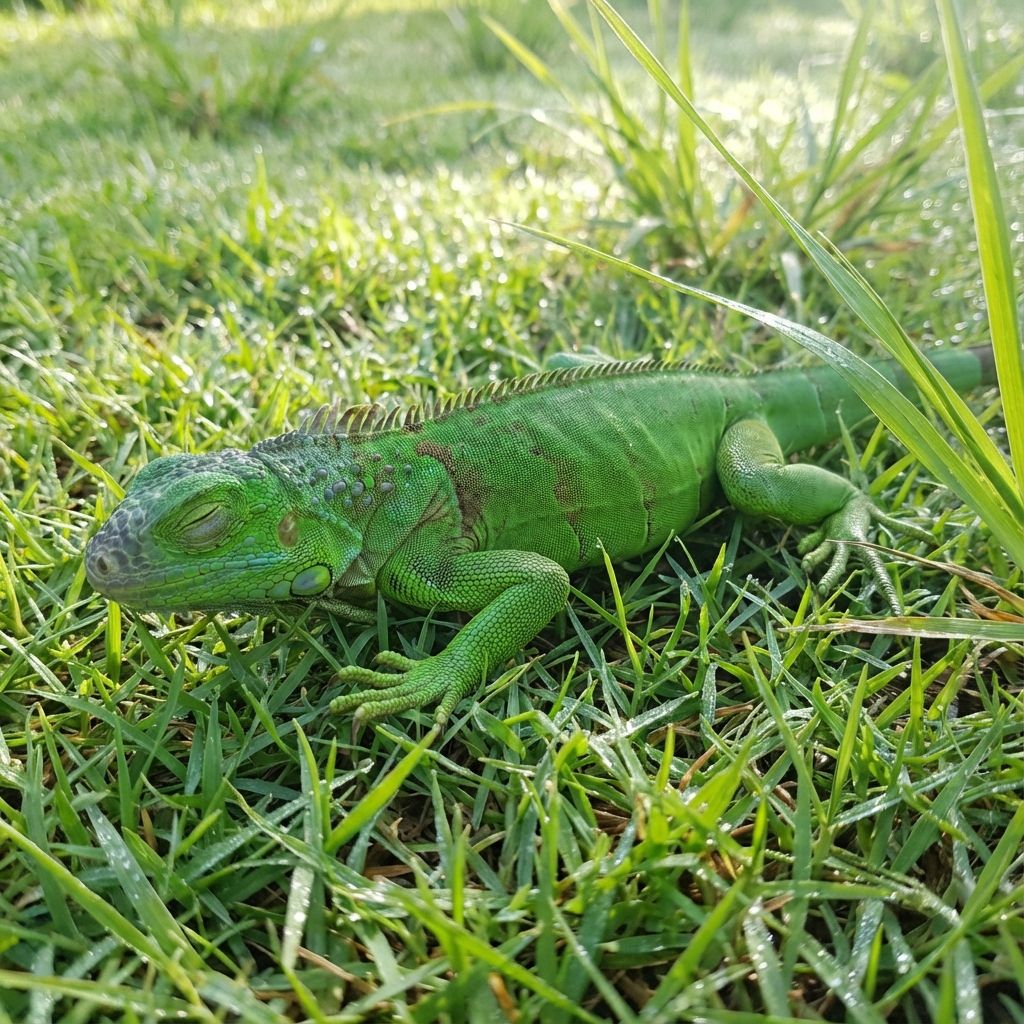
When temperatures drop quickly, specifically below 45 degrees Fahrenheit (7 degrees Celsius), an iguana’s body begins to shut down. Their blood flow slows, and their muscles become stiff and unresponsive. This creates a state of temporary paralysis called “cold-stunning.” Since their claws can no longer grip the wood, they lose their hold and tumble from the treetops. In places like Florida, this leads to “raining iguanas” during sudden winter cold snaps.
Surviving the Impact
Despite falling from heights of up to 40 feet (12 meters), most iguanas survive the drop. Their bodies are robust, and they are usually relaxed during the fall, which helps prevent broken bones. They often land on soft surfaces like grass or soil.

Although they appear lifeless on the ground, they are usually just dormant. They continue to breathe very slowly, and their heart beats only a few times per minute. Once the sun comes out and the air temperature rises, the iguana’s blood warms up. The animal wakes up, regains its energy, and climbs back into safety. However, the fall can be dangerous if they hit hard concrete, and prolonged cold can eventually harm them if they do not warm up quickly enough.
Read Land Animals & Water Animals here or in the app
Read every story in both shelves right here on the web, or open them in Encyclopedia: Kids Learning with narration you control. The full 1,000+ topics come with the app, covering space, the human body, history and more. Ad-free, ages 5–12.