Why Are Giant Pandas So Bad at Surviving?
Pandas are bears that eat almost nothing but bamboo - and they can only digest 17% of it! They spend 16 hours a day eating, and their newborn babies are tinier than a stick of butter.

The Bamboo Problem
Giant pandas are technically bears, which means their bodies are built to eat meat. However, 99 percent of their diet is bamboo. Bamboo is a tough grass that contains very little nutrients or sugars. Because their digestive systems are short and simple—unlike the complex, multi-chambered stomachs of cows—pandas cannot break down plant matter efficiently. They digest (absorb) only about 17 percent of the food they eat.
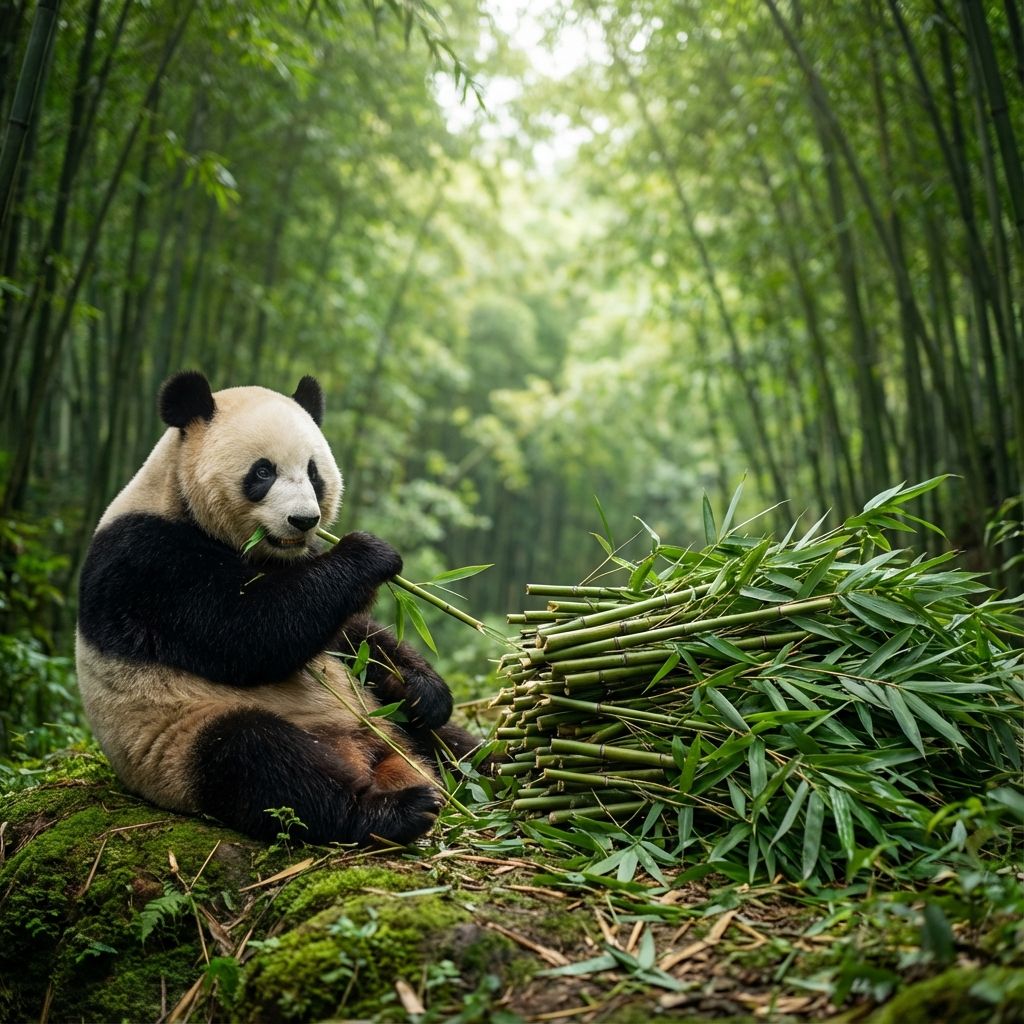
To get enough energy to stay alive, an adult panda must eat between 26 and 84 pounds (12 to 38 kilograms) of bamboo every day. This keeps them busy eating for up to 16 hours a day. They have strong jaw muscles and large molars (back teeth) to crush the tough bamboo stalks, but it requires constant effort.
Low Energy Lifestyle
Because their food gives them so little fuel, pandas must save energy wherever possible. They move slowly, avoid steep hills, and sleep often. Their metabolism (how fast the body burns energy) is very slow, similar to a three-toed sloth. This lack of energy makes it difficult for them to travel long distances to find new food sources if the bamboo in their area dies off.
Tiny Cubs and Reproduction
Survival is also difficult because pandas rarely have babies. A female panda can become pregnant for only two or three days once a year. If she finds a mate during this very short time, she gives birth to one of the smallest newborns in the animal kingdom compared to the mother’s size.
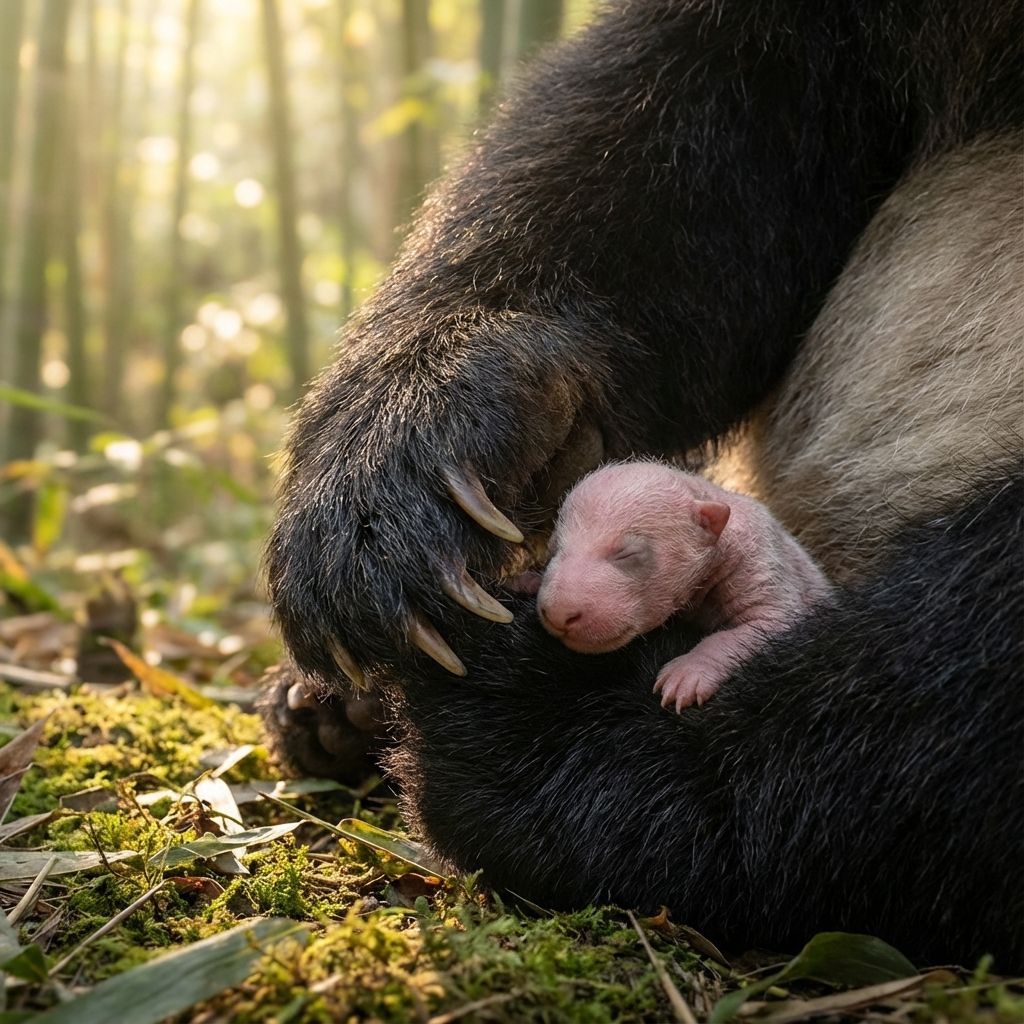
A newborn panda is pink, hairless, and blind. It weighs only about 3 to 5 ounces (85 to 140 grams), which is about the size of a stick of butter. This is 1/900th the size of its mother. These tiny cubs are extremely helpless and prone to illness or injury. If a mother gives birth to twins, she usually cares for only one because she does not have enough milk or energy to raise both.
Read Land Animals & Water Animals here or in the app
Read every story in both shelves right here on the web, or open them in Encyclopedia: Kids Learning with narration you control. The full 1,000+ topics come with the app, covering space, the human body, history and more. Ad-free, ages 5–12.