Venom vs. Poison: What's the Difference?
One bite from an Inland Taipan has enough venom to kill 100 adults - that's 50 times stronger than a cobra! Learn the surprising difference between 'venomous' and 'poisonous.'
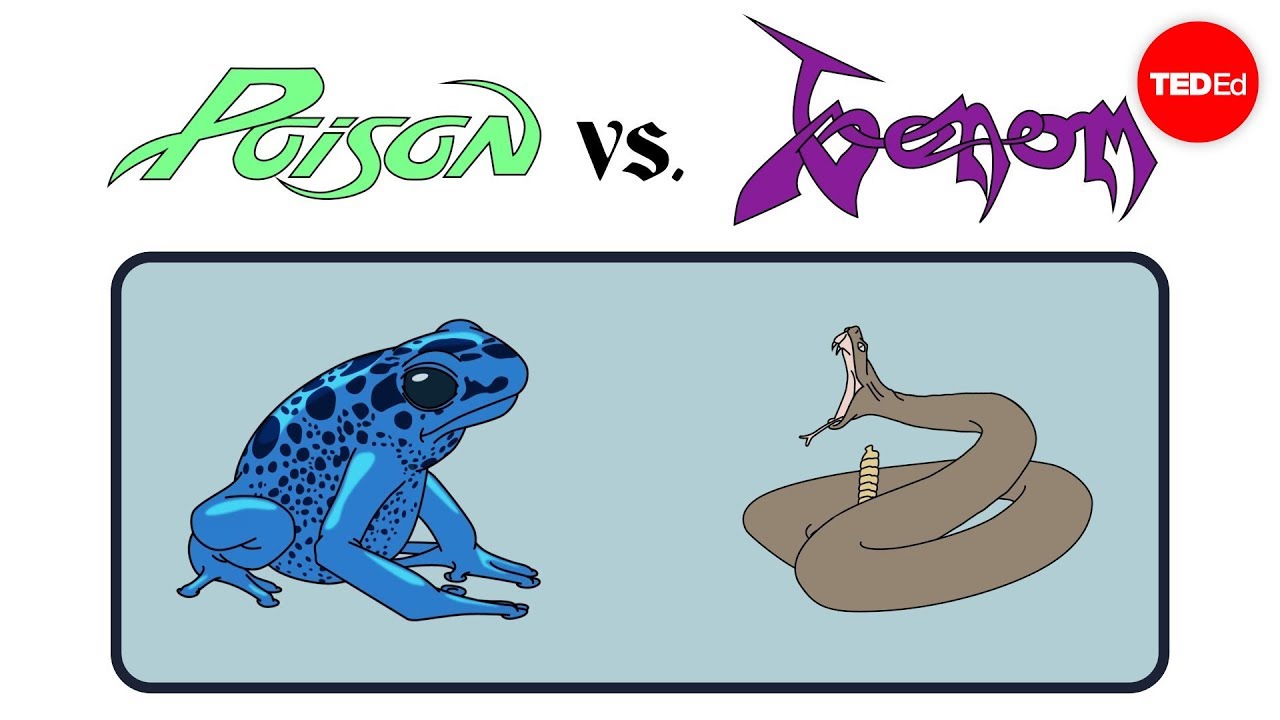
Many people think “venom” and “poison” mean the same thing, but there is a major difference in how they enter the body. Biologists have a simple rule: if you bite it and get sick, it is poisonous. If it bites you and you get sick, it is venomous.
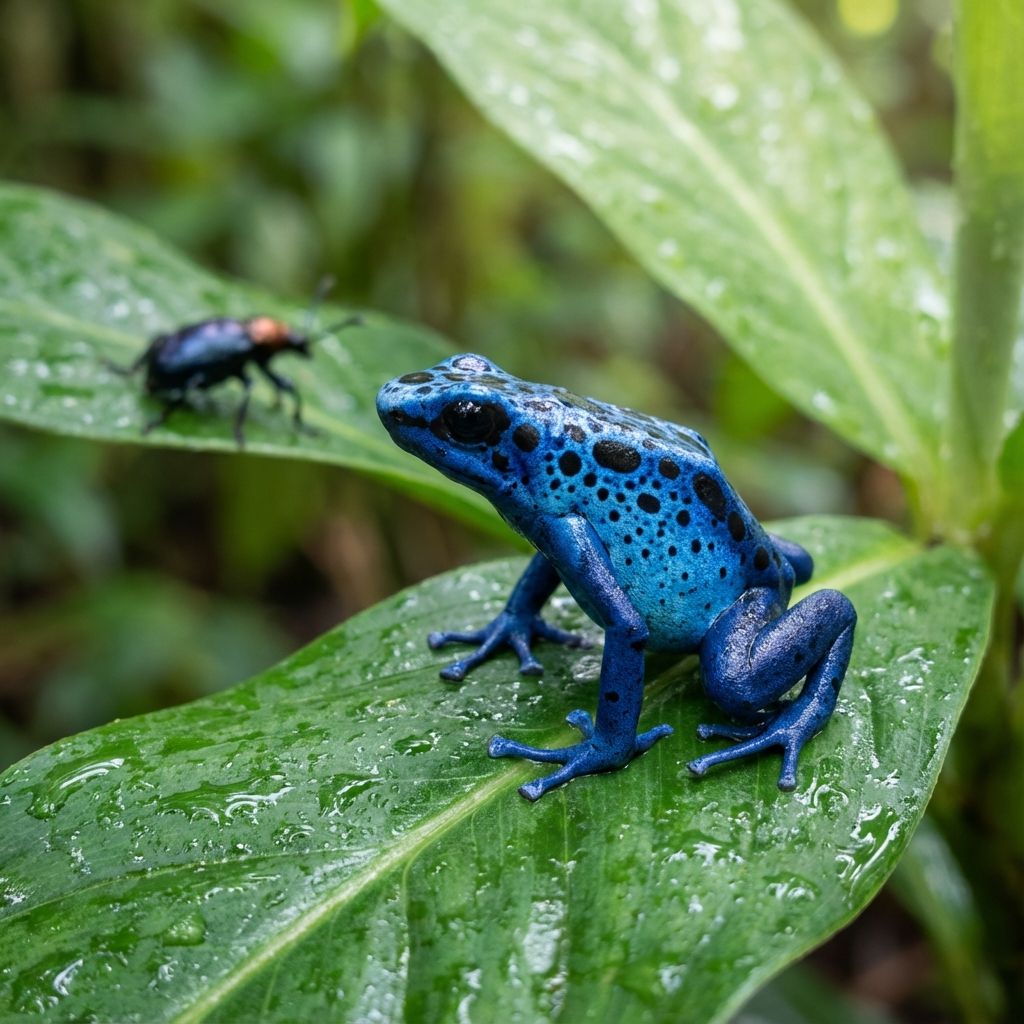
Poison acts passively. Animals like the poison dart frog secrete toxins through their skin to stop predators from eating them. Venom is an active weapon. It must be injected directly into the bloodstream using specialized tools like fangs, stingers, or spines.
The World’s Most Toxic Snake
The Inland Taipan, found in the remote deserts of Australia, carries the most toxic venom of any snake on Earth. While it is not the largest snake, its chemical weapon is incredibly potent (strong). A single bite from an Inland Taipan contains enough venom to end the lives of 100 adult men or 250,000 mice.
Specialized Hunting
This snake needs such powerful venom because of its diet. It hunts the long-haired rat and other small mammals native to Australia. These prey animals are fast and can fight back with sharp teeth and claws. The Taipan cannot afford a long struggle.
Its venom is a complex mixture of neurotoxins (chemicals that attack the brain and nerves) and hemotoxins (chemicals that affect the blood). When the snake strikes, this mixture paralyzes the prey almost instantly, stopping it from running away or fighting. This allows the snake to eat safely.
Comparing the Cobra
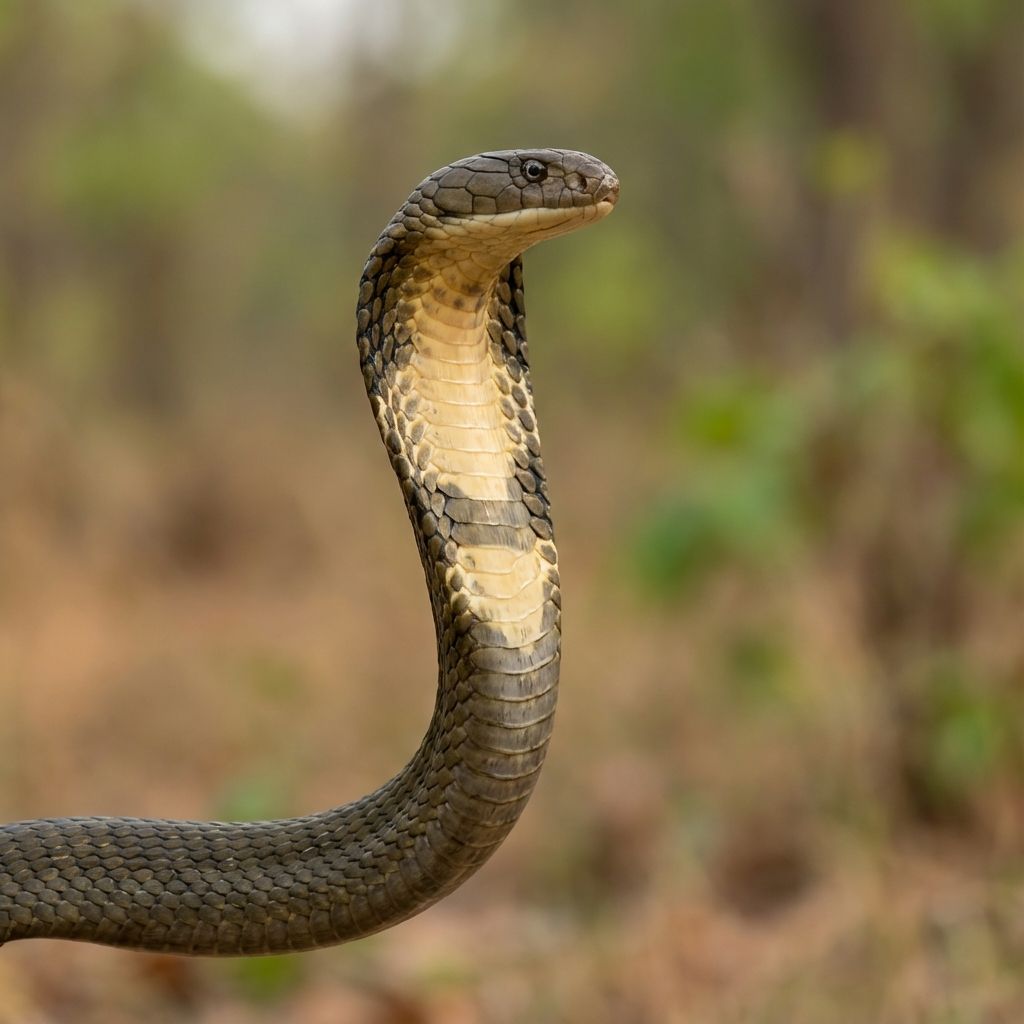
The King Cobra is famous and dangerous, but it relies on quantity rather than quality. A cobra injects a large volume of liquid when it bites. The Inland Taipan injects a smaller amount, but the liquid is far more concentrated. Drop for drop, the venom of the Inland Taipan is 50 times stronger than that of the Indian Cobra. Despite this power, the Inland Taipan is a shy, reclusive animal that hides in deep cracks in the clay soil and rarely encounters humans.
Read Land Animals & Water Animals here or in the app
Read every story in both shelves right here on the web, or open them in Encyclopedia: Kids Learning with narration you control. The full 1,000+ topics come with the app, covering space, the human body, history and more. Ad-free, ages 5–12.