The Arctic Tern: Flying 44,000 Miles a Year
Arctic Terns fly 44,000 miles every year - from North Pole to South Pole and back! Over their lifetime, they travel far enough to reach the Moon and back three times.

The Longest Journey
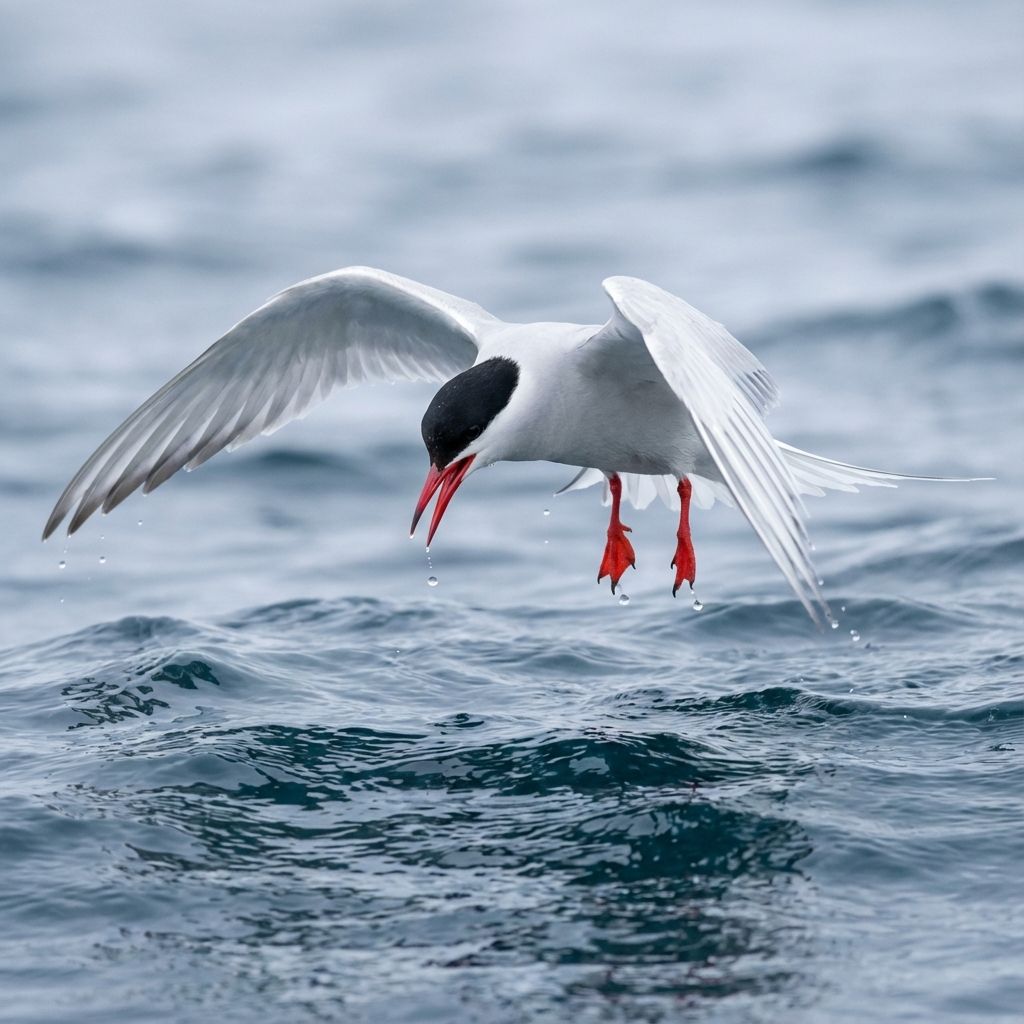
The Arctic Tern is a small seabird that holds the world record for the longest migration. Every year, these birds fly from their breeding grounds in the Arctic (the North Pole) all the way to the Antarctic (the South Pole) and back again. This round-trip journey covers about 44,000 miles (71,000 kilometers). Over a lifespan of 30 years, one tern may travel enough distance to fly to the Moon and back three times.

Chasing the Summer Sun
Arctic Terns migrate to follow the summer season. They start in the Arctic during the northern summer, where the sun hardly ever sets. As winter approaches in the north, they fly south to the Antarctic just in time for the southern summer. Because of this schedule, Arctic Terns see more daylight than any other animal on Earth. Constant sunlight is important because it allows the birds to spot fish and krill in the water easily, giving them plenty of time to eat.
Built for Endurance
To survive such a long trip, the Arctic Tern has a lightweight body and long, pointed wings. They are experts at gliding on air currents to save energy. Instead of flying in a straight line, they follow wind patterns across the oceans, often flying in a giant “S” shape. During their time in the Antarctic, they molt (lose old feathers and grow new ones) so their wings are fresh and strong for the return flight north.
Read Land Animals & Water Animals here or in the app
Read every story in both shelves right here on the web, or open them in Encyclopedia: Kids Learning with narration you control. The full 1,000+ topics come with the app, covering space, the human body, history and more. Ad-free, ages 5–12.