Tapirs
With a pig's body and an elephant's trunk, this strange animal uses its nose as a snorkel to hide underwater. Babies are born with spots and stripes that make them look like furry watermelons.

Not a Pig, Not an Elephant
With a body like a chunky wild pig, a mini elephant trunk, and the hooves of a horse, the tapir looks like a creature made from spare parts. These heavy-set herbivores (plant-eaters) have roamed the Earth for tens of millions of years, barely changing their design. Despite their pig-like bodies, their closest living relatives are rhinoceroses and zebras. They are built like tanks, weighing up to 800 pounds—about as heavy as a grand piano—and can plow through thick jungle undergrowth where other animals get stuck.
A Snorkel on Your Face
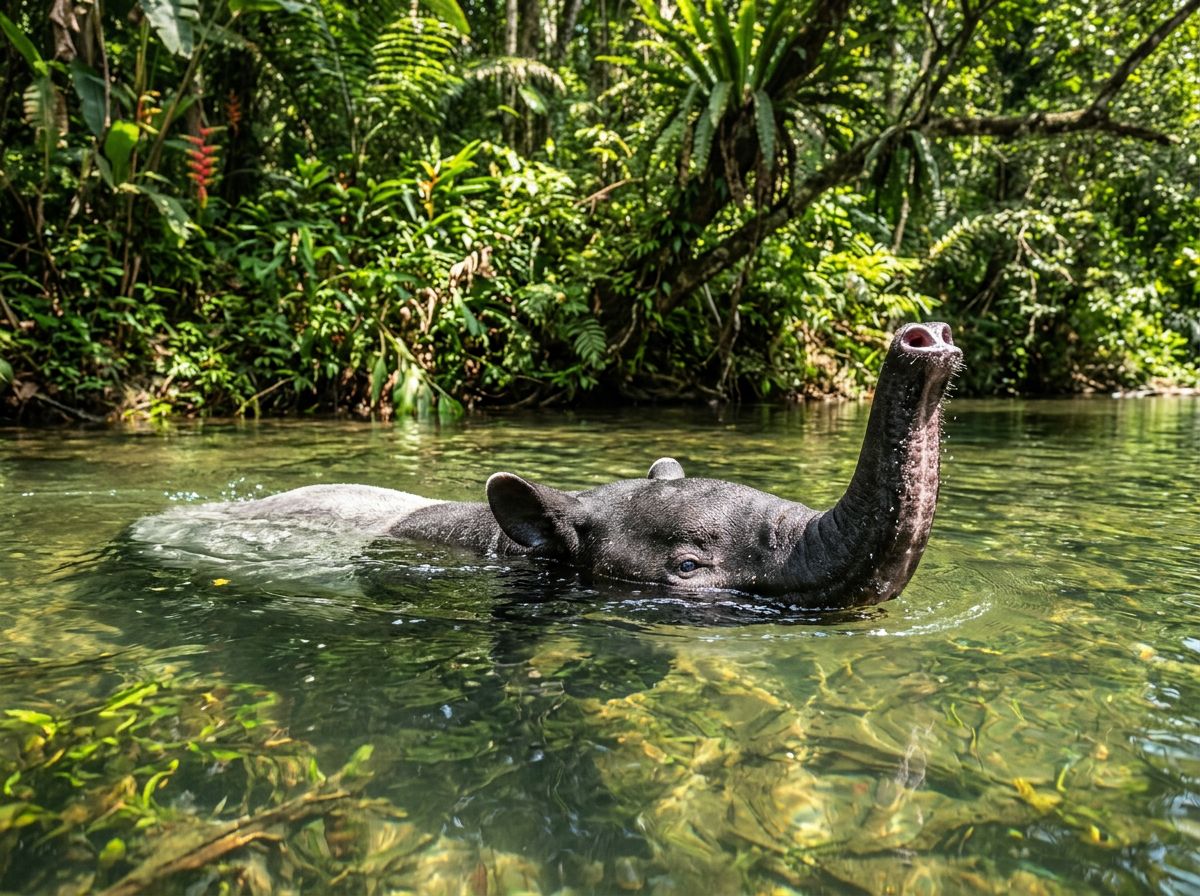
The tapir’s most famous feature is its nose. This flexible snout is prehensile (capable of grabbing things), working like a shortened version of an elephant’s trunk. A tapir uses its nose to wrap around branches, pluck choice leaves, and pop them into its mouth. But this nose has another superpower: it works as a snorkel. Tapirs love water and are excellent swimmers. When a jaguar or a cougar chases them, tapirs flee straight into a river, dive deep, and keep their snout poking out above the surface to breathe while they wait out the danger.
Walking Watermelons
Adult tapirs are usually solid black, brown, or gray. The Malayan tapir even looks like it is wearing a stark black-and-white tuxedo. However, baby tapirs look entirely different. They are born covered in bright white stripes and spots, making them look exactly like furry, walking watermelons. This pattern serves as perfect camouflage in the dappled sunlight of the rainforest floor, helping them hide from predators while they are still small and vulnerable. After about six months, the spots fade away.
Jungle Gardeners
Tapirs are crucial to the survival of their rainforest homes in Central America, South America, and Southeast Asia. Because they eat massive amounts of fruit and travel long distances, they poop out whole seeds all over the forest. This makes them natural heavy-duty gardeners. Many tree species rely almost entirely on tapirs to spread their seeds and plant the next generation of the forest. Without these bulky seed-planters, entire jungle ecosystems would collapse.
Read Land Animals & Water Animals here or in the app
Read every story in both shelves right here on the web, or open them in Encyclopedia: Kids Learning with narration you control. The full 1,000+ topics come with the app, covering space, the human body, history and more. Ad-free, ages 5–12.