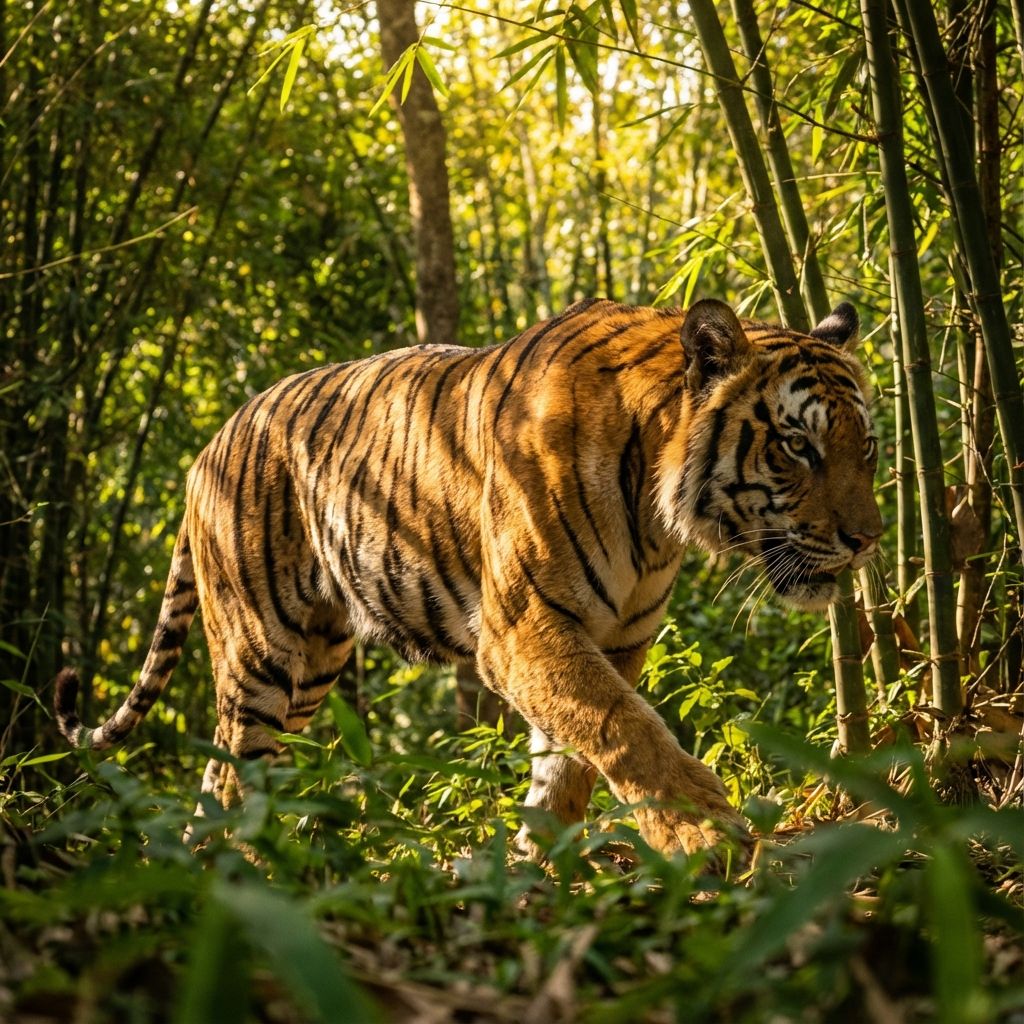
Saving Tigers: Only 3,900 Left in the Wild
From 100,000 tigers to just 3,900 in one century! Radio collars and protected reserves are helping, but poachers still kill tigers for their bones and skins.

One hundred years ago, approximately 100,000 tigers roamed across Asia. They lived in a vast range of habitats, from the frozen forests of Russia to the tropical jungles of Indonesia. Today, that number has dropped by about 96 percent. Experts estimate there are only around 3,900 wild tigers left. This places the tiger on the list of endangered species, meaning they are at risk of disappearing from the wild forever.
Shrinking Habitats
The biggest threat to tigers is the loss of their homes. As human populations grow, forests are cut down to build cities, roads, and farms. This destruction is called habitat loss. Large areas of forest are often cleared to plant palm oil trees or timber plantations.
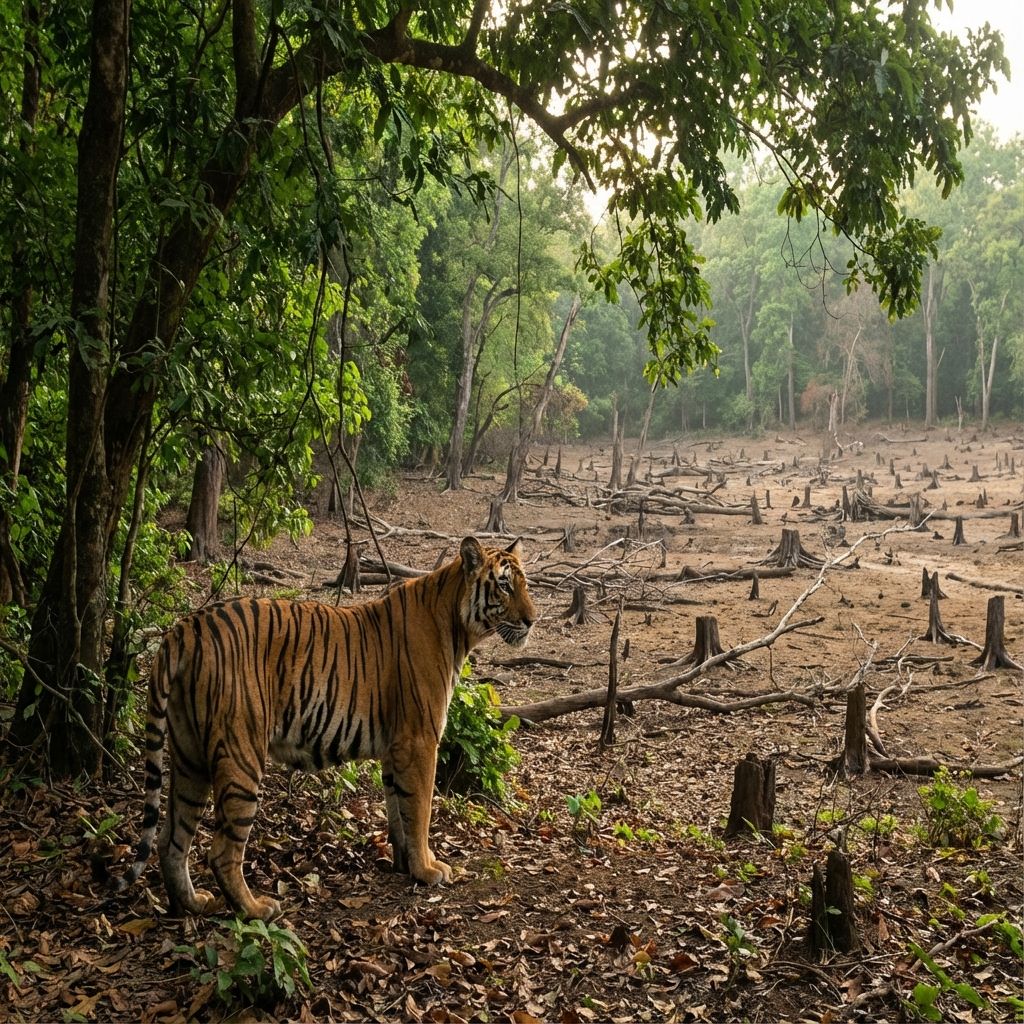
When forests are cut down, the remaining tiger groups get separated from each other. This is known as habitat fragmentation (frag-men-TAY-shun). Tigers need huge territories to hunt and find mates. When their land is broken into small islands of forest, they cannot travel safely to find food or other tigers, which makes it hard for them to survive and raise cubs.
Poaching and Illegal Trade
Hunting is another major cause of the population drop. Even though it is against the law, people still hunt tigers illegally. This crime is called poaching. Poachers target tigers for their beautiful orange and black striped fur, which is sold as rugs or decorations. Other body parts are used in traditional medicines, even though there is no scientific proof that they work. Stronger laws and forest patrols are now in place to stop these hunters.
Conservation Efforts
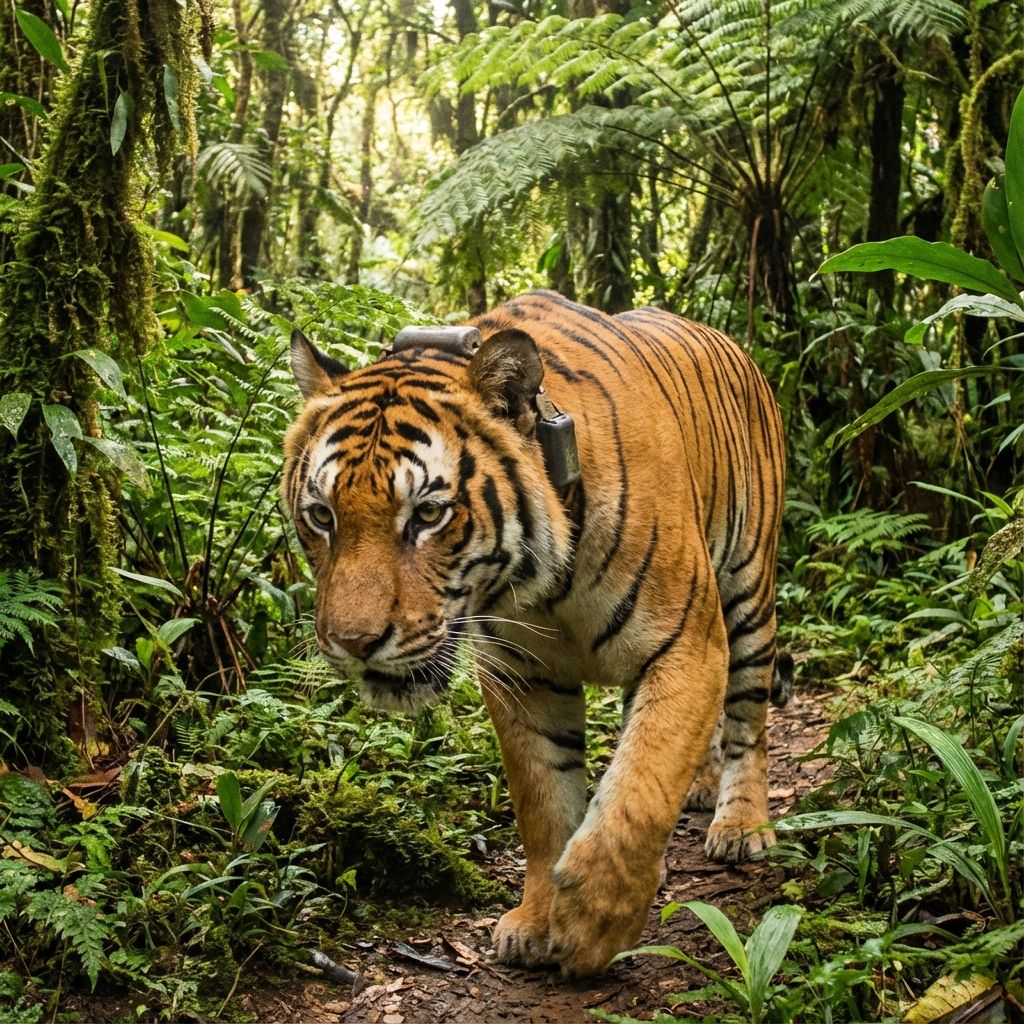
Despite the low numbers, there is hope. Governments and conservation groups are working together to double the number of wild tigers. They create protected areas called reserves where tigers can live safely. Scientists use motion-sensor cameras and radio collars to track tiger movements and count their numbers accurately. In countries like India and Nepal, these strict protection efforts have helped the tiger population begin to rise again.
Read Land Animals & Water Animals here or in the app
Read every story in both shelves right here on the web, or open them in Encyclopedia: Kids Learning with narration you control. The full 1,000+ topics come with the app, covering space, the human body, history and more. Ad-free, ages 5–12.