Owl Superpowers: Silent Flight & 270° Head Turns
Owls have comb-like fringes on their feathers that make their flight completely silent! Plus, they have 14 neck bones (twice as many as humans) letting them turn their heads 270 degrees.
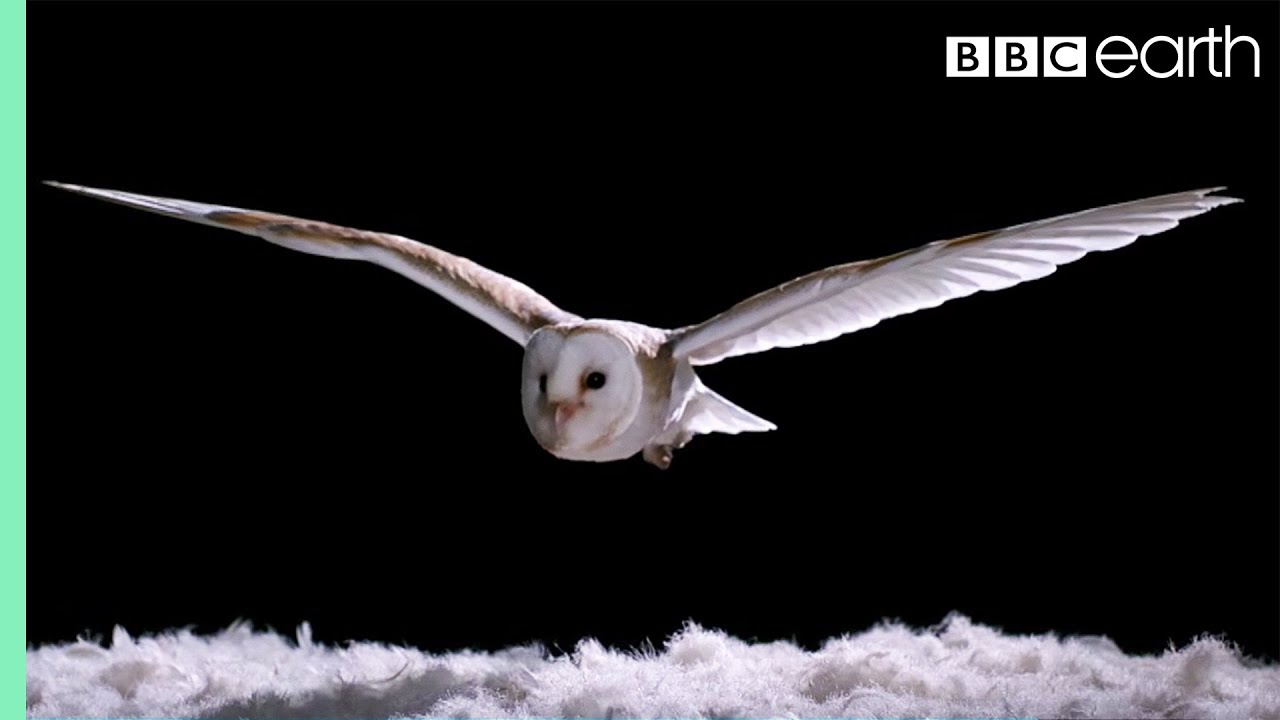
Most birds make a swooshing sound when they flap their wings, but owls are masters of stealth. They can swoop down on prey completely undetected. This ability comes from the unique shape and texture of their feathers. Additionally, because their eyes are fixed in place, they have evolved a super-flexible neck to see the world around them.
Engineering of Silent Wings
An owl’s wing is designed to break up air turbulence (choppy wind) that usually creates noise. Three specific parts of the wing work together to muffle sound.
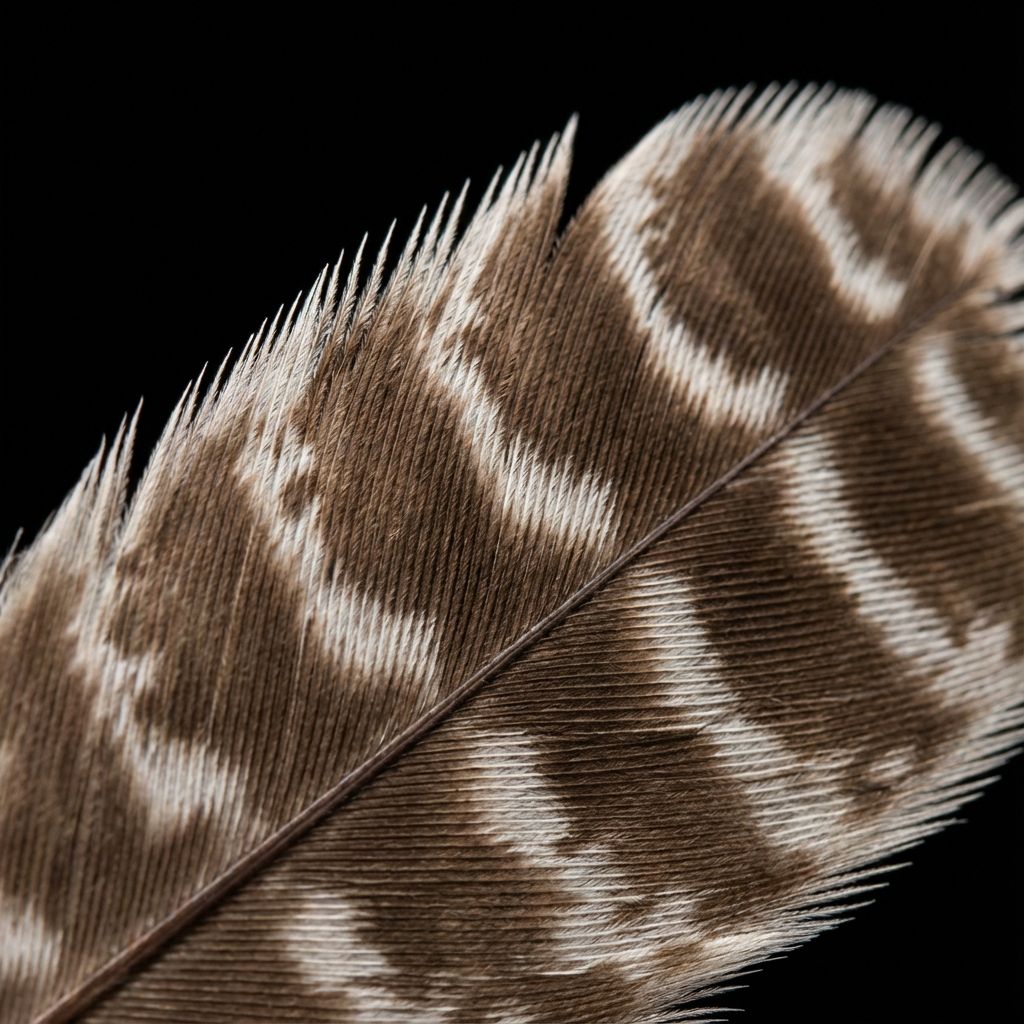
First, the leading edge of the primary flight feathers has a comb-like fringe (serrations). This jagged edge cuts through the air and breaks large wind currents into tiny, quiet swirls. Second, the surface of the feathers is covered in a soft, velvety coating that absorbs noise like a carpet. Finally, the trailing edge of the wing has a soft, tattered fringe that smooths out the airflow behind the bird. This allows large owls, like the Barn Owl or Great Grey Owl, to hunt voles and mice without being heard.
The Flexible Neck
Owls have large, tube-shaped eyes that are excellent for seeing in the dark. However, these eyes are held tightly in place by bony sockets, meaning an owl cannot roll its eyes to look side-to-side like a human can. To see around them, they must turn their entire head.
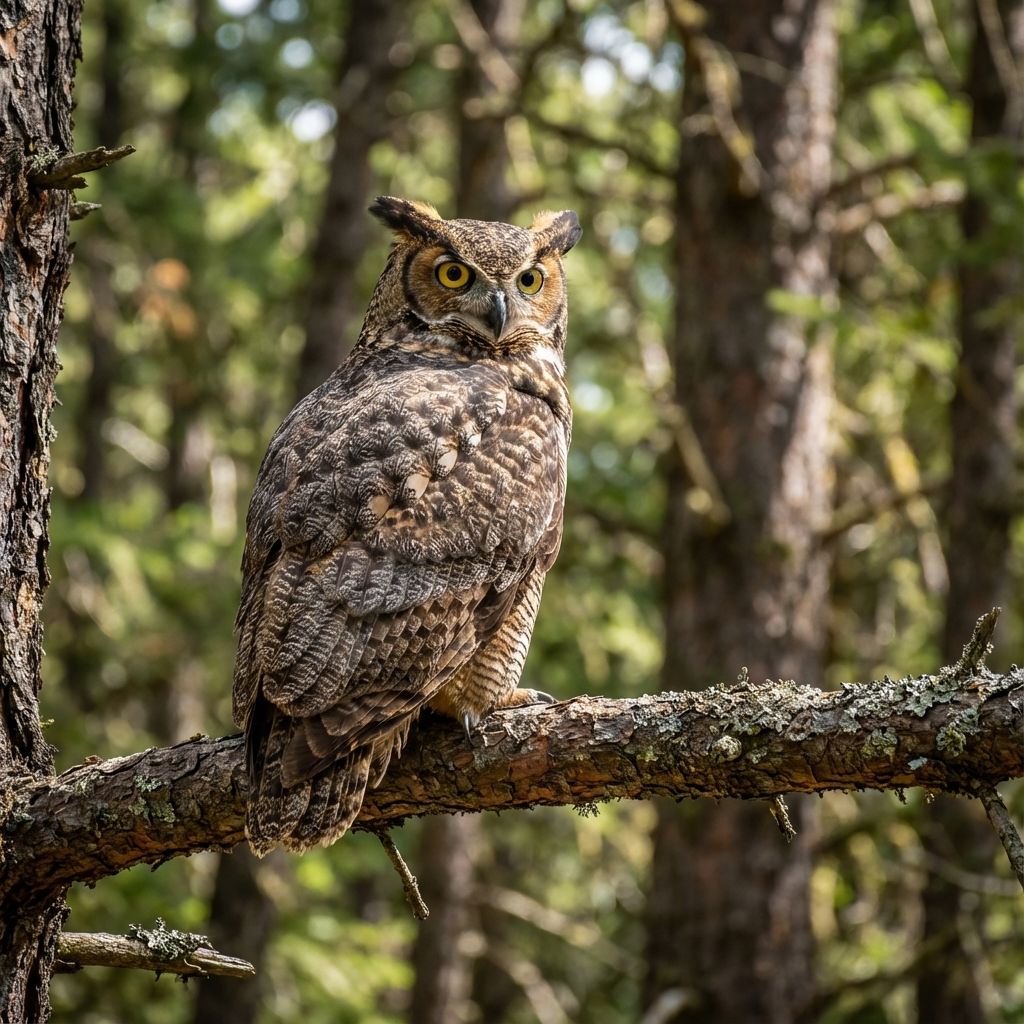
An owl can rotate its head 270 degrees. This means if an owl faces forward, it can turn its head all the way to the right, past its shoulder, and almost all the way back to the front again without moving its body. They cannot spin their heads in a full 360-degree circle, despite popular myths.
skeletal Secrets
This extreme flexibility is possible because owls have 14 neck bones (vertebrae), which is twice as many as humans and giraffes, who both have seven. These extra bones allow for a wider range of twisting motion. To prevent injury during these extreme turns, owls have special hollow spaces in their neck bones. These spaces are large enough to protect their arteries (blood vessels), ensuring that blood supply to the brain is never cut off, even when the neck is twisted like a corkscrew.
Read Land Animals & Water Animals here or in the app
Read every story in both shelves right here on the web, or open them in Encyclopedia: Kids Learning with narration you control. The full 1,000+ topics come with the app, covering space, the human body, history and more. Ad-free, ages 5–12.