Monkeys
Some monkeys have tails with unique fingerprints, while others are the size of a stick of butter. Meet the howler monkey, whose screams are as loud as a jet engine taking off!

The Tail Check
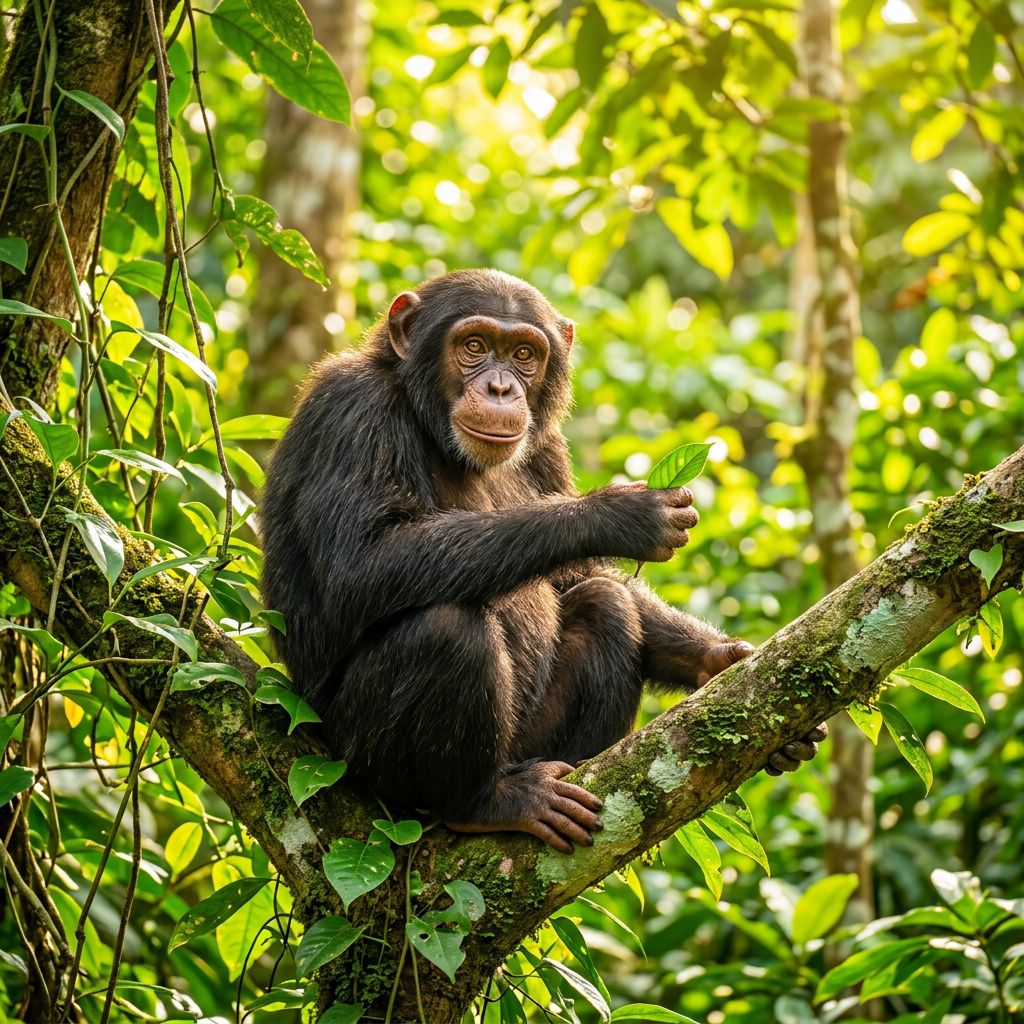
How do you tell a monkey apart from an ape? Look at the backside. If there is a tail, you are looking at a monkey. If there is no tail, it is an ape (like a chimpanzee or a gorilla).
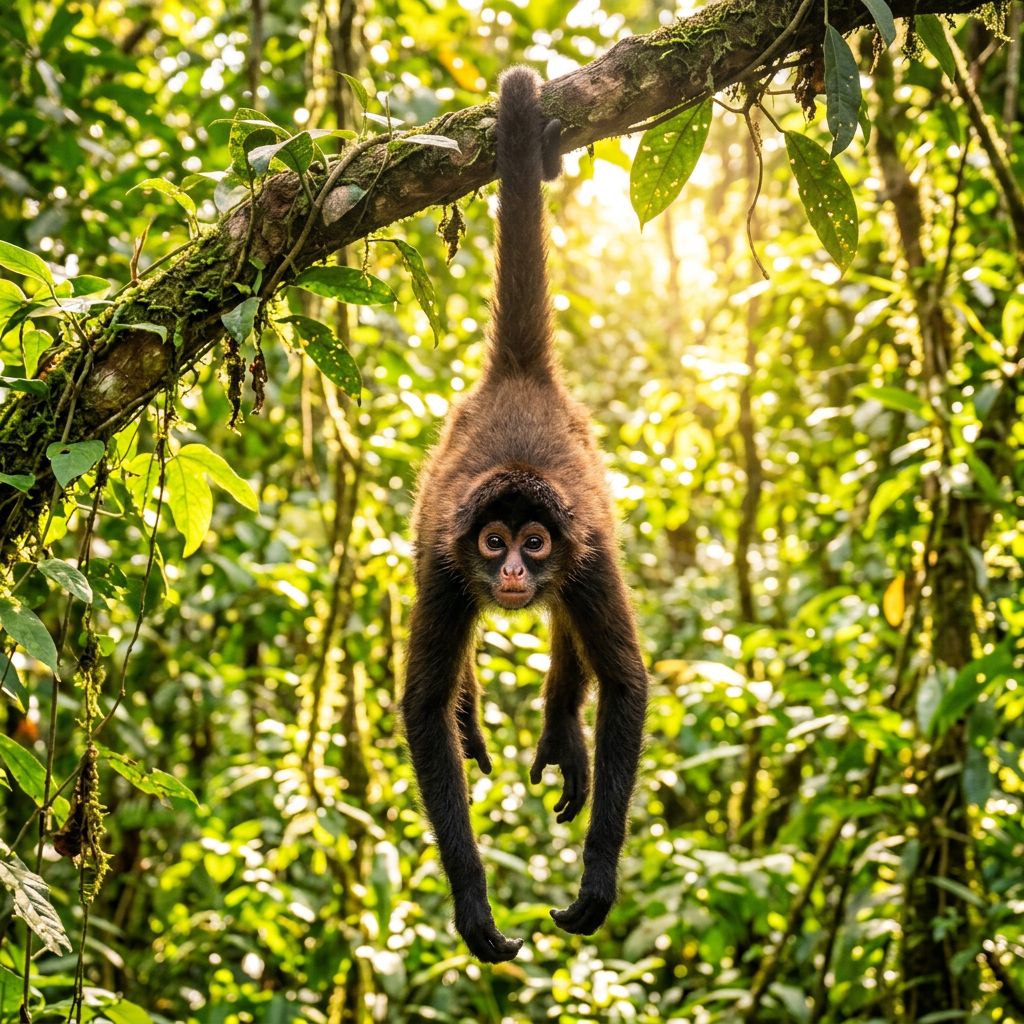
Monkeys are split into two main groups based on where they live: New World monkeys from Central and South America, and Old World monkeys from Africa and Asia. Many New World monkeys have a prehensile (grasping) tail. This acts like a fifth hand, strong enough to hold their entire body weight while they swing through the treetops. The underside of this tail even has a bare patch of skin with a unique pattern—just like a human fingerprint—to help them grip slippery bark.
Pocket-Sized to Lion-Toothed
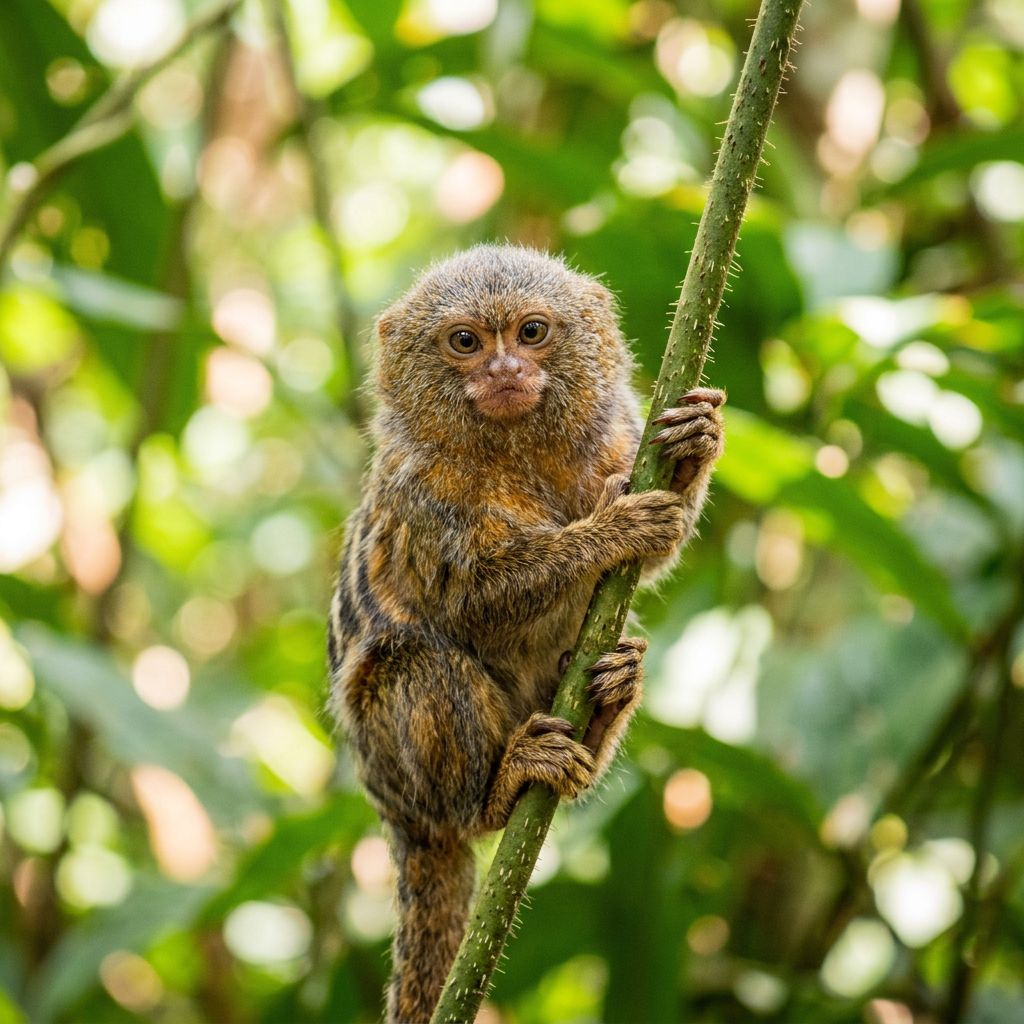
Monkeys come in wildly different packages. On the tiny end of the scale is the pygmy marmoset. This pocket-sized climber is about the weight of a single stick of butter and can easily sit in the palm of your hand.
On the heavy end is the mandrill. Weighing up to 120 pounds (54 kilograms), male mandrills look like they are wearing bright blue and red face paint. They have long, sharp canine teeth that can grow longer than those of a lion, which they flash to warn rivals to back off.
Jungle Group Chats
Step into a South American rainforest, and you might hear a sound like a roaring windstorm. That is the howler monkey. Inside its throat is an enlarged, hollow bone that acts like a megaphone. Their screams can reach 140 decibels—as loud as a jet engine taking off—and travel up to three miles (five kilometers) through the thick trees to warn other troops to stay off their turf.
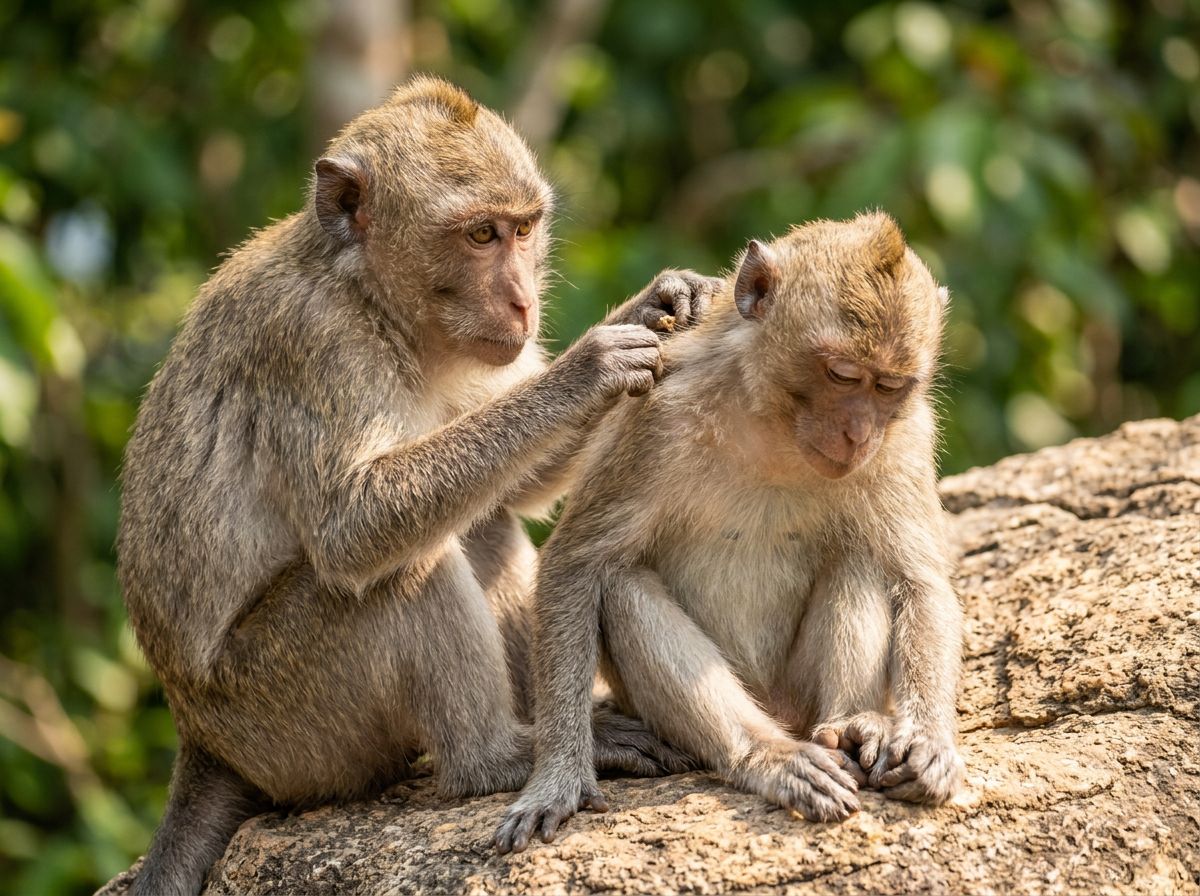
Most monkeys live in busy social groups called troops. To keep the peace, they spend hours grooming each other. Picking dirt and bugs out of a friend’s coat releases chemicals in their brains that lower stress, making a session of bug-picking the ultimate jungle peace treaty.
Read Land Animals & Water Animals here or in the app
Read every story in both shelves right here on the web, or open them in Encyclopedia: Kids Learning with narration you control. The full 1,000+ topics come with the app, covering space, the human body, history and more. Ad-free, ages 5–12.