Mongooses
These quick little predators can dodge a cobra's deadly bite and are completely immune to its venom. Ancient Egyptians even kept them as household pets and buried them in royal tombs.
Snake-Slayers
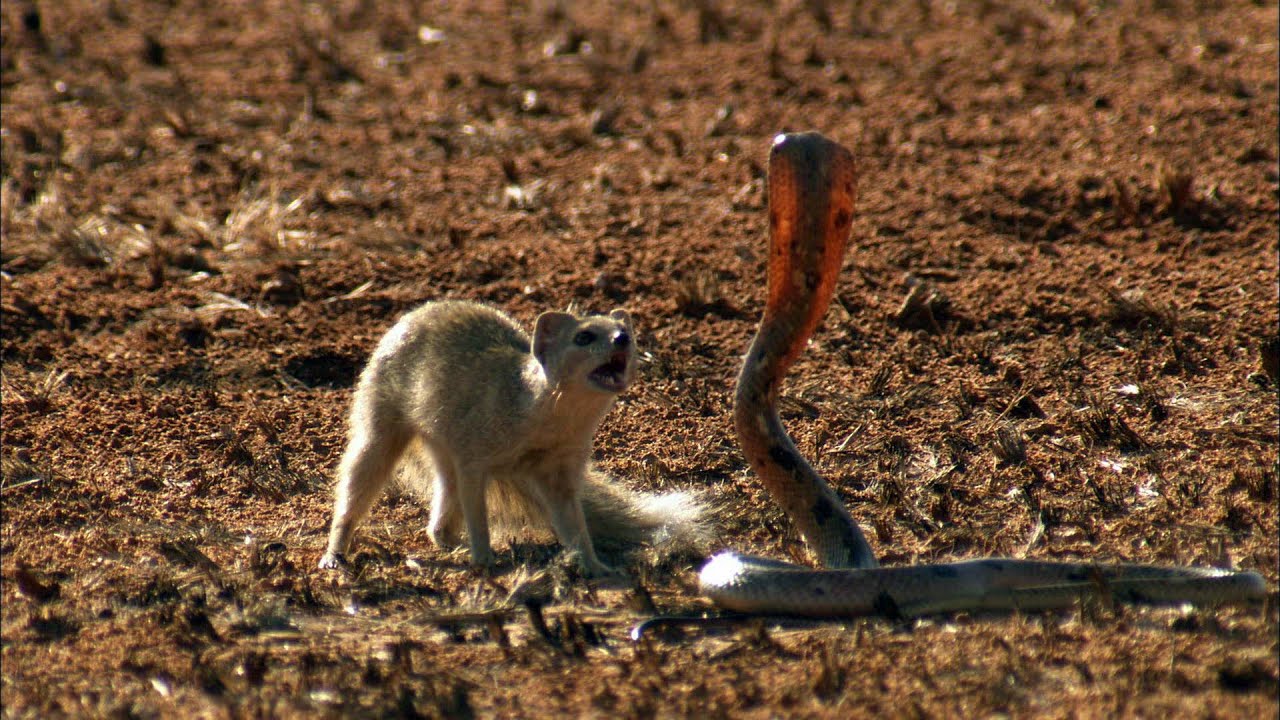
A single bite from a king cobra carries enough venom to take down an elephant, but the mongoose steps up to fight anyway. These furry, pint-sized predators are famous for their lightning-fast reflexes. When a cobra strikes, the mongoose dodges like a video game character with maxed-out speed stats. It tires the snake out by dancing just out of reach, waiting for the perfect moment to dart in for a crushing bite to the snake’s skull.
Venom-Blocking Cells
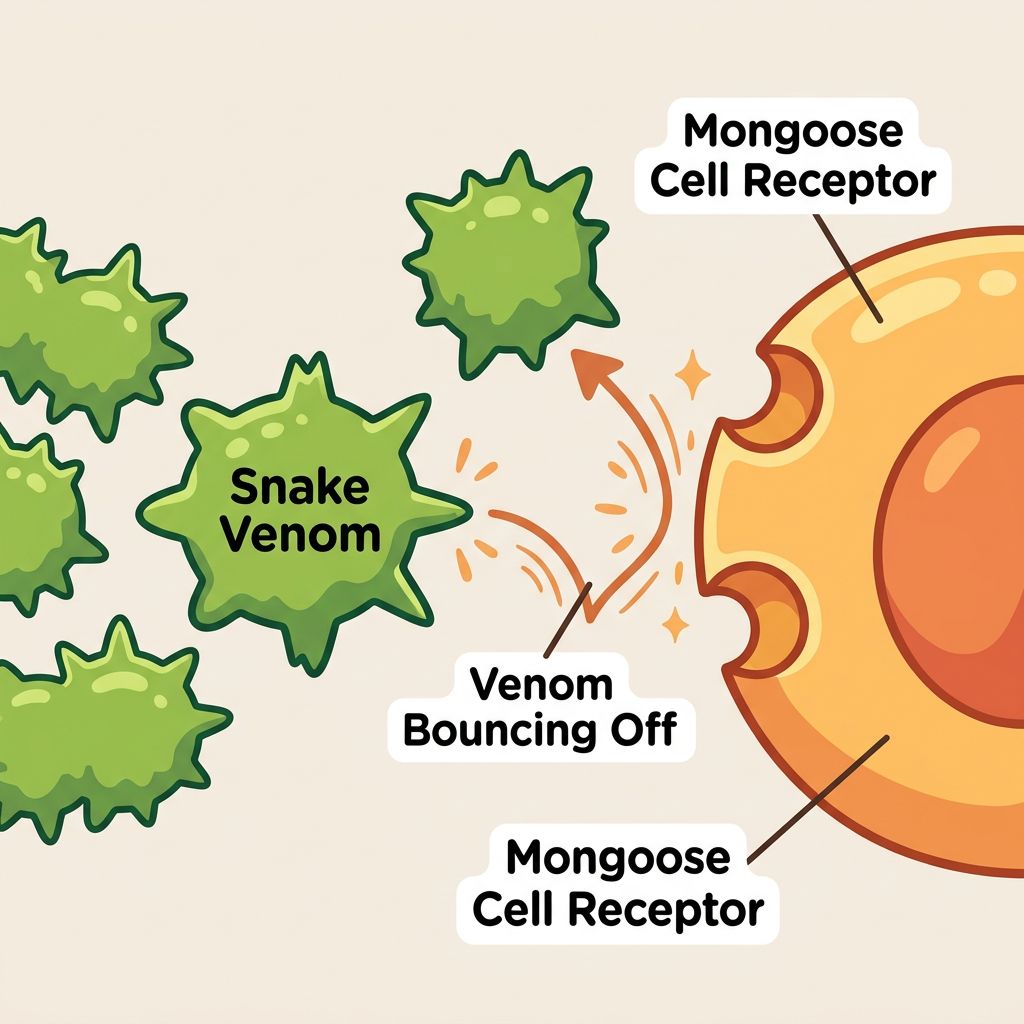
If a mongoose does get bitten during a battle, it has a secret molecular shield. Most animals have receptors (tiny landing pads on cells that receive chemical messages) that snake venom easily locks onto, blocking nerve signals and causing paralysis. But a mongoose’s receptors are shaped differently. The snake’s chemical venom cannot latch onto them. It simply bounces off, leaving the mongoose unharmed. It is the molecular equivalent of trying to plug a USB cable into a headphone jack.
High-Speed Chatter
Not all mongooses are lone warriors. Some, like meerkats (which are a type of mongoose), live in massive family groups called mobs. To survive in the open grasslands, they have developed a complex warning system. They do not just make random noise; they speak in a code of chirps, growls, and whistles. Their calls combine different sounds to tell the group exactly what kind of danger is coming—like an eagle from the sky or a jackal from the grass—and how fast it is approaching. Sentries (lookout guards) take turns standing on their hind legs to watch the horizon while others forage for food.
Pharaonic Pets
In ancient Egypt, mongooses were considered sacred. Families kept them as household pets to keep their homes free of cobras, rats, and scorpions. These clever creatures were even associated with Horus, the Egyptian god of the sky. Archaeologists have found mummified mongooses buried in royal tombs alongside pharaohs, prepared to accompany them into the afterlife.
Read Land Animals & Water Animals here or in the app
Read every story in both shelves right here on the web, or open them in Encyclopedia: Kids Learning with narration you control. The full 1,000+ topics come with the app, covering space, the human body, history and more. Ad-free, ages 5–12.