Mike the Headless Chicken: Surviving 18 Months
In a rare case, a specific chicken named Mike survived 18 months after losing most of his head in 1945! Part of his brainstem remained intact, so his heart kept beating and he could still walk around.

Most animals cannot survive without a head because the brain controls breathing, heart rate, and other vital functions. However, a chicken’s anatomy is different from humans. The brain of a chicken is small and located at the back of the skull. The most important part for survival is the brainstem (the lower part of the brain connecting to the spinal cord). This part controls basic body actions like breathing and heartbeats.
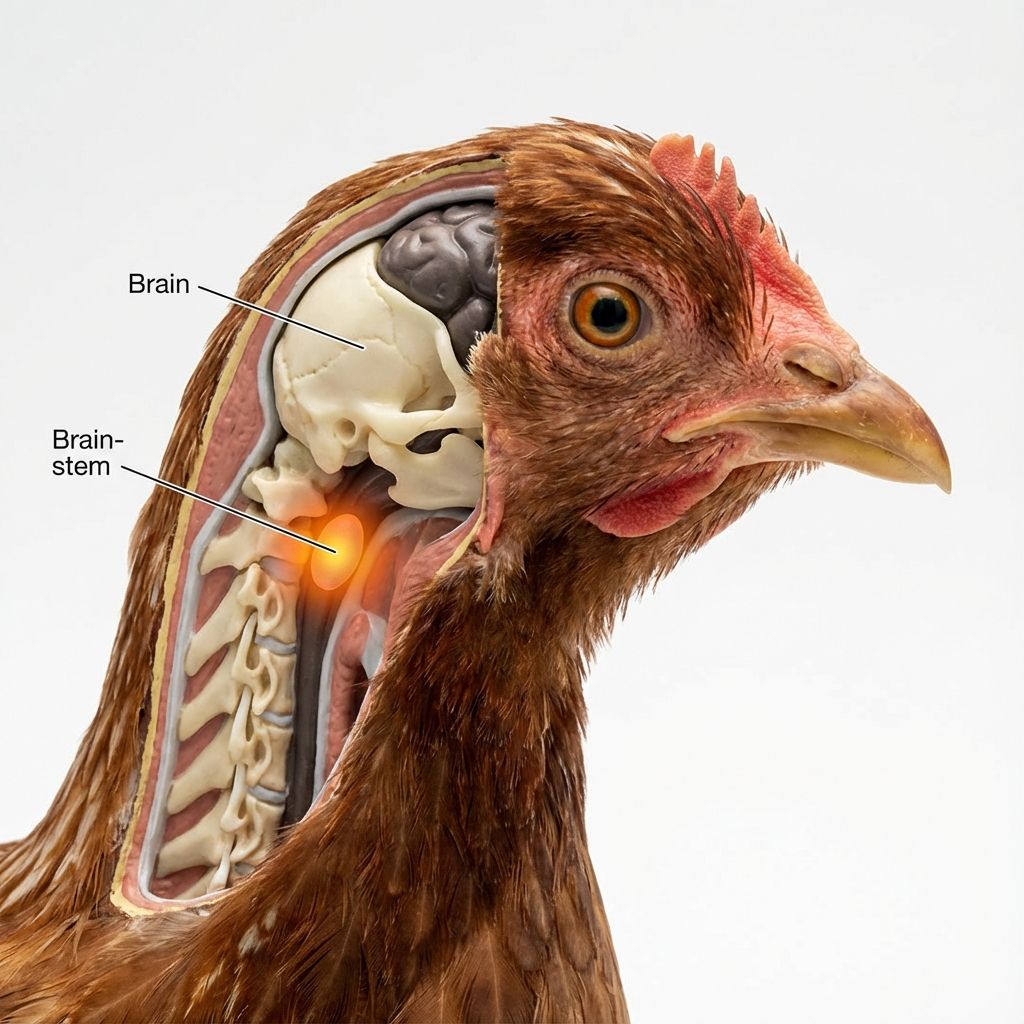
Because the chicken’s brainstem is positioned low in the neck, it is possible for a chicken to lose the front part of its head—including the eyes, beak, and forebrain—while the brainstem remains attached to the body. If the brainstem is not damaged, the body keeps working. The heart continues to beat, and the chicken can still breathe.
The Story of Mike
The most famous example of this happened in 1945 with a chicken named Mike. When a farmer tried to prepare Mike for dinner, the axe removed most of his head but missed the jugular vein and the brainstem. A blood clot stopped Mike from bleeding to death. Because his brainstem was safe, Mike was able to balance on a perch and walk clumsily. The farmer fed him mixtures of milk and water using a small dropper directly into his throat. Mike lived for 18 months after losing his head, traveling around the United States as a famous wonder.
Muscle Reflexes
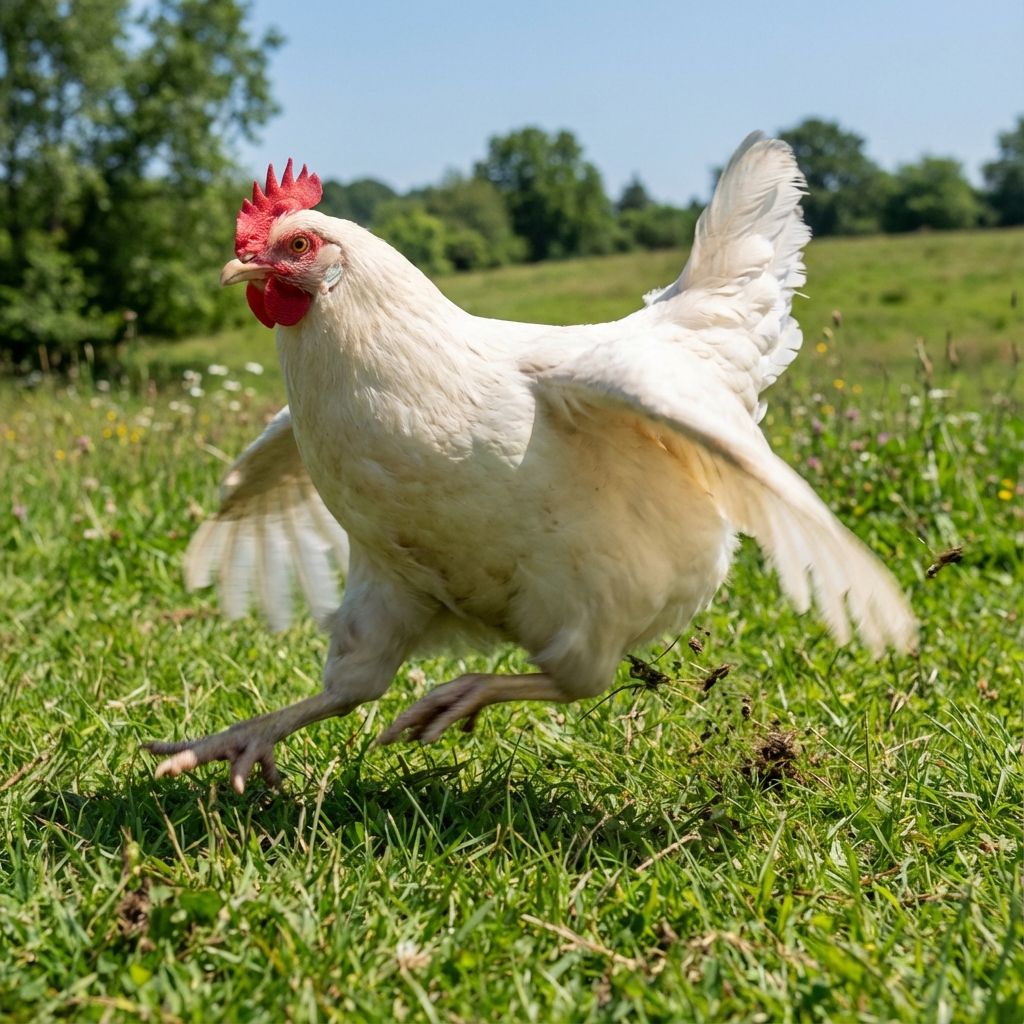
Usually, a chicken does not survive losing its head. The phrase “running around like a headless chicken” describes something different called a reflex. When a chicken dies, the nerve endings in the muscles might still have residual (leftover) energy. This can cause the legs to kick or the wings to flap wildly for a few seconds or minutes. This is not the animal trying to escape; it is an automatic reaction of the nerves sending random signals to the muscles. Without the brain to control these signals, the movement is chaotic and fast.
Read Land Animals & Water Animals here or in the app
Read every story in both shelves right here on the web, or open them in Encyclopedia: Kids Learning with narration you control. The full 1,000+ topics come with the app, covering space, the human body, history and more. Ad-free, ages 5–12.