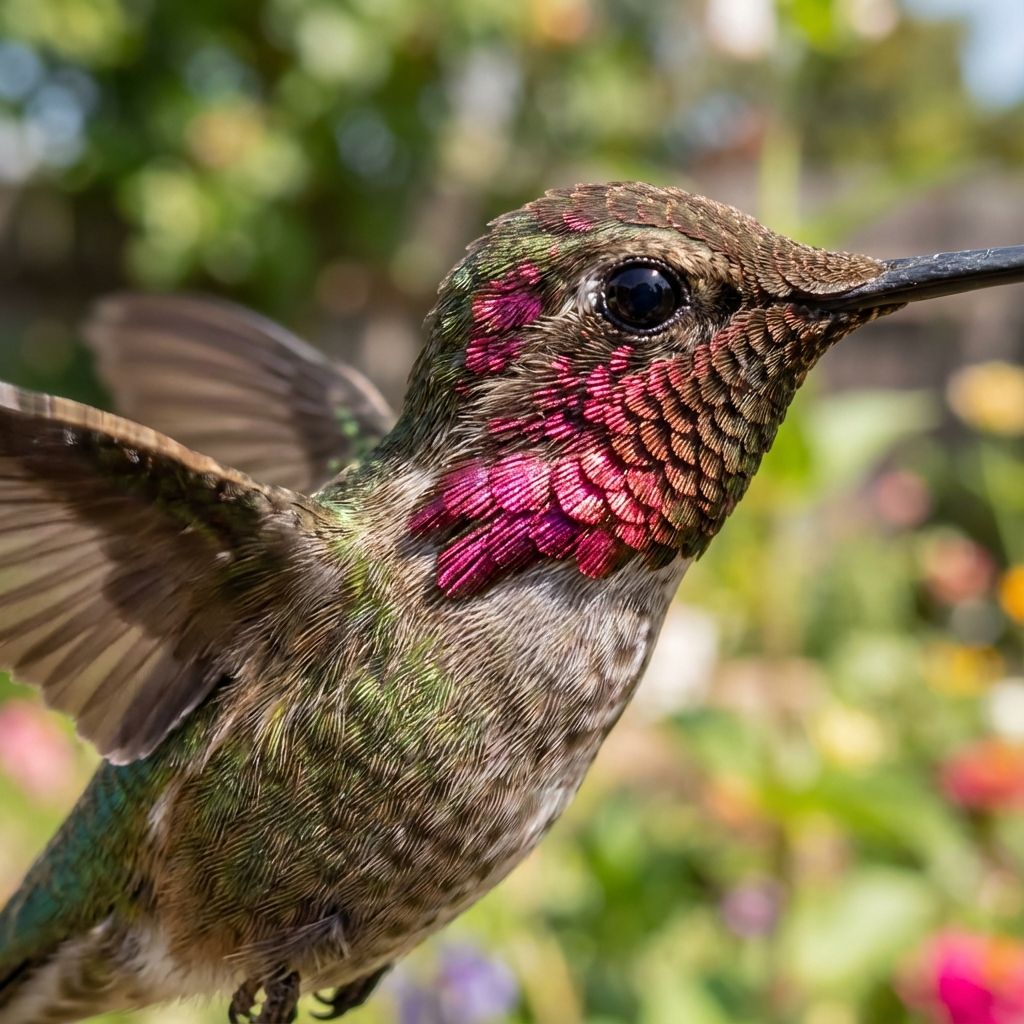
Hummingbirds: The Only Birds That Fly Backwards
Hummingbirds can rotate their wings 180 degrees and flap up to 80 times per second! This lets them hover like helicopters and fly backward - something no other bird can do.

Hummingbirds are the only birds capable of true hovering and backward flight. While other birds, such as warblers, may briefly hover to catch an insect, they cannot sustain it. The hummingbird’s ability to move in any direction—up, down, sideways, and backwards—comes from the unique structure of its wings and skeleton.
Flexible Shoulder Joints
The key to a hummingbird’s agility is its shoulder joint. Unlike other birds, which can only flap their wings up and down, a hummingbird has a ball-and-socket joint that allows the wing to rotate 180 degrees. This flexibility lets the bird flip its wings over completely.
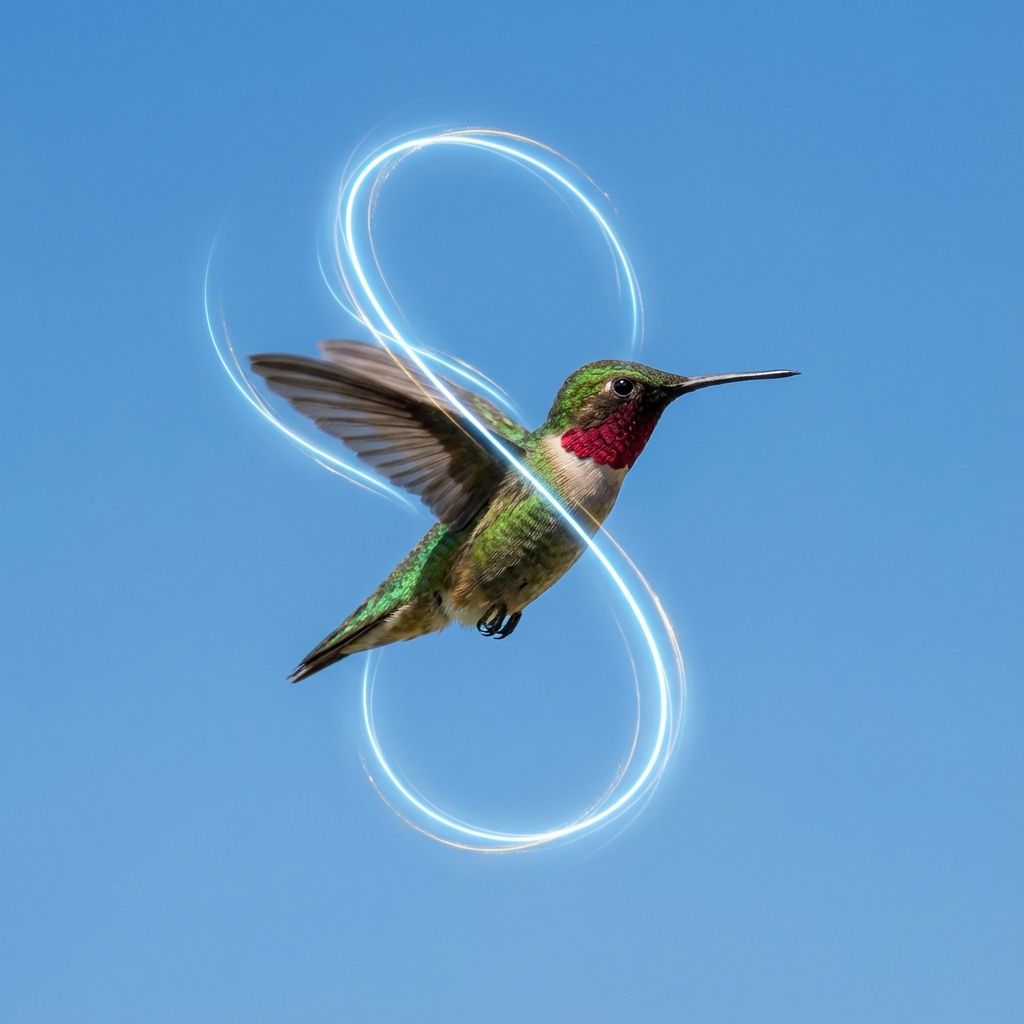
The Figure-Eight Pattern
When a hummingbird hovers or flies backward, it does not just flap up and down. Instead, it moves its wing tips in a sideways figure-eight shape. Because the wing can rotate, the bird generates lift (upward force) on both the forward stroke and the backward stroke. This provides constant support, keeping the bird steady in the air like a helicopter. Most other birds only generate lift on the downstroke, which pushes them forward.
Powerful Chest Muscles
Supporting this unique flight style requires immense strength. A hummingbird’s pectoral (chest) muscles make up about 30 percent of its total body weight. These muscles power the wings to beat between 10 and 80 times every second, depending on the species. This rapid movement creates the humming sound that gives the bird its name.
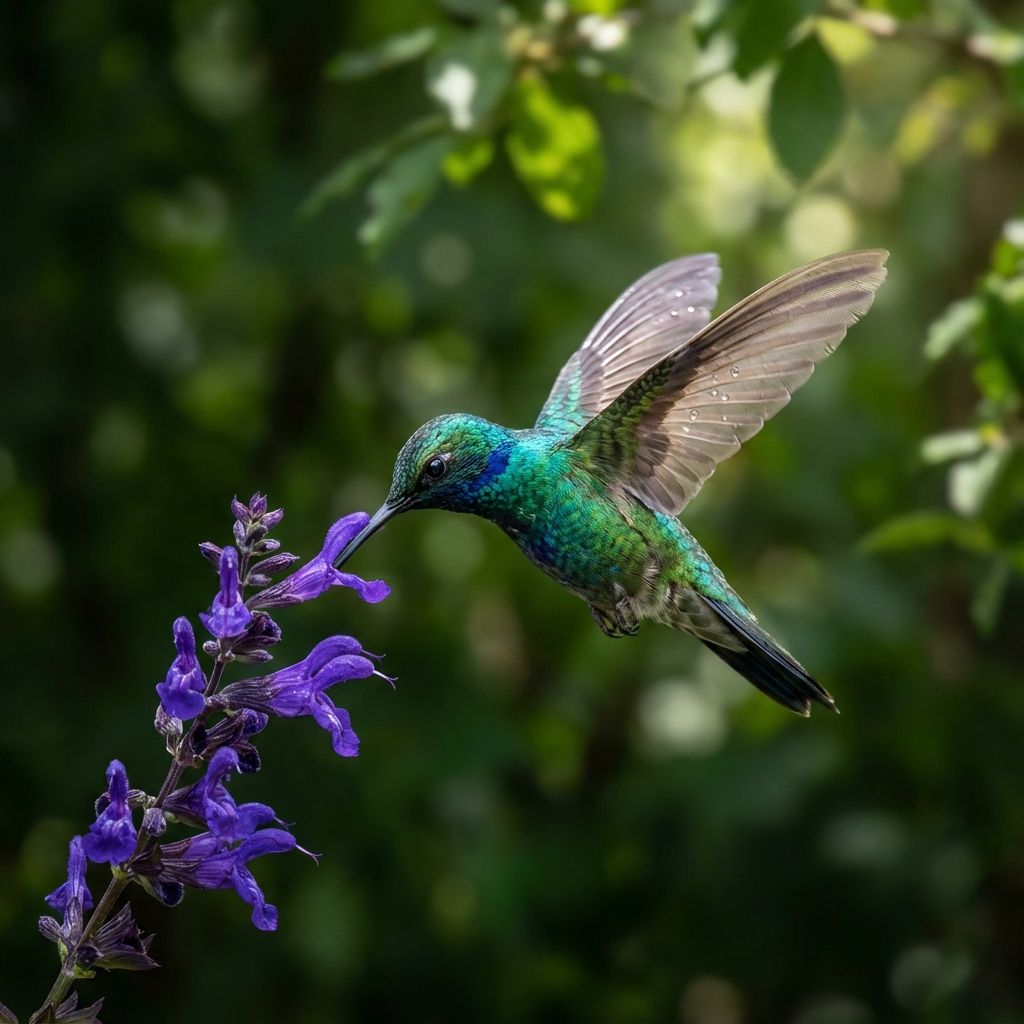
Feeding on the Fly
Backward flight is essential for the hummingbird’s survival. These birds feed on nectar found deep inside tubular flowers. They must hover in front of the flower to insert their long beaks and tongues. Once they finish drinking, they cannot simply walk backward because their legs are too weak for walking. Instead, they must fly backward to pull their beak out of the flower before flying away to the next bloom.
Read Land Animals & Water Animals here or in the app
Read every story in both shelves right here on the web, or open them in Encyclopedia: Kids Learning with narration you control. The full 1,000+ topics come with the app, covering space, the human body, history and more. Ad-free, ages 5–12.