How Vultures Eat Rotten Meat Safely
Vulture stomach acid is strong enough to dissolve metal! This lets them eat meat infected with anthrax and cholera without getting sick. Their bald heads are actually built-in hygiene systems.

Vultures act as nature’s cleanup crew. They are scavengers, which means they search for animals that have already died instead of hunting live prey. The meat they eat is often rotting and full of dangerous bacteria (germs) and toxins that would kill most other animals. Vultures survive this diet because of specialized biological tools that destroy germs before they can cause harm.
An Acid Bath
The vulture’s main defense is its stomach. While humans have strong stomach acid to digest food, a vulture’s stomach acid is nearly ten times stronger. On the pH scale, which measures acidity, vulture stomach acid is very close to zero. This is strong enough to dissolve some metals.
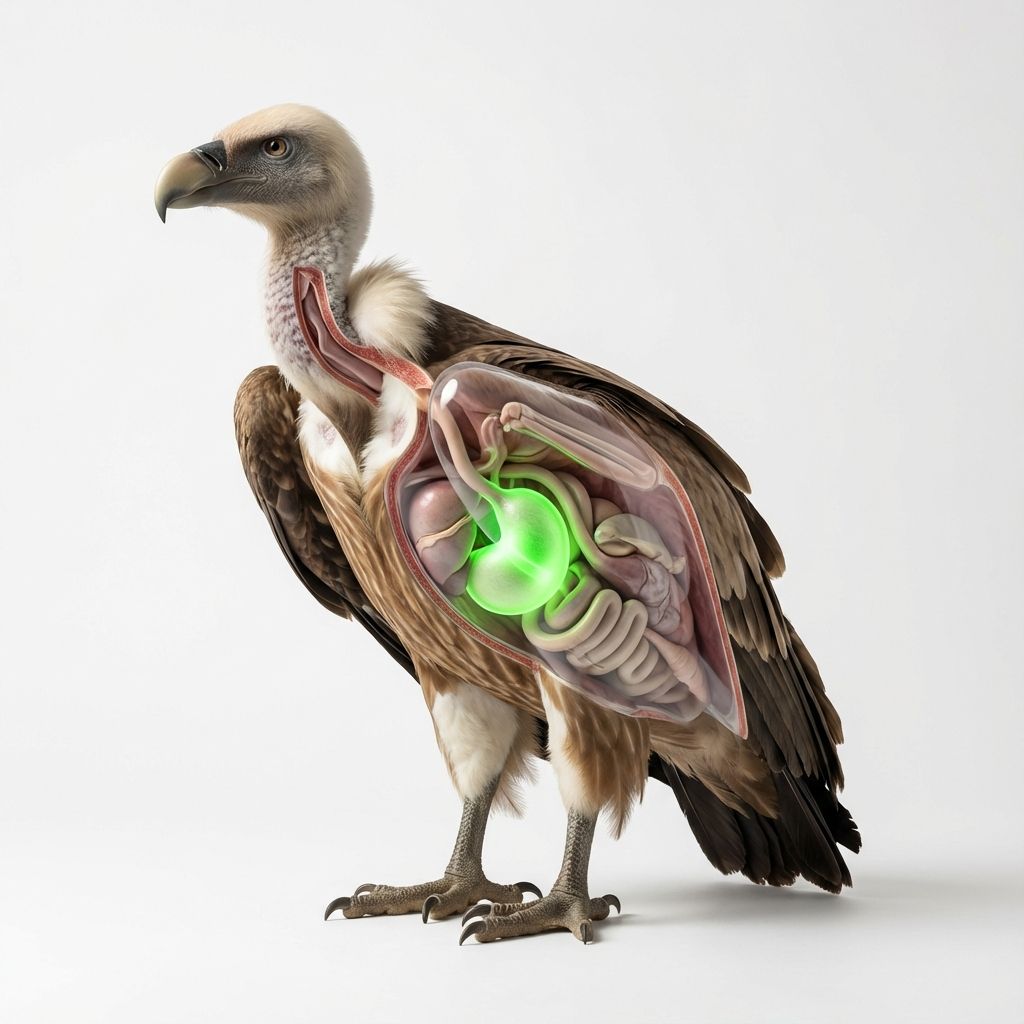
When a vulture swallows meat infected with diseases like anthrax or cholera, the acid bath in its stomach destroys the bacteria instantly. This prevents the germs from entering the bird’s bloodstream and causing sickness.
Bacterial Shields
Sometimes, very tough bacteria survive the initial acid bath. To handle this, vultures have a unique immune system and a specialized gut microbiome. The intestines are lined with helpful bacteria that act as a shield. These helpful microscopic organisms take up all the space in the gut, leaving no room for harmful germs to attach to the stomach walls or grow. Instead of getting sick, the vulture digests the bacteria as extra protein.
The Bald Head Benefit
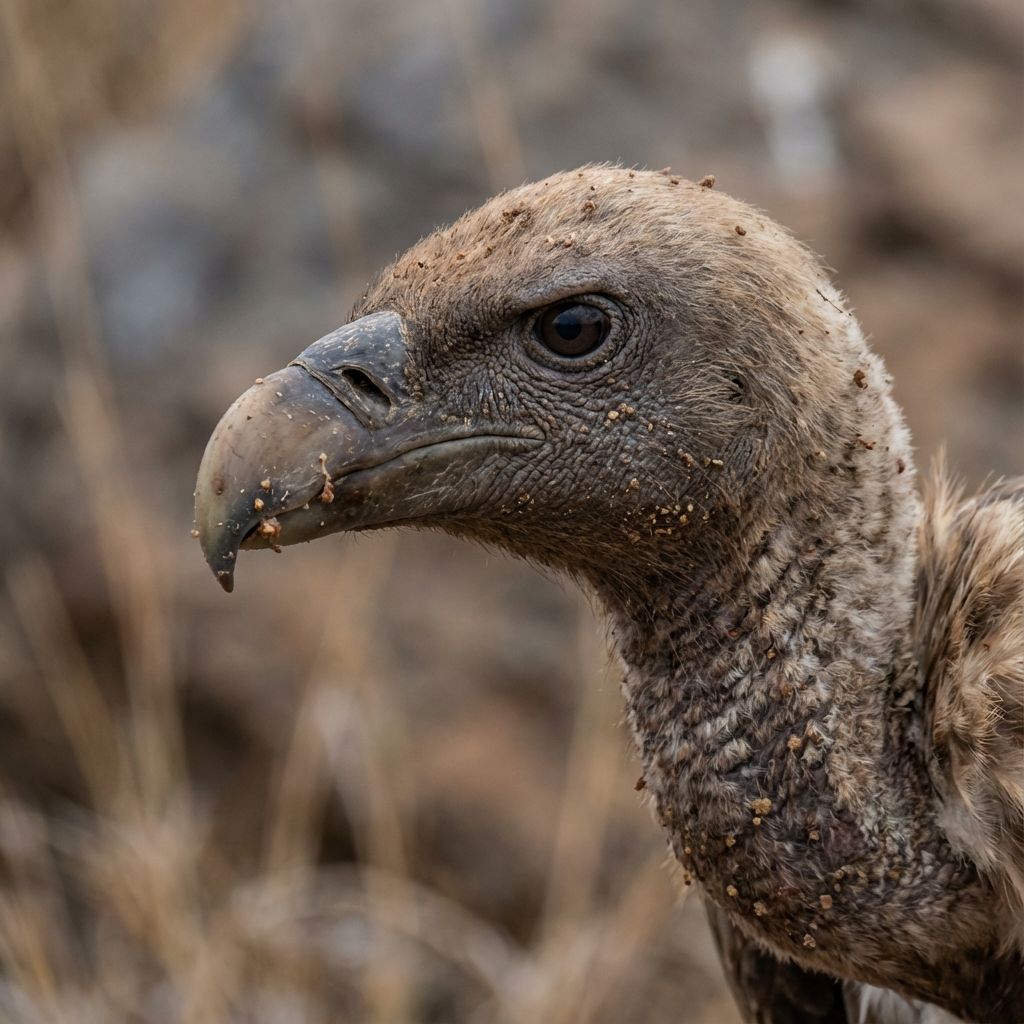
Many vultures have bald heads and necks with no feathers. This is a hygiene adaptation. When a vulture eats, it often has to reach deep inside a carcass. If the bird had feathers on its head, blood and rotting bits would get stuck and become a breeding ground for bacteria near the eyes and beak. Bare skin dries quickly in the sun, killing off surface bacteria and keeping the bird clean.
Read Land Animals & Water Animals here or in the app
Read every story in both shelves right here on the web, or open them in Encyclopedia: Kids Learning with narration you control. The full 1,000+ topics come with the app, covering space, the human body, history and more. Ad-free, ages 5–12.