How the Bald Eagle Was Saved From Extinction
In 1963, only 417 bald eagle pairs remained. Now there are 300,000! Discover how banning one chemical saved America's national bird from extinction.
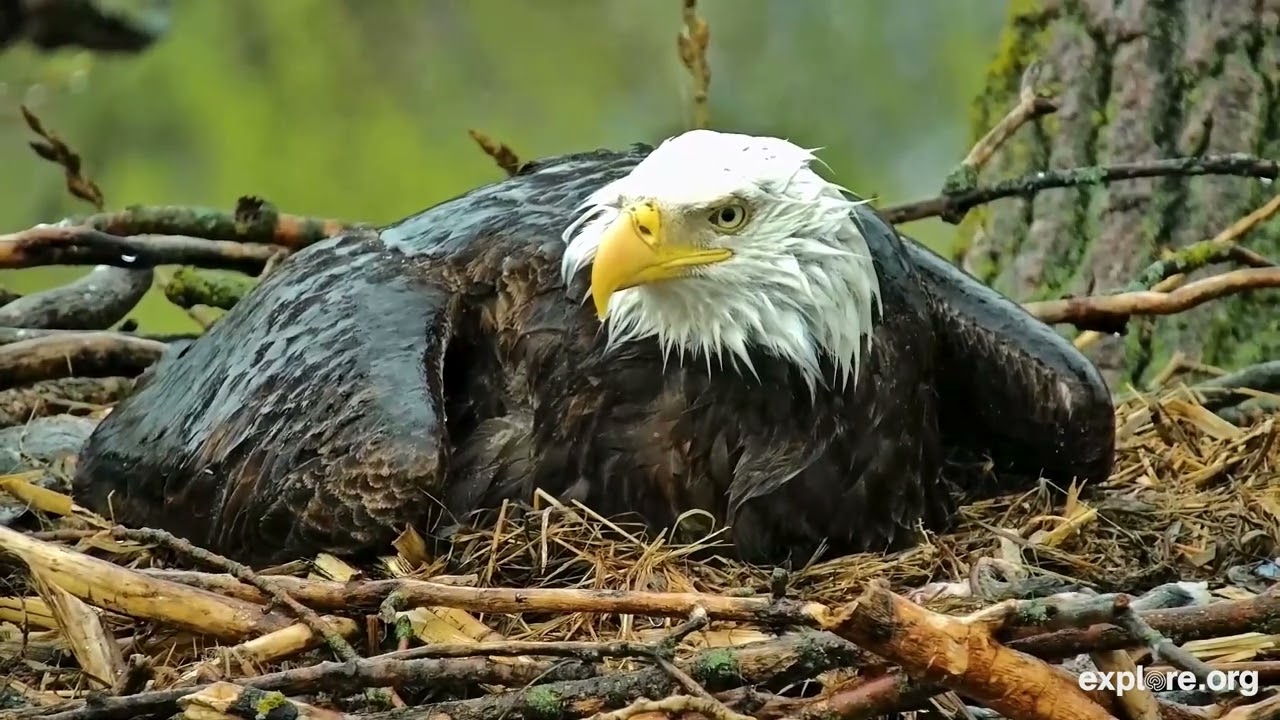
The bald eagle (Haliaeetus leucocephalus) is a large bird of prey found only in North America. Despite its name, the bird is not actually bald. Adults have a distinctive white head and tail that contrast with a dark brown body. This white plumage develops when the bird is about four or five years old. Before that, young eagles are mostly brown with white speckles. As the national bird of the United States, the bald eagle is a symbol of strength and freedom, but it nearly disappeared completely in the 20th century.
The Great Decline
In the late 1700s, an estimated 100,000 bald eagles lived in the United States. By 1963, only 417 nesting pairs remained in the lower 48 states. This rapid drop was caused by habitat loss, illegal shooting, and a chemical pesticide called DDT. Farmers used DDT to kill insects on crops. The rain washed the chemical into rivers, where it was absorbed by fish. When eagles ate the fish, the chemical built up in their bodies.
DDT did not kill adult eagles directly. Instead, it affected how they produced calcium. Female eagles laid eggs with extremely thin, fragile shells. These shells would crack under the weight of the incubating parent, preventing new chicks from hatching.
Protecting the Species
The recovery of the bald eagle is one of the biggest success stories in wildlife conservation. In 1972, the United States government banned the use of DDT. Following this, the Endangered Species Act of 1973 gave the birds special legal protection. These laws stopped hunters from harming them and protected the forests and waterways where they lived. With cleaner water and safer habitats, the population began to grow rapidly. In 2007, the bald eagle was removed from the endangered species list. Today, scientists estimate there are over 300,000 bald eagles across the country.
Nests and Hunting
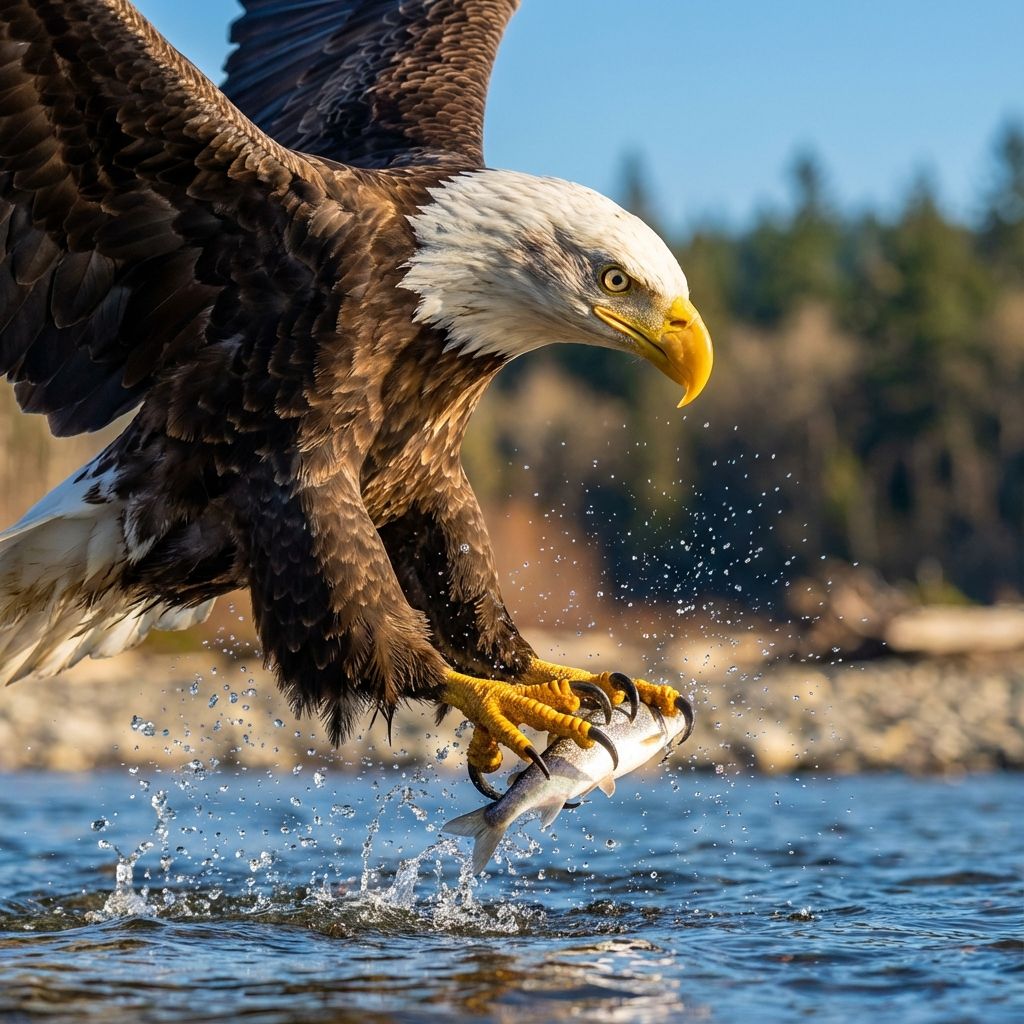
Bald eagles are powerful hunters with a wingspan of up to 8 feet (2.4 meters). They nest near lakes, rivers, and coasts because their main food source is fish. An eagle uses its sharp eyesight to spot a fish from high in the air, then swoops down to snatch it from the water with strong, curved claws called talons.
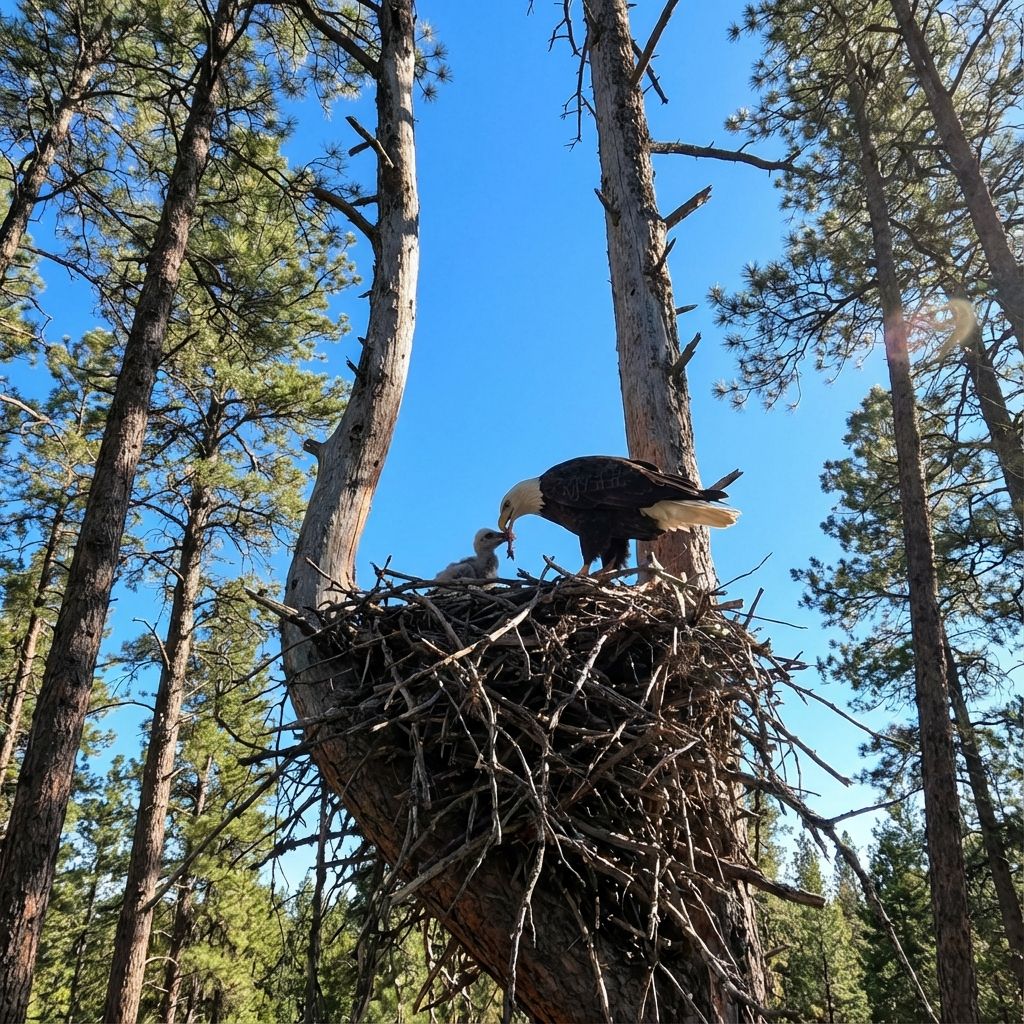
These birds build the largest nests of any North American bird. They construct massive platforms of sticks high in sturdy trees. Eagles often return to the same nest year after year, adding new sticks each time. Some nests can grow to weigh more than 2,000 pounds (900 kilograms) and measure 10 feet (3 meters) wide.
Read Land Animals & Water Animals here or in the app
Read every story in both shelves right here on the web, or open them in Encyclopedia: Kids Learning with narration you control. The full 1,000+ topics come with the app, covering space, the human body, history and more. Ad-free, ages 5–12.