How Geckos Walk on Ceilings
Geckos have millions of microscopic hairs on their toes that let them walk on ceilings! When grabbed by a predator, they can snap off their own tails - which keep wiggling to distract the attacker.

Most lizards cannot climb smooth surfaces like glass, but geckos can run up walls and hang upside down from ceilings. They also have a unique defense trick called autotomy, which allows them to detach their own tails to escape danger.
Sticky Toes and Setae
Geckos do not use glue or suction cups to stick to surfaces. Their ability to climb comes from the unique design of their toes. The bottom of a gecko’s toe is covered with ridges called lamellae. These ridges are covered in millions of microscopic hairs called setae (SEE-tee).
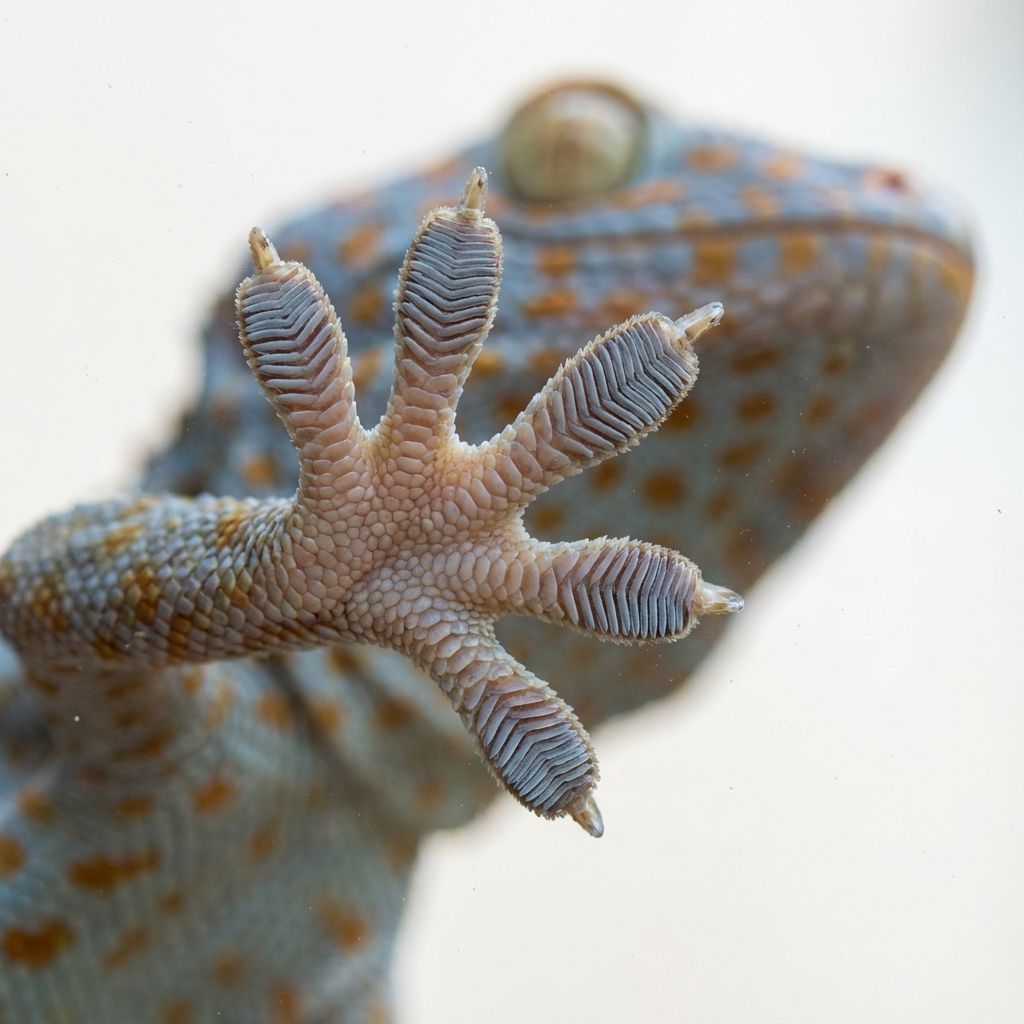
At the tip of each seta, the hair splits into hundreds of even smaller strands called spatulae. These tips are so tiny that they interact with the molecules of the wall or ceiling. A weak electrical force, known as Van der Waals force, creates an attraction between the gecko’s hair and the surface. While the force from one hair is weak, the combined force of millions of hairs creates a grip strong enough to hold the gecko’s entire weight.
Detaching the Tail
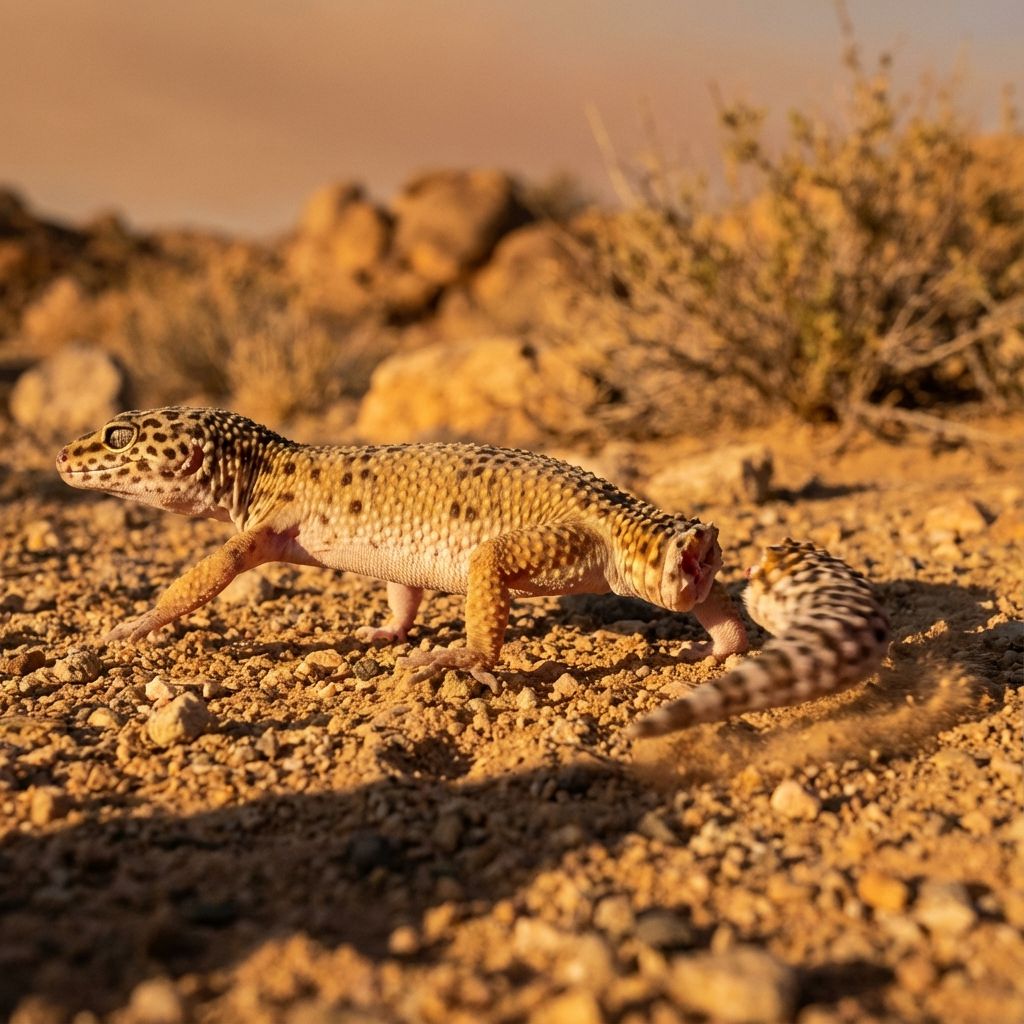
Geckos have many predators, including birds, snakes, and larger lizards. If a predator grabs a gecko by the tail, the gecko can instantly drop it. This process is called autotomy.
The tail has special “fracture planes” or weak spots in the vertebrae (backbones). Muscles around the weak spot contract powerfully to snap the bone and seal the blood vessels instantly. This prevents the gecko from losing blood. The detached tail continues to wiggle and thrash on the ground for several minutes. This movement distracts the predator, giving the gecko time to scurry away to safety.
Regrowth and Recovery
Losing a tail is stressful because the gecko loses a place where it stores fat for energy. However, the tail usually grows back over several weeks. The new tail is often shorter, smoother, and a different color than the original. Instead of growing new bone, the gecko grows a tube of cartilage to support the new tail. Once regrown, the tail can be dropped again if necessary, but usually only at a point higher up than the first break.
Read Land Animals & Water Animals here or in the app
Read every story in both shelves right here on the web, or open them in Encyclopedia: Kids Learning with narration you control. The full 1,000+ topics come with the app, covering space, the human body, history and more. Ad-free, ages 5–12.