How Fast Can a Peregrine Falcon Dive?
At over 200 mph in a dive, the peregrine falcon is faster than most race cars! Special nose bumps let it breathe at these speeds, and built-in 'goggles' protect its eyes.

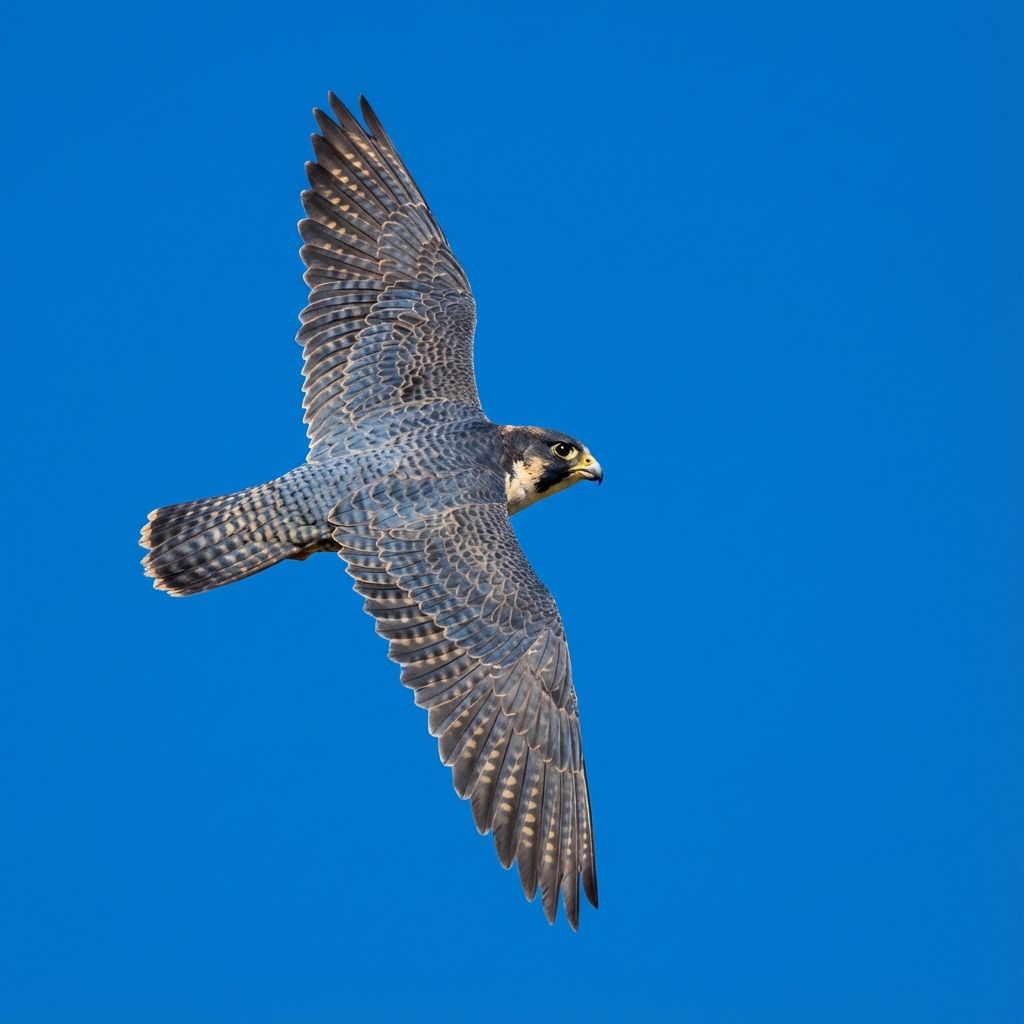
The peregrine falcon is the fastest member of the animal kingdom. While it flies at a normal cruising speed of about 30 to 60 miles (48 to 97 kilometers) per hour, it transforms completely when it hunts. To catch other birds in mid-air, the falcon performs a special high-speed dive called a “stoop.” During this dive, the bird tucks its wings tight against its body and drops from high in the sky.
In a stoop, the peregrine falcon can reach speeds over 200 miles (320 kilometers) per hour. This makes it significantly faster than a cheetah, which runs at about 70 miles (112 kilometers) per hour on land, and faster than many race cars.
Built for Speed
The falcon’s body has unique adaptations (special physical features) that allow it to survive these extreme speeds. Its pointed wings and stiff feathers reduce drag from the wind. However, rushing air at 200 mph can make it difficult to breathe. To solve this, the falcon has small bony bumps inside its nostrils. These act as baffles (walls that control airflow) to slow down the air entering the nose, allowing the bird to breathe safely during a dive.
Its eyes also need protection from the wind. A clear third eyelid, called a nictitating membrane, acts like built-in goggles. It slides across the eye to keep it moist and clear of debris while the falcon maintains perfect focus on its target.
The Strike
The peregrine falcon hunts medium-sized birds, such as pigeons, ducks, and songbirds. It usually spots prey from high above or a tall perch. Once it reaches maximum speed in its dive, the falcon does not grab the prey with its claws immediately. Instead, it strikes the bird with a closed foot, hitting it with the force of a heavy object. This impact usually stuns or kills the prey instantly. The falcon then circles back to catch the falling bird before it hits the ground.
Read Land Animals & Water Animals here or in the app
Read every story in both shelves right here on the web, or open them in Encyclopedia: Kids Learning with narration you control. The full 1,000+ topics come with the app, covering space, the human body, history and more. Ad-free, ages 5–12.