Hippos
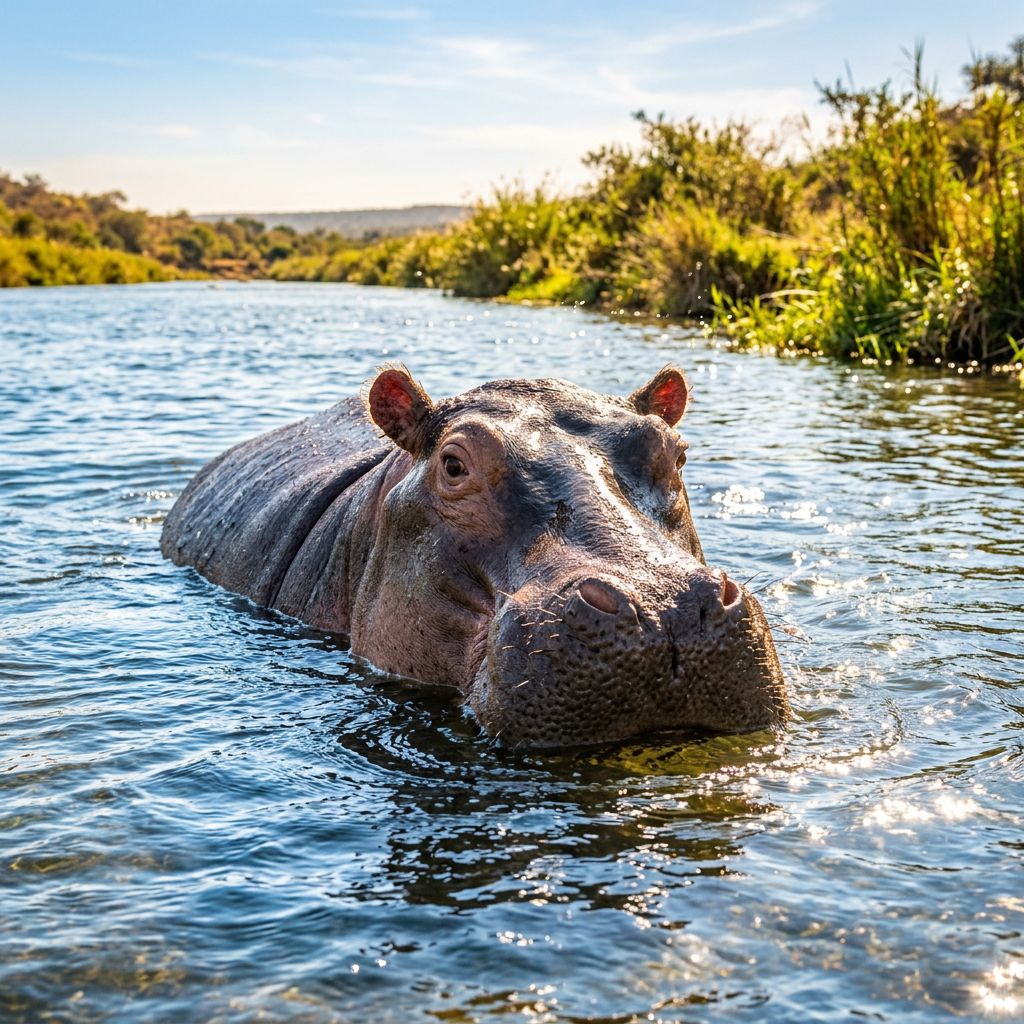
Despite living in rivers, heavy-boned hippos cannot swim and must walk or run along the riverbed. To protect themselves from the sun, they ooze a special pink liquid that acts as sunscreen.

Heavyweight Runners
A hippopotamus weighs up to 8,000 pounds, but it can outrun a human on land. Despite their round, soft appearance, hippos are among the most aggressive land mammals on Earth. They spend up to 16 hours a day lounging in rivers and lakes to keep their massive bodies cool. But do not let the lazy floating fool you. If a hippo is threatened on land, it can charge at speeds of 20 miles per hour (32 kilometers per hour).
Walking Under Water
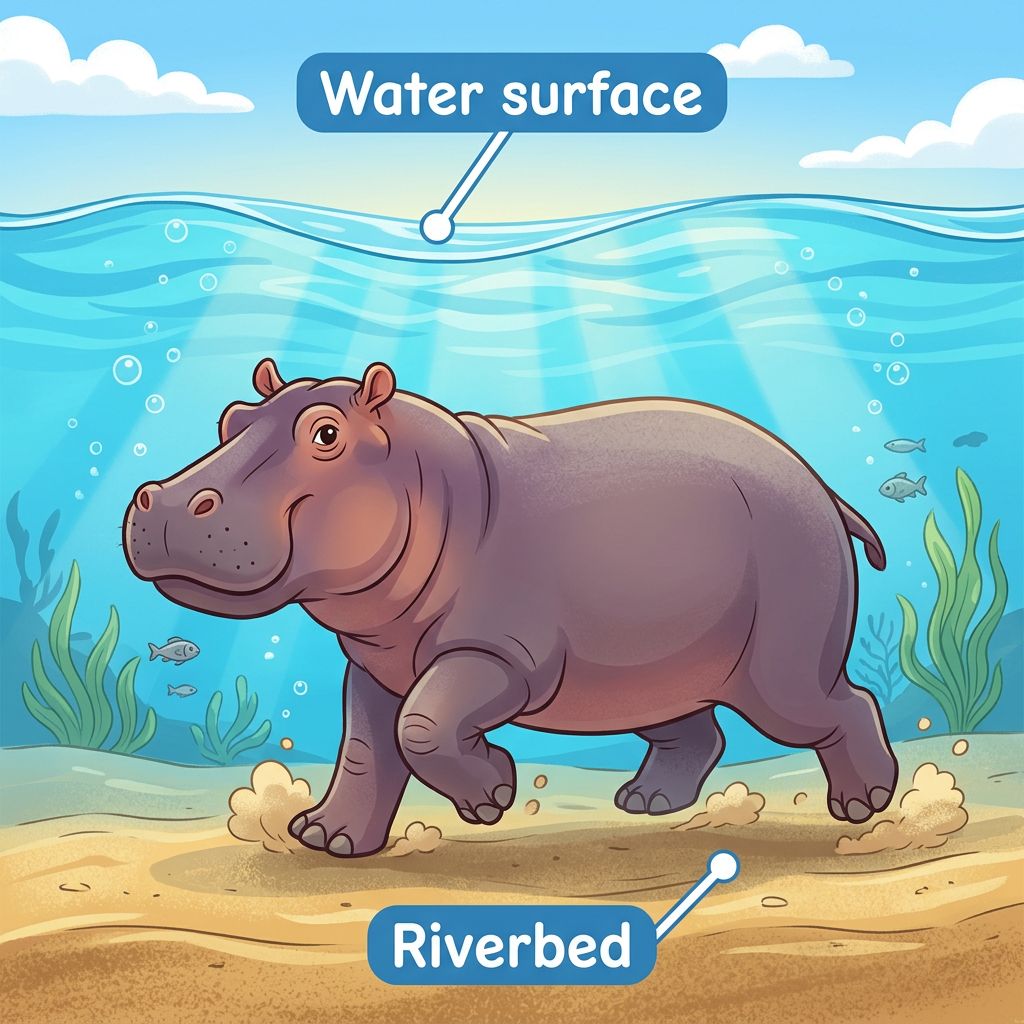
Although they spend most of their lives in water, hippos cannot swim. Their bones are too heavy and dense to float. Instead, they sink directly to the bottom and walk, jog, or bounce along the riverbed. They can hold their breath for up to five minutes, using a built-in physical reflex that automatically closes their nostrils and ears the moment they submerge. Even baby hippos are born underwater and must push off the muddy bottom to surface for their very first breath of air.
Pink Sunscreen and Giant Tusks
Spending all day under the blazing African sun requires serious skin protection. Hippos do not have fur, so they produce their own custom lotion. They secrete a reddish-pink oily liquid from their skin. For a long time, explorers thought hippos sweat actual blood. This liquid is a combination of sunscreen, moisturizer, and antibiotic (medicine that kills germs). It blocks harmful sun rays, prevents infections, and keeps their skin from cracking in the dry heat.
When a hippo opens its mouth wide, it is not yawning because it is sleepy. It is flashing a threat. A hippo can open its jaw at a massive 150-degree angle, showing off tusks that can grow up to 1.5 feet (45 centimeters) long. These self-sharpening teeth are never used for eating plants. Instead, they are deadly weapons used to slice through territorial rivals or fight off crocodiles.
Read Land Animals & Water Animals here or in the app
Read every story in both shelves right here on the web, or open them in Encyclopedia: Kids Learning with narration you control. The full 1,000+ topics come with the app, covering space, the human body, history and more. Ad-free, ages 5–12.