Deer & Moose
Giant moose can dive twenty feet deep underwater to munch on weeds, while white-tailed deer can jump over an eight-foot ceiling. Their bone antlers grow up to an inch every day!

The Heavyweights of the Woods
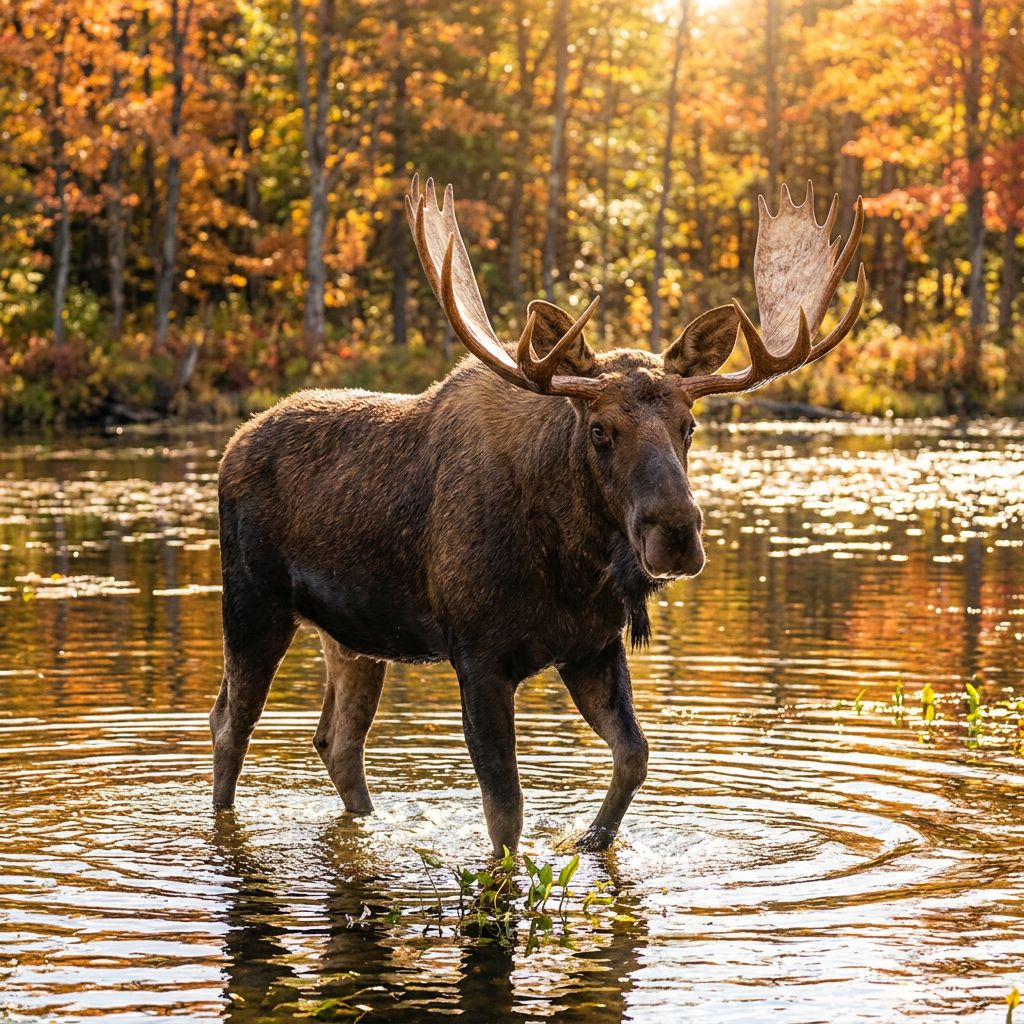
A full-grown male moose stands seven feet tall at the shoulder. That is taller than most professional basketball players, and that does not even include their massive head or antlers. Moose are the largest members of the deer family. While a common white-tailed deer weighs about as much as two adult humans, a giant Alaskan moose can weigh up to 1,600 pounds—comparable to eight adult men.
Fast-Growing Bone Helmets
Only male deer and moose grow antlers, and they do it every single year. Antlers are made of solid bone, and during the spring, they grow faster than any other mammal bone on Earth—up to an inch a day. While growing, the antlers are wrapped in a fuzzy, skin-like coating called velvet, which delivers blood and nutrients to the growing bone. By autumn, the bone hardens, the velvet peels off, and males use their new headgear to clash with rivals. Once winter arrives, the antlers fall off entirely, leaving the animals lightweight for the snowy season.
Deep-Sea Divers and High Jumpers

Moose have a secret superpower: they are powerful swimmers. They can dive 20 feet deep to munch on weeds at the bottom of lakes, holding their breath for nearly a minute. Their nostrils act like valves, clamping shut automatically when they submerge to keep water out of their lungs.
Smaller deer species rely on extreme agility to survive. A white-tailed deer can clear an eight-foot fence—higher than a standard residential ceiling—in a single leap. They can sprint at 35 miles per hour and make sharp, zigzag turns to escape predators. To spot danger early, a deer’s eyes are positioned on the sides of its head, giving it a 310-degree view. This allows them to watch the forest behind them while keeping their nose to the ground to graze.
Read Land Animals & Water Animals here or in the app
Read every story in both shelves right here on the web, or open them in Encyclopedia: Kids Learning with narration you control. The full 1,000+ topics come with the app, covering space, the human body, history and more. Ad-free, ages 5–12.