Camels
A camel's hump is packed with fat that flops over when empty, and they can drink a whole bathtub of water in just thirteen minutes! They even have three eyelids to block out flying sand.
The Fat Tanks
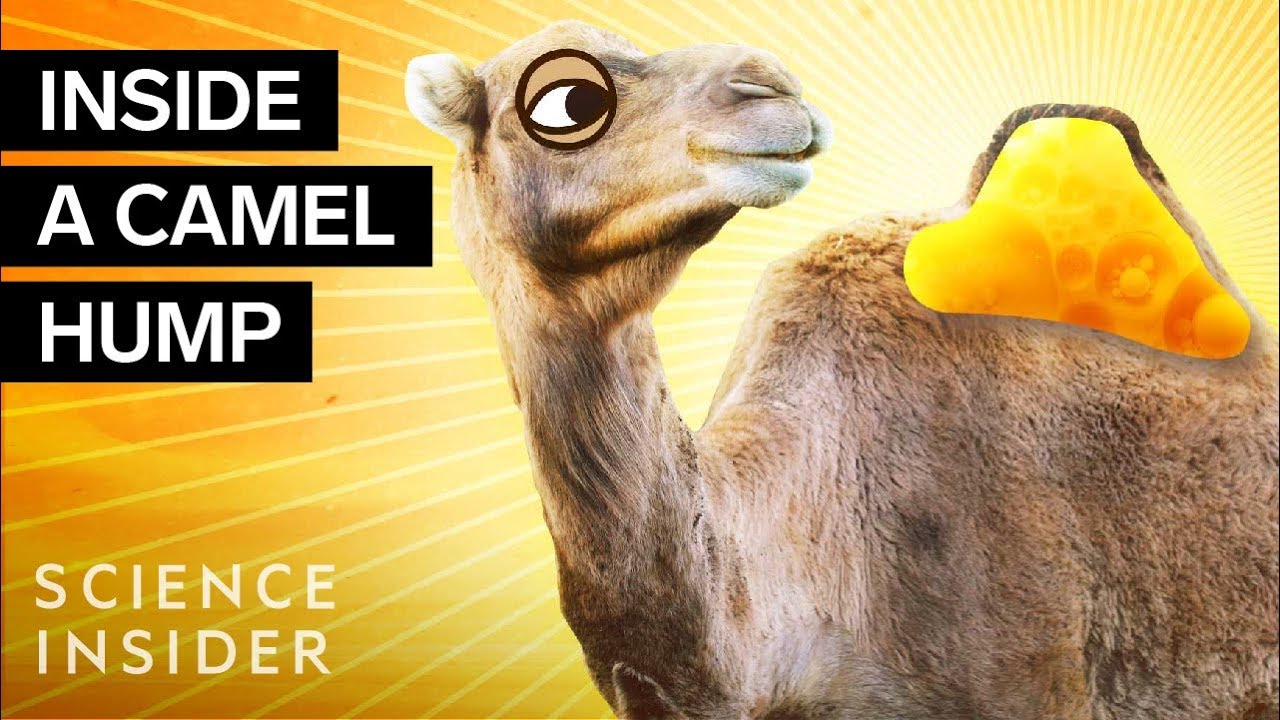
If you sliced open a camel’s hump, you would not find a single drop of water. Instead, you would find up to 80 pounds (36 kilograms) of pure fat. This hump is a built-in energy backpack. By concentrating all their body fat in one spot, camels avoid trapping heat around their organs, helping them stay cooler in the baking desert sun. When a camel goes weeks without food, its hump shrinks and flops over to one side like an empty balloon. Once the animal eats and rests, the hump pumps back up to its solid, standing position.
Desert Super-Suits
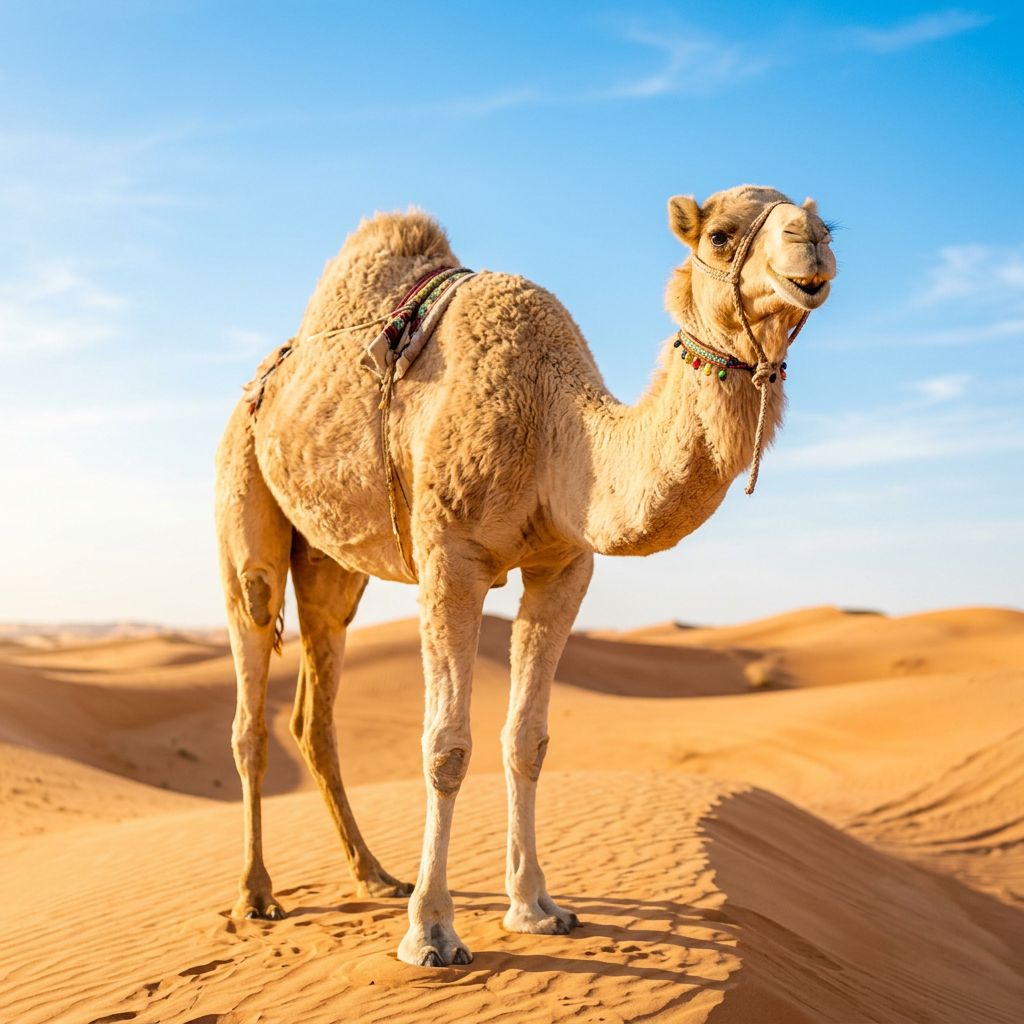
Walking through a sandstorm is like walking into a leaf blower filled with sandpaper. To survive, camels come equipped with built-in safety gear. They have three eyelids on each eye. Two have long, thick eyelashes that act like protective cages, while the third is a thin, see-through membrane (a protective layer of skin) that sweeps across the eyeball like a windshield wiper to clear away dust. Their nostrils can pinch completely shut to block out swirling sand. Down below, their feet are not hard hooves, but wide, leathery pads that stretch out when they step, acting like snowshoes to keep them from sinking into the loose desert dunes. They can even snack on cactus thorns that would pierce human shoe leather, thanks to a tough, rubbery lining inside their mouths.
Extreme Thermostats
Camels do not waste a single drop of moisture. While humans start sweating when their temperature rises slightly, a camel’s internal temperature can swing by 11 degrees Fahrenheit (6 degrees Celsius) before it lets out a single sweat drop. When they do find water, they drink with unmatched speed, gulping down 30 gallons (113 liters) of water in just 13 minutes—enough to fill a bathtub. Their red blood cells are oval-shaped rather than round, which allows them to swell to double their normal size without bursting as they hydrate. These survival tricks were not invented in the desert. Fossil evidence shows that the earliest ancestors of camels lived in the freezing Arctic millions of years ago, where their wide feet and fatty humps first evolved to help them navigate snow and survive dark, foodless winters.
Read Land Animals & Water Animals here or in the app
Read every story in both shelves right here on the web, or open them in Encyclopedia: Kids Learning with narration you control. The full 1,000+ topics come with the app, covering space, the human body, history and more. Ad-free, ages 5–12.