Why Penguins Swim Instead of Fly
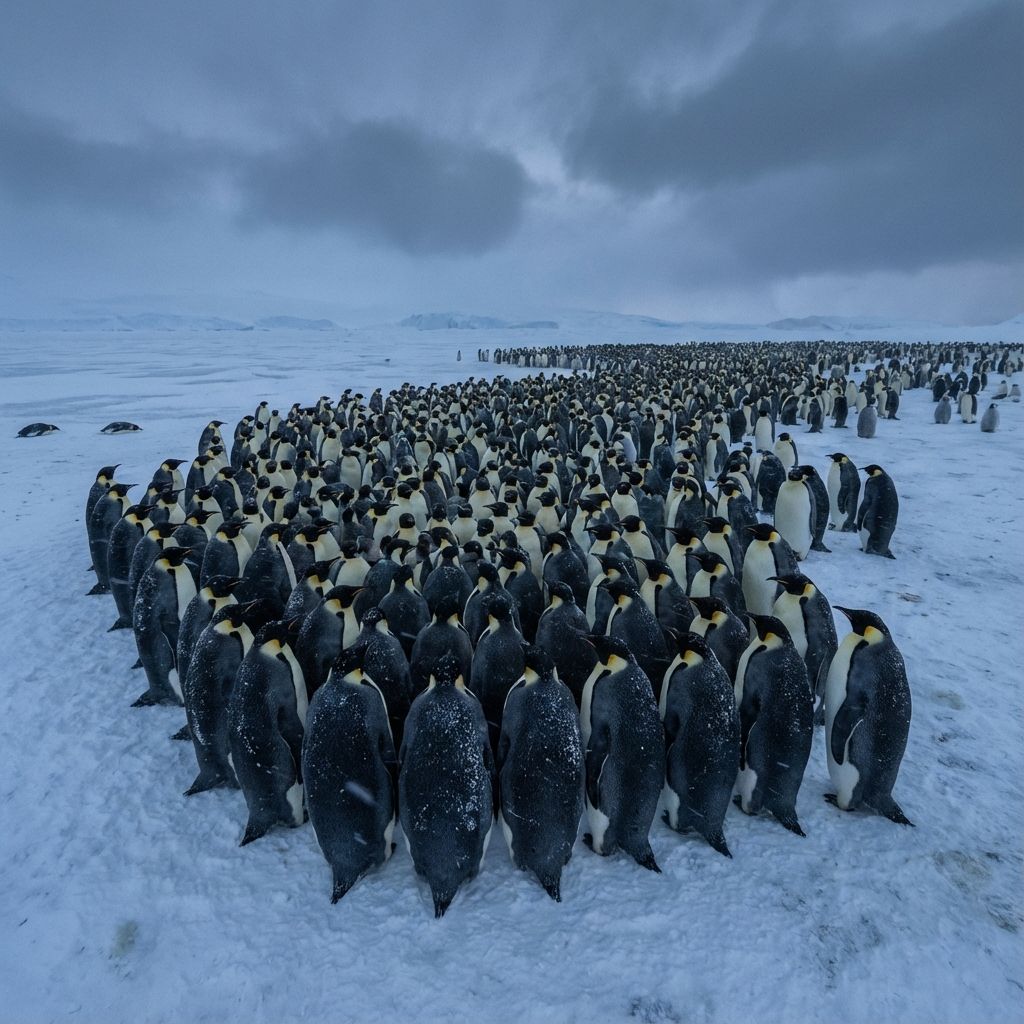
Penguin ancestors could fly, but evolution made their bones heavier and fused their wings into flippers! Now they 'fly' underwater at 22 mph instead of through the air.

Millions of years ago, the ancestors of modern penguins could fly through the air just like seagulls or puffins. Over time, these birds began spending more time in the ocean to catch fish. Evolution slowly changed their bodies to become efficient swimmers, but this meant losing the ability to fly in the sky.
Heavier Bones
Most birds have hollow bones. This makes them light enough to lift off the ground. Penguins evolved in the opposite direction. They developed solid, heavy bones. In the water, heavy bones act like a diver’s weight belt. This extra weight, or ballast, helps the penguin sink and stay underwater without struggling against the upward push of the water (buoyancy). This allows them to dive deep in search of krill and squid.
Wings into Flippers
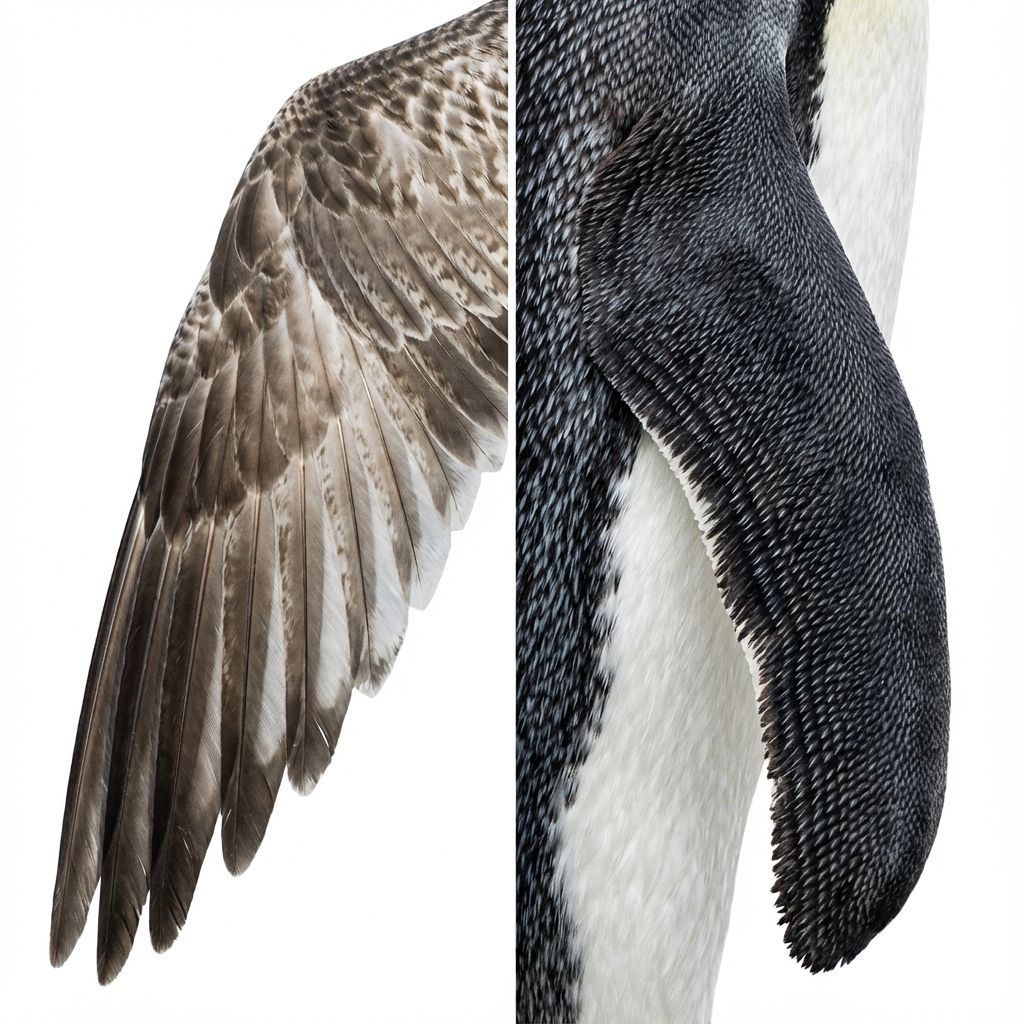
Flying in air and swimming in water require very different tools. Air is thin, so wings need to be large and flexible to push against it. Water is much thicker and heavier than air. To move through water at high speeds, penguins developed short, stiff wings called flippers.
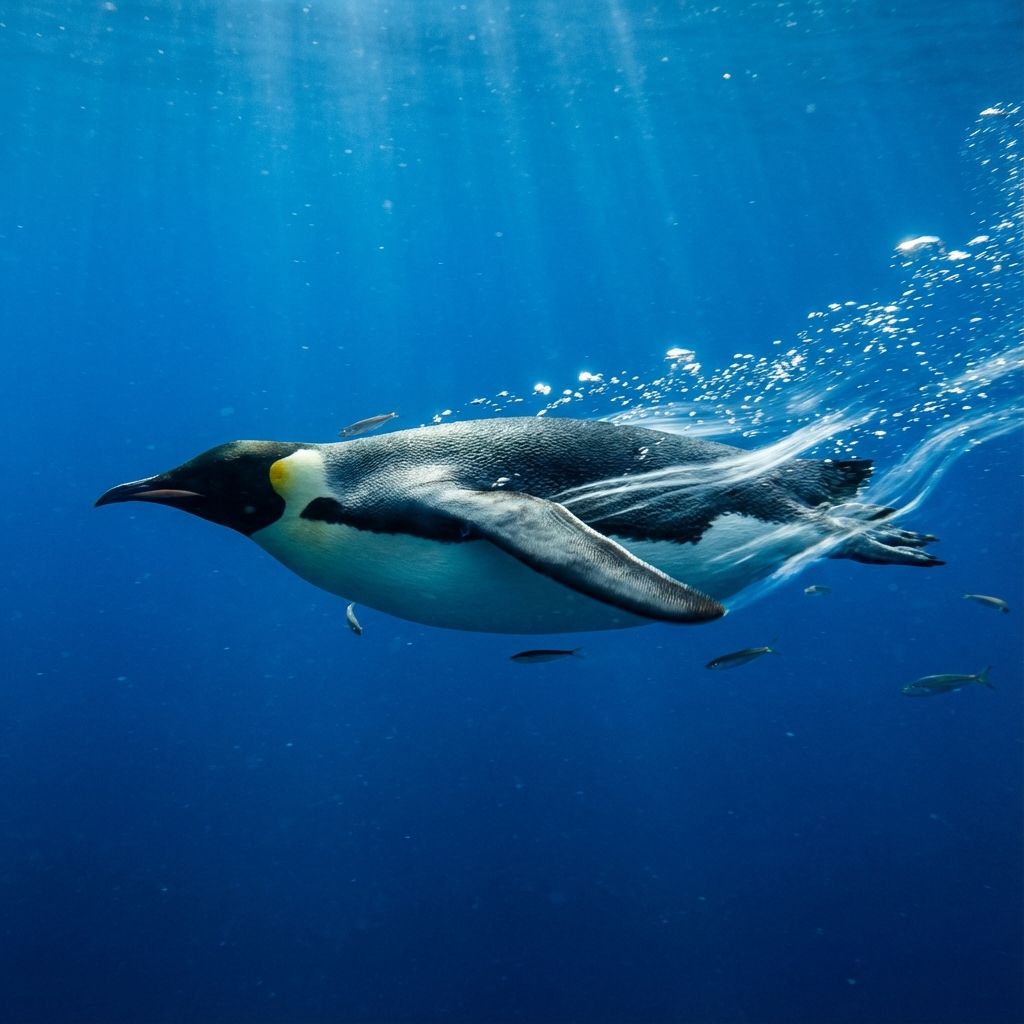
The joints in a penguin’s wing fused together so they cannot fold like other birds. Their feathers turned into tiny, scale-like layers that make the body smooth and waterproof. When a penguin swims, it flaps its flippers in a motion similar to flying. This underwater flight propels species like the Gentoo penguin at speeds up to 22 miles per hour (35 kilometers per hour).
The Energy Problem
Scientists discovered that birds cannot be excellent at both flying and swimming. A bird that dives well needs a heavy body and small wings, but a bird that flies well needs a light body and huge wings. Trying to do both takes too much energy. As penguins found more food in the rich Antarctic oceans, their bodies specialized entirely for life in the water.
Read Land Animals & Water Animals here or in the app
Read every story in both shelves right here on the web, or open them in Encyclopedia: Kids Learning with narration you control. The full 1,000+ topics come with the app, covering space, the human body, history and more. Ad-free, ages 5–12.