Why Don't Axolotls Ever Grow Up?
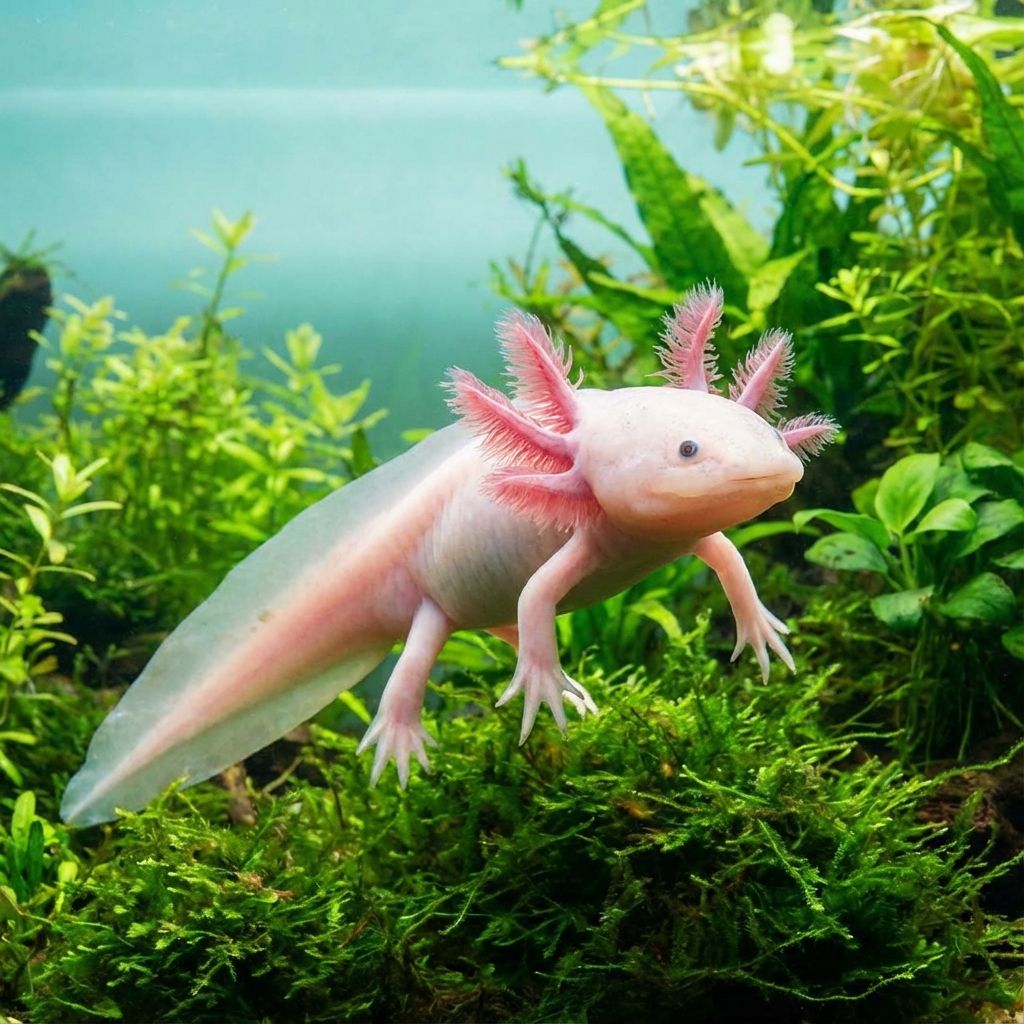
Axolotls are the Peter Pans of the animal world - they never grow up! They keep their baby gills forever and can regrow lost legs, tails, and even parts of their brain.

The axolotl is a type of salamander found only in a small system of canals and lakes in Mexico City, specifically Lake Xochimilco. While it is often called a “Mexican walking fish,” it is actually an amphibian. Unlike other amphibians, the axolotl rarely leaves the water. It spends its entire life in the larval (young) stage, a condition scientists call neoteny.
The Peter Pan of the Water
Most amphibians, such as frogs and other salamanders, go through a process called metamorphosis. They start as eggs, hatch into water-dwelling larvae (like tadpoles) with gills, and eventually change their body shape to become air-breathing adults that live on land. The axolotl does not follow this path. Due to a lack of a specific hormone (a chemical messenger in the body), the axolotl never triggers the change into an adult land animal. Instead, it grows larger but keeps its youthful features permanently.
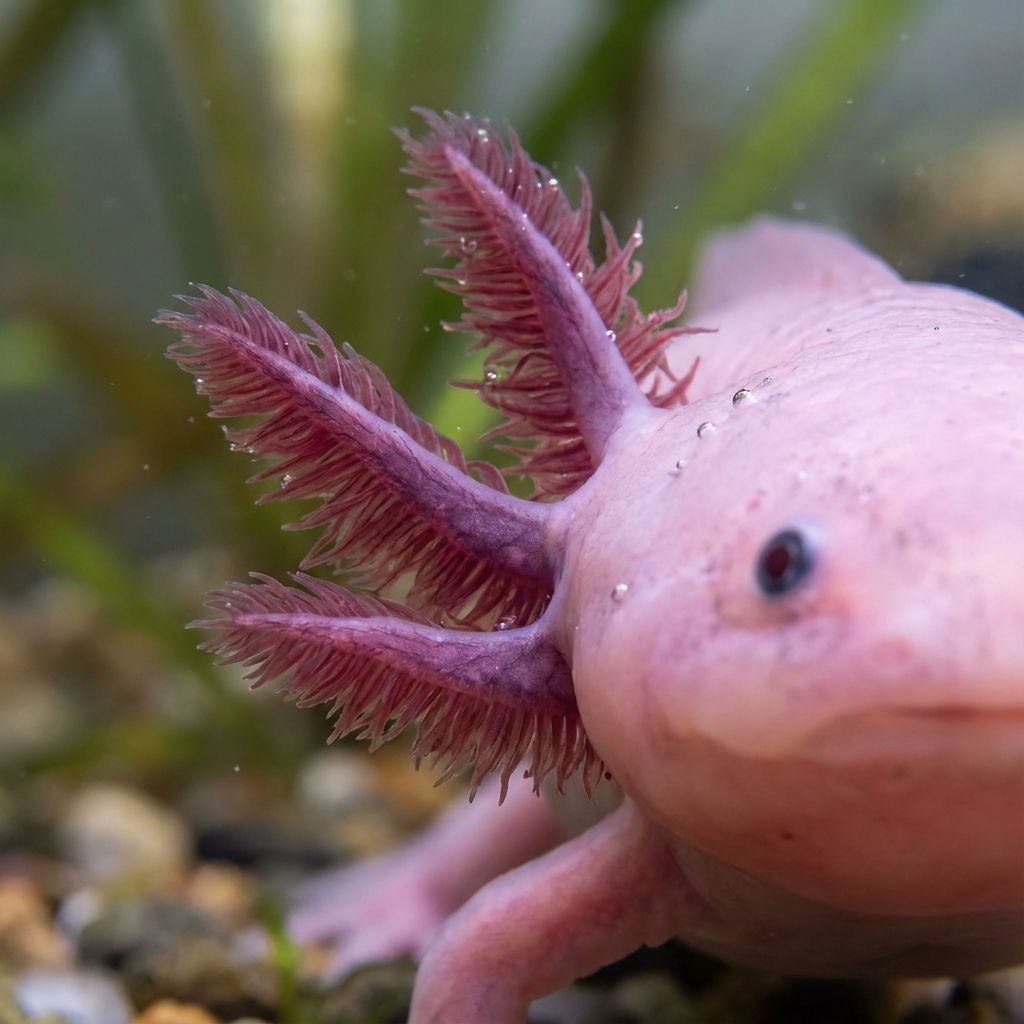
Feathery Gills and Breathing
The most noticeable sign that an axolotl is still in its larval form is the set of six feathery stalks sticking out from the sides of its head. These are external gills. While fish have gills inside their bodies, the axolotl wears them on the outside to catch oxygen from the water. They also have primitive lungs, so they occasionally swim to the surface to gulp a breath of air. This combination allows them to survive in water with low oxygen levels.
Walking Underwater
Even though they stay underwater, axolotls develop legs and feet. They have four short limbs that they use to crawl along the muddy bottom of the lake. They are also strong swimmers, using their long, paddle-like tails to propel themselves through the water.
Regeneration Skills
Axolotls are famous for their ability to regenerate (regrow) body parts. If an axolotl loses a leg, tail, or even parts of its heart or brain, it can grow them back perfectly without leaving a scar. Scientists study axolotls to understand how this healing works, hoping it might one day help human medicine.
Read Land Animals & Water Animals here or in the app
Read every story in both shelves right here on the web, or open them in Encyclopedia: Kids Learning with narration you control. The full 1,000+ topics come with the app, covering space, the human body, history and more. Ad-free, ages 5–12.