Why Do Sperm Whales Sleep Standing Up?
Sperm whales sleep standing straight up in the water! They take 15-minute power naps while holding their breath, making them the least sleep-dependent mammals on Earth.

Drifting in the Deep
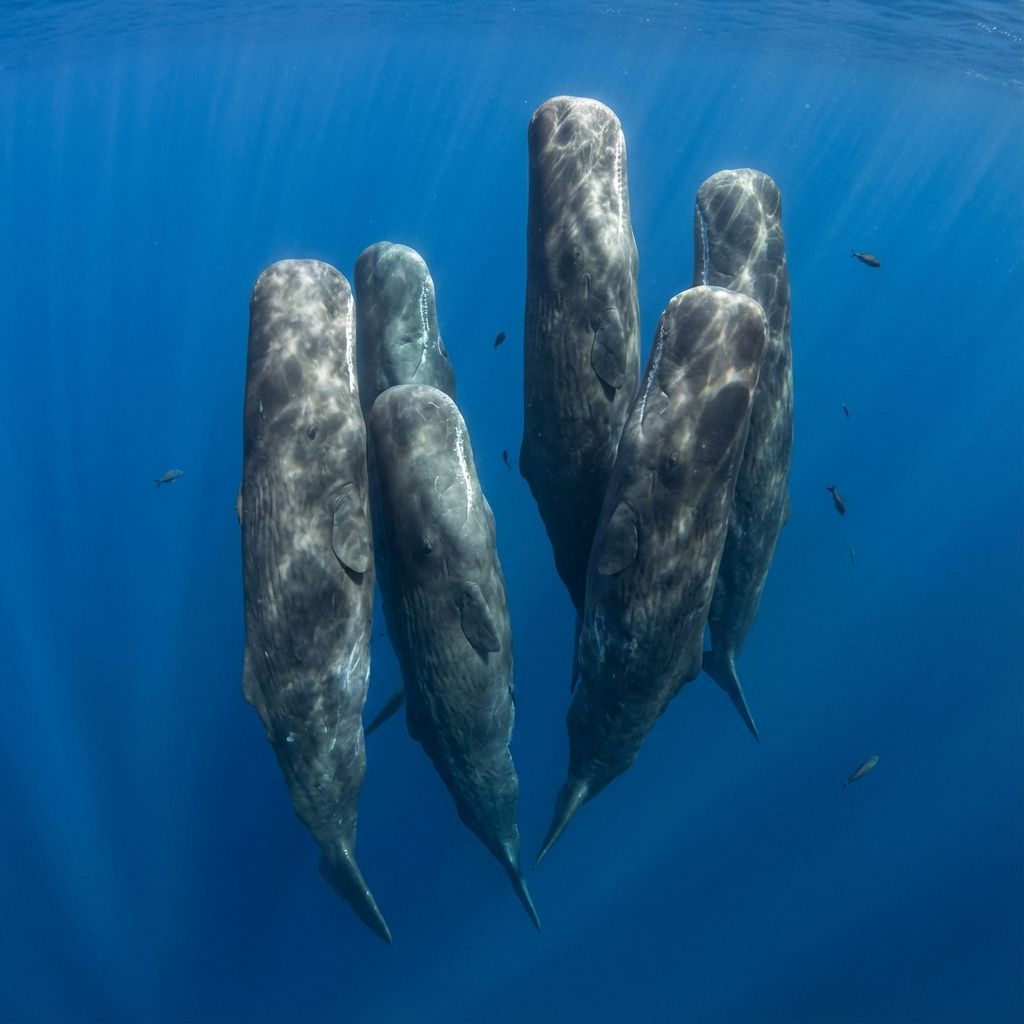
Most fish and sea creatures sleep while swimming, but sperm whales have a unique way of resting. They sleep vertically, hanging in the water like giant drift logs. This behavior is often called “logging” or drift diving. A pod (group) of whales will arrange themselves nose-up or nose-down in the water column and stop moving completely. They look like massive underwater pillars suspended in the deep blue ocean.
Quick Power Naps
Sperm whales are mammals, which means they must breathe air from the surface. Unlike humans, they cannot breathe unconsciously. To sleep safely, they take very short naps that last only 10 to 15 minutes. During this time, they hold their breath and hover just below the water’s surface. These short rests make them the least sleep-dependent mammals on Earth, spending only about 7 percent of their time asleep. If a boat approaches, they might remain asleep until accidentally touched, suggesting they enter a very deep state of rest.
Buoyancy and the Spermaceti Organ
Sperm whales can stay perfectly still in the water without sinking or floating to the top too fast because of a special substance in their heads. Their massive square heads contain a huge organ filled with a waxy oil called spermaceti.
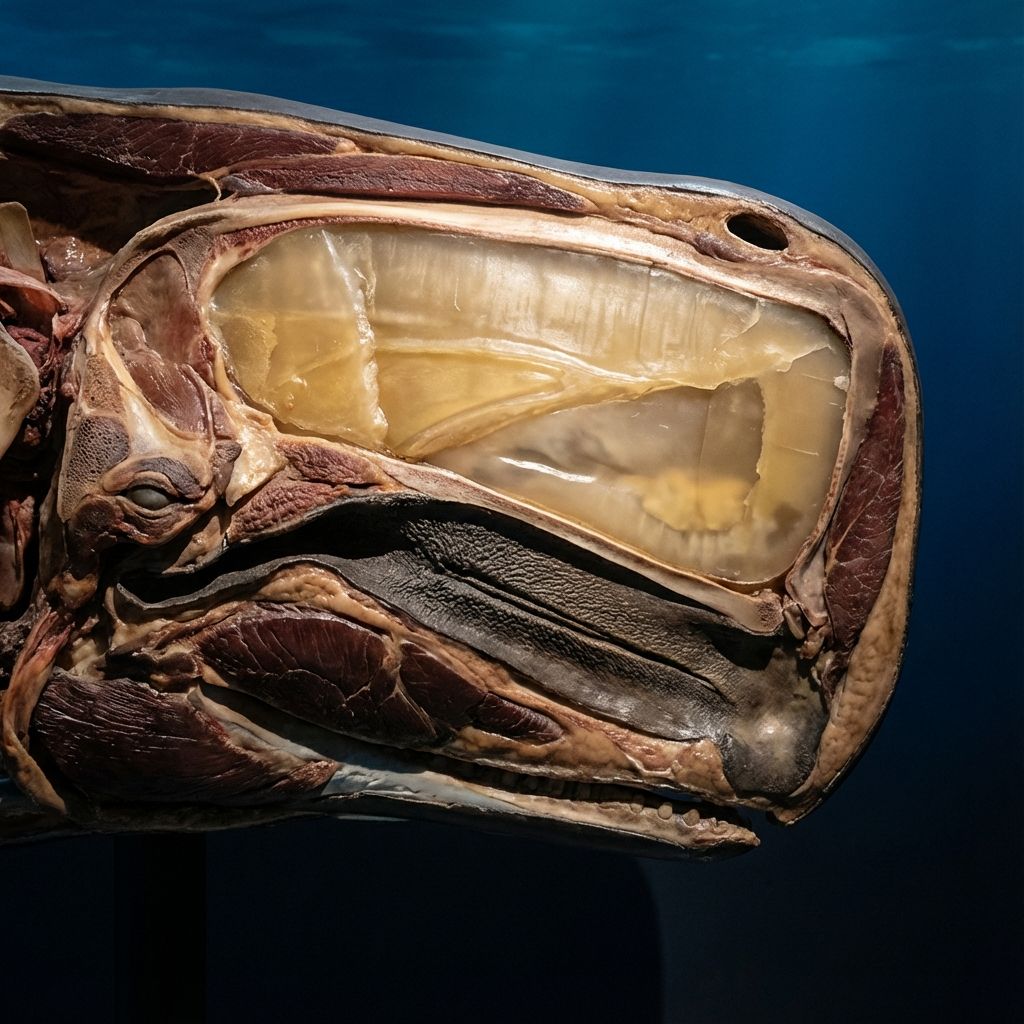
By controlling the temperature of this oil, the whale can change its density. When the oil cools, it becomes waxy and heavy, helping the whale sink or stay submerged. This allows them to hang motionless at a specific depth, conserving energy while they recharge for their next deep dive.
Read Land Animals & Water Animals here or in the app
Read every story in both shelves right here on the web, or open them in Encyclopedia: Kids Learning with narration you control. The full 1,000+ topics come with the app, covering space, the human body, history and more. Ad-free, ages 5–12.