Why Are Male Anglerfish Tiny Parasites?
Male anglerfish are smaller than your finger and can't eat! When one finds a giant female, he bites her and their bodies fuse together forever - he becomes a permanent parasite.

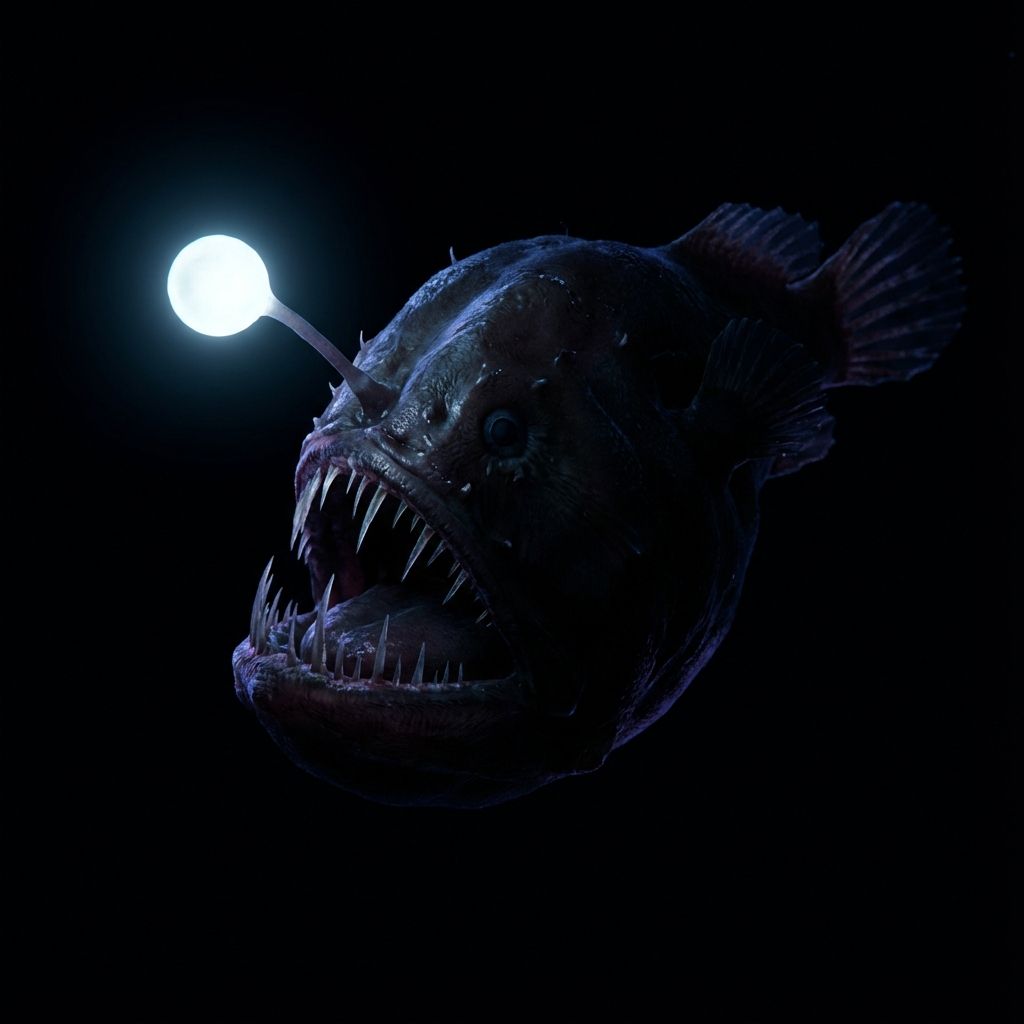
The deep ocean is a vast, pitch-black place where animals are spread far apart. For deep-sea anglerfish, finding a partner is extremely difficult. To solve this problem, male and female anglerfish look and act completely different. This is called sexual dimorphism.
A Giant and a Dwarf
Females are the large, round fish seen in pictures. They have a famous glowing lure on their heads to attract prey. Some females can grow up to 1.2 meters (4 feet) long. Males, however, are tiny. Some are smaller than a human finger. The female needs a large body to hunt big fish and carry thousands of eggs. The male only needs to be big enough to swim and find a female.
The Search in the Dark
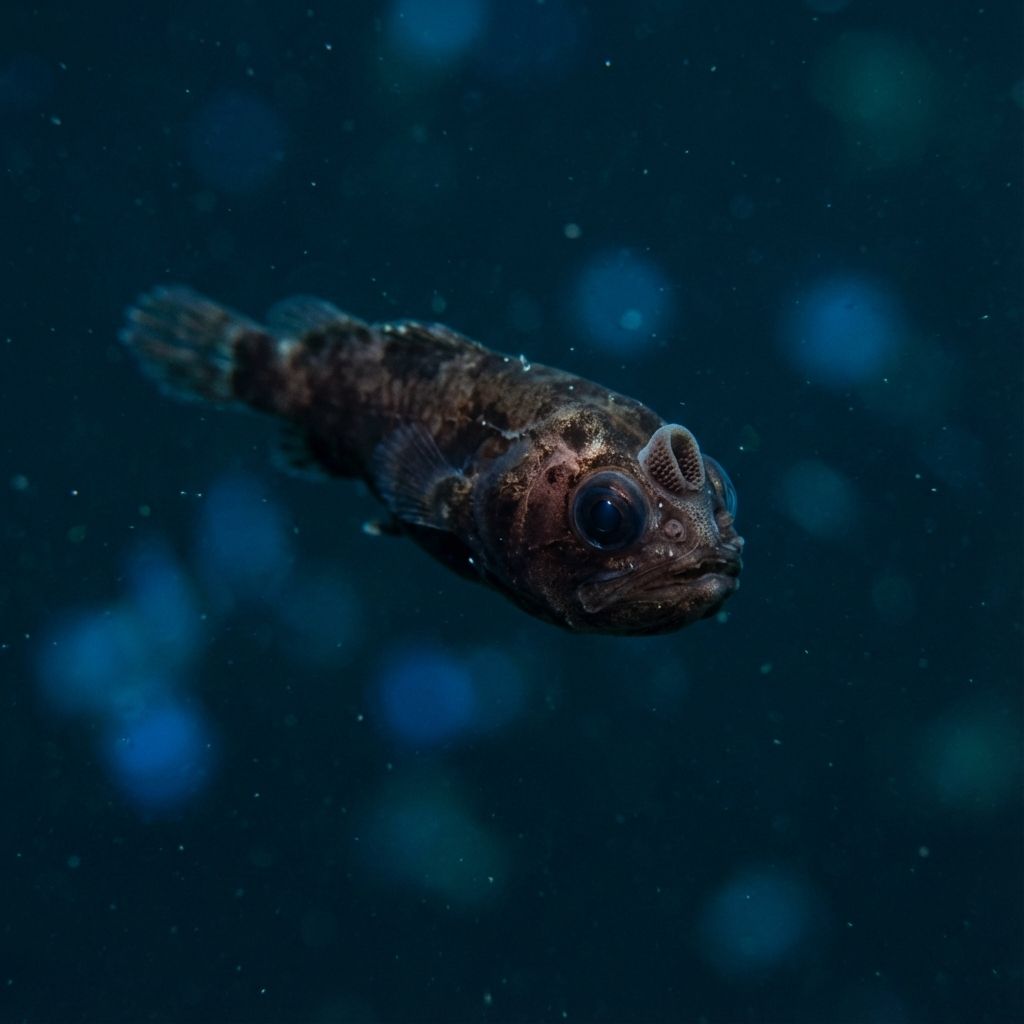
The male anglerfish has one specific job: to find a female. He has huge nostrils (nose openings) to smell chemicals that the female releases into the water. He also has special eyes designed to spot her glowing lure in the darkness. Unlike the female, the male does not have a fishing lure of his own. In fact, many males have mouths that cannot eat normal food. They rely on energy stored in their bodies from when they were babies.
Permanent Attachment
When a male finds a female, he bites onto her belly. Then, a strange physical change begins. His mouth dissolves and fuses (joins) with her skin. Eventually, their blood vessels connect. The male becomes a permanent part of the female’s body. He acts like a parasite, getting all his nutrients and oxygen directly from her blood. In return, he provides the cells needed to fertilize her eggs. This ensures that when the female is ready to reproduce, a mate is always right there attached to her.
Read Land Animals & Water Animals here or in the app
Read every story in both shelves right here on the web, or open them in Encyclopedia: Kids Learning with narration you control. The full 1,000+ topics come with the app, covering space, the human body, history and more. Ad-free, ages 5–12.