Why Are Flamingos Pink?
Flamingos aren't born pink - they're gray! They turn pink from eating shrimp and algae. And their legs have a locking mechanism that lets them sleep while standing on one foot.

Flamingos are famous for their bright pink feathers and their habit of balancing on a single leg. These large wading birds live in large groups called colonies, often found in shallow salt lakes and lagoons. While they look delicate, their bodies are built to survive in harsh, salty environments.
Diet and Coloration
Flamingos are not born pink. When they hatch, their feathers are fluffy and gray or white. Their color changes based on what they eat. Their main food sources are tiny plants (algae) and small water animals like brine shrimp. These foods contain a red-orange chemical called beta-carotene. This is the same pigment found in carrots.
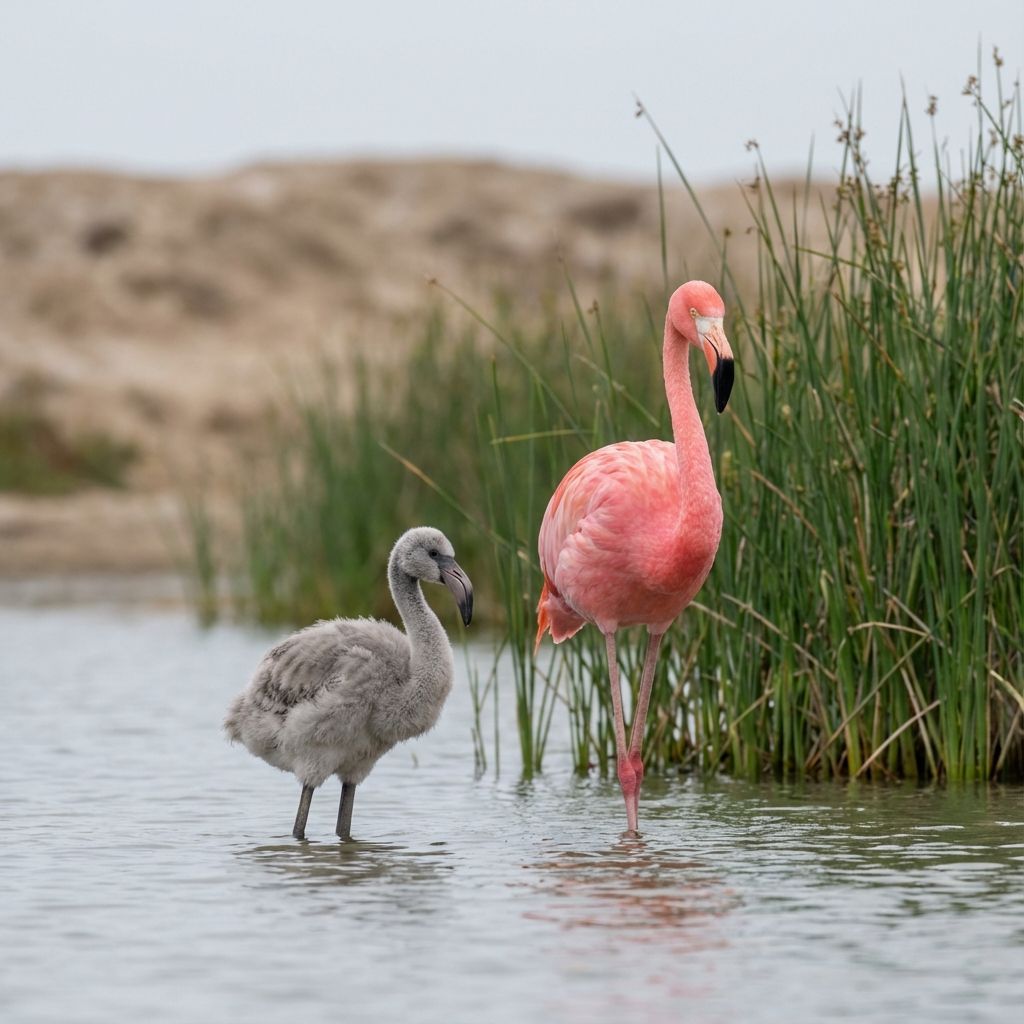
As the flamingo digests its food, the beta-carotene dissolves in fats and moves to the developing feathers. If a flamingo stops eating these foods, its feathers will turn white again. In zoos, keepers sometimes add special supplements to the birds’ food to keep them pink.
Balancing and Heat Control
Scientists have studied why flamingos stand on one leg for long periods. The most accepted reason is to save body heat. A flamingo’s legs are long, thin, and have no feathers to keep them warm. Blood flowing through the legs cools down quickly in cold water or wind. By tucking one leg up into the warm feathers of its belly, the bird reduces the amount of body heat escaping.
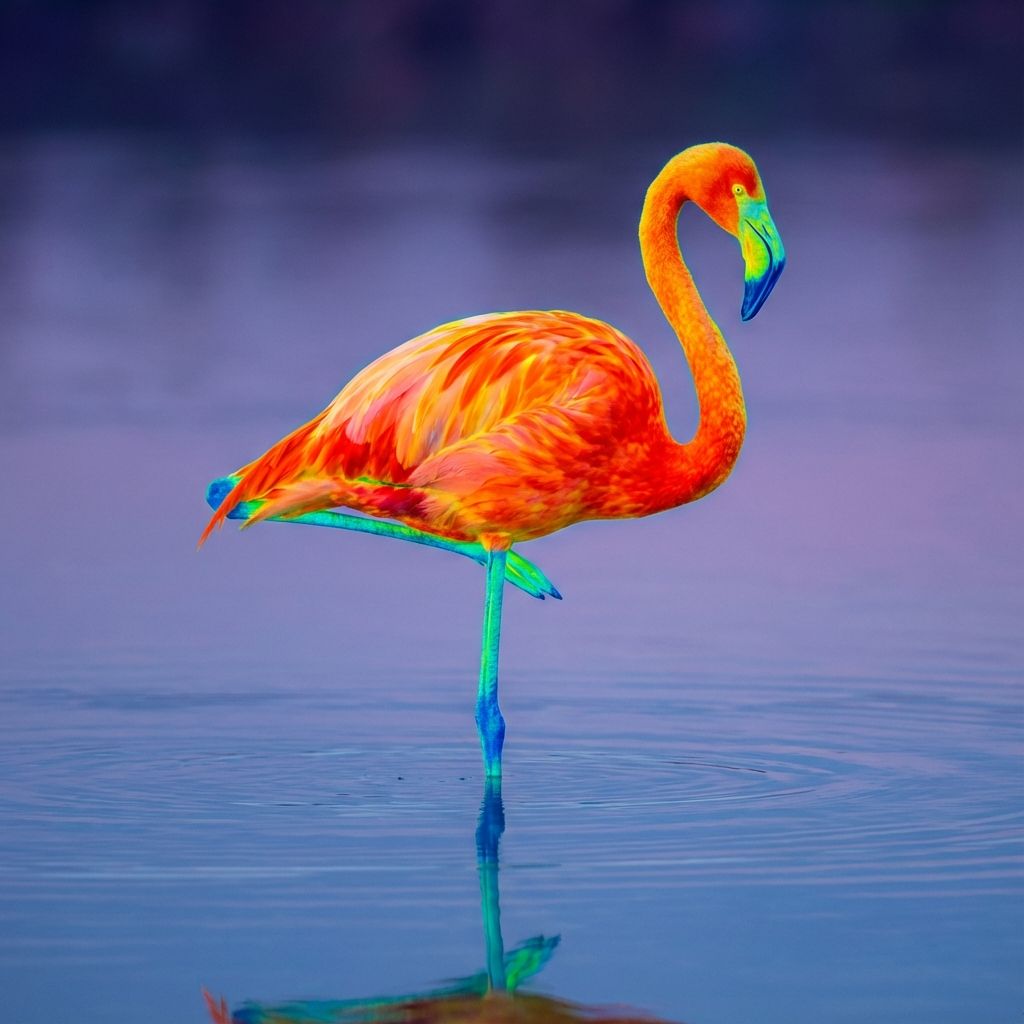
Another reason is energy conservation. The flamingo’s leg joints have a special locking mechanism. When the bird stands straight, the leg locks into place. This allows them to stand for hours without using any muscle power. They can even sleep while balancing.
Upside-Down Feeding
Flamingos have a unique way of eating. They feed with their heads upside down underwater. Their beaks are curved specially for this position. Inside the beak, there are comb-like structures called lamellae.
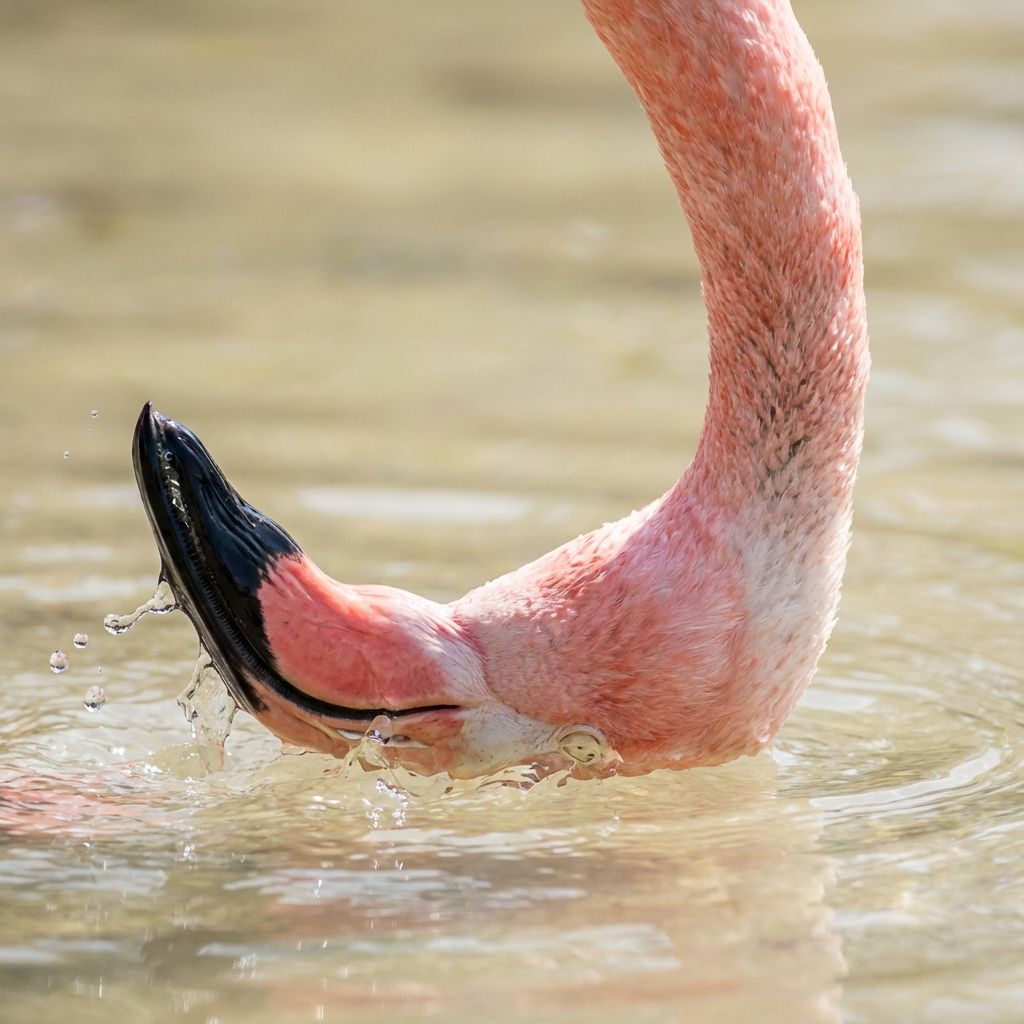
The bird uses its fleshy tongue to pump water in and out of the beak. The lamellae act like a sieve, trapping the algae and shrimp while pushing the water and mud out. This allows them to filter feed quickly in muddy waters.
Read Land Animals & Water Animals here or in the app
Read every story in both shelves right here on the web, or open them in Encyclopedia: Kids Learning with narration you control. The full 1,000+ topics come with the app, covering space, the human body, history and more. Ad-free, ages 5–12.