Walruses
Walruses can turn bright pink in the sun and use their neck sacs like built-in life jackets to sleep floating vertically. Their giant tusks are actually overgrown teeth they use to climb out of the icy sea.

Giant Ice-Climbers
Picture trying to climb out of a swimming pool using nothing but your front teeth. That is everyday life for a walrus. These giant marine mammals possess two massive tusks that are actually overgrown canine teeth. A walrus’s tusks can grow up to three feet long—about the length of a baseball bat. When a walrus wants to drag its two-ton body out of the freezing Arctic ocean onto slippery ice, it stabs its tusks into the frozen ground and pulls itself up. Scientists call them “tooth-walkers” for this very reason.
High-Tech Whiskers
Underneath a walrus’s snout is a brush of stiff, bushy whiskers called vibrissae (vye-BRIS-ee). Instead of using eyes to find food in the dark, muddy depths of the seafloor, walruses use these whiskers like organic metal detectors. A walrus has up to 700 of these sensory hairs. They are so sensitive that they can feel the difference between a tiny clam and a small pebble in total darkness. Once they pinpoint a shellfish, they do not crush the shell with their teeth. Instead, they seal their powerful lips around it and suck the meat right out of the shell like a high-powered vacuum cleaner.
Color-Changing Giants
Walruses are built for freezing weather, packed with a layer of fat called blubber that can be up to six inches thick. This fat keeps them warm, but it also causes a dramatic skin transformation. In deep, icy water, a walrus looks pale gray or even white because its body pumps blood away from its skin to keep its internal organs warm. But when a walrus climbs onto land to bask in the sun, the blood rushes back to its skin surface to shed heat, turning the giant beast a bright sunburn-pink.
Built-In Life Jackets
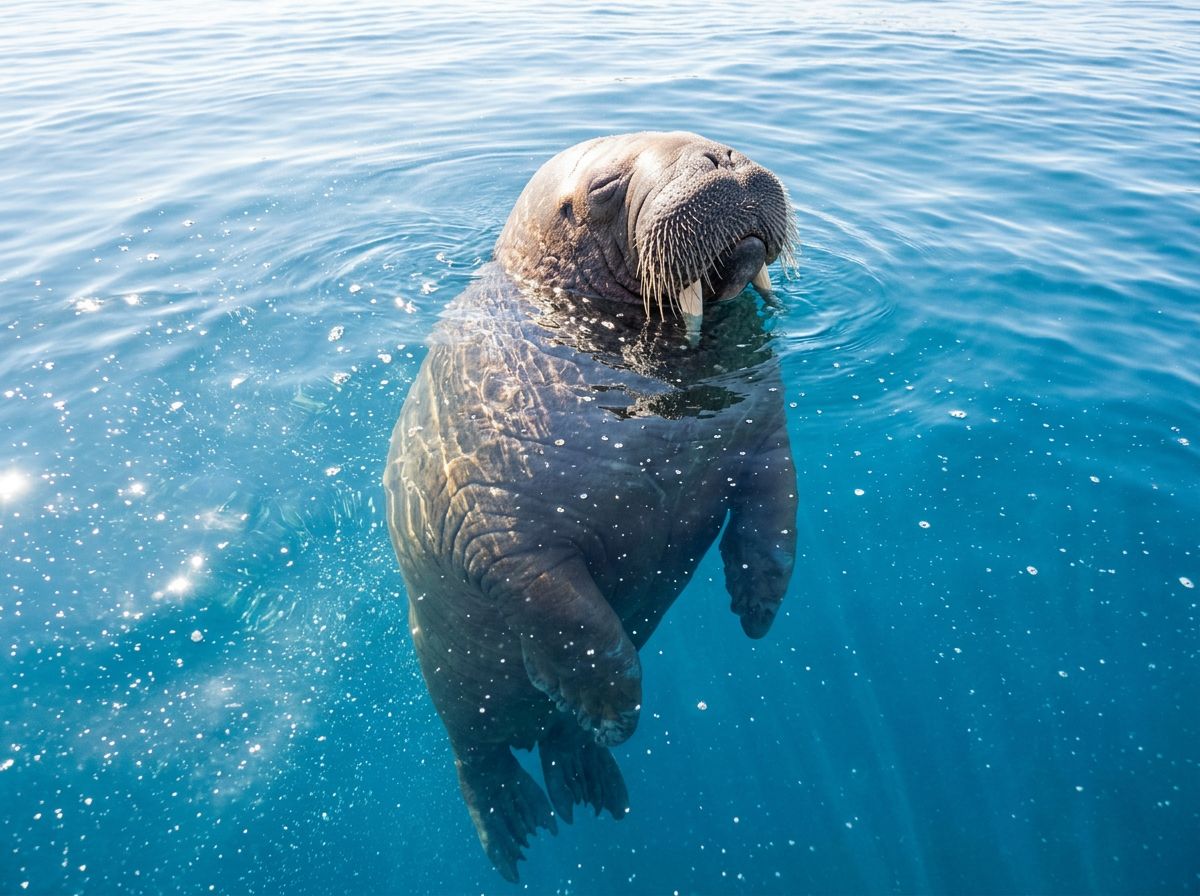
Sleeping at sea is no problem for these heavyweights. Walruses have two air sacs in their necks that inflate like balloons. Once inflated, these sacs act like built-in life jackets. This allows a walrus to snooze peacefully while floating vertically in the open ocean, keeping its nose above water without flapping a single flipper.
Read Land Animals & Water Animals here or in the app
Read every story in both shelves right here on the web, or open them in Encyclopedia: Kids Learning with narration you control. The full 1,000+ topics come with the app, covering space, the human body, history and more. Ad-free, ages 5–12.