Surviving the Mariana Trench
The pressure down here is like an elephant standing on your thumb. Meet the squishy, ghostly creatures that actually live in the deepest place on Earth.
The Deepest Cut
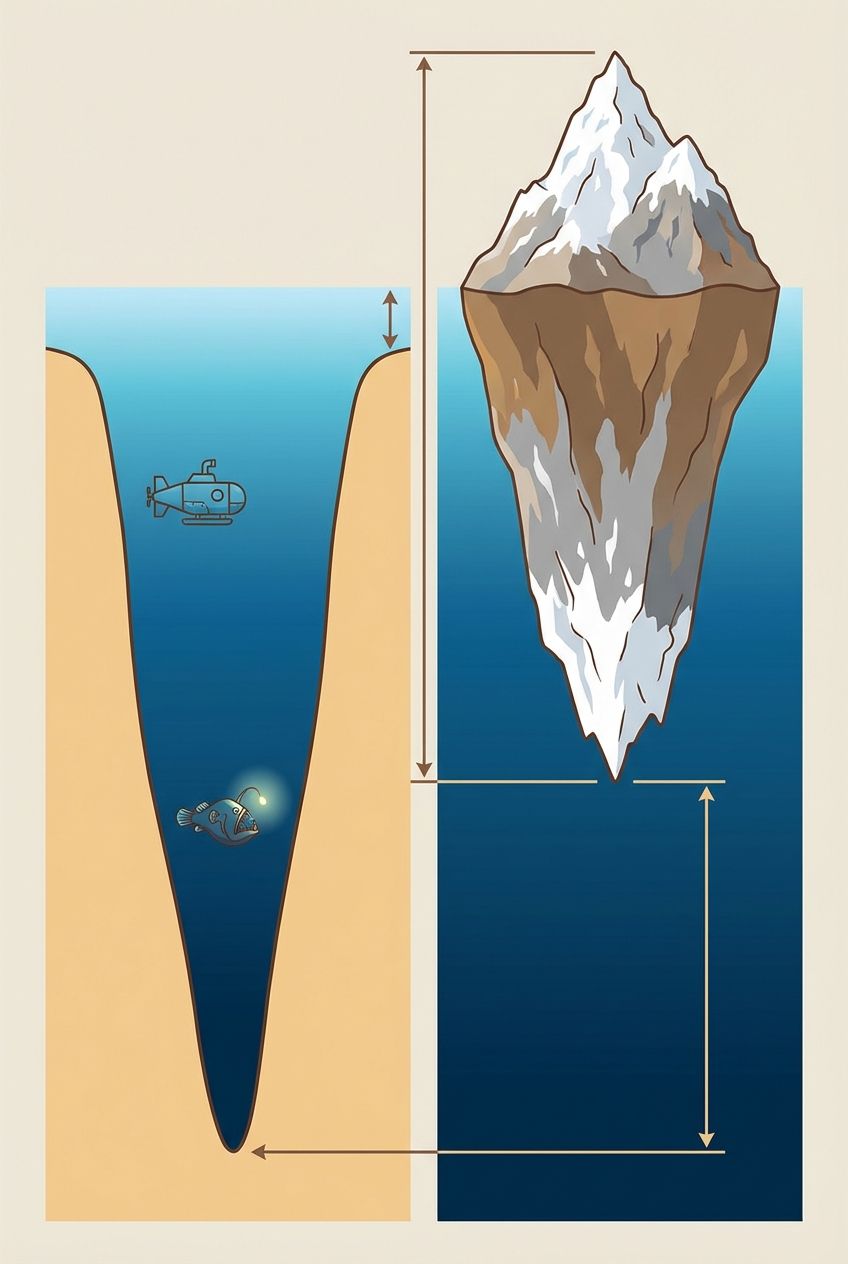
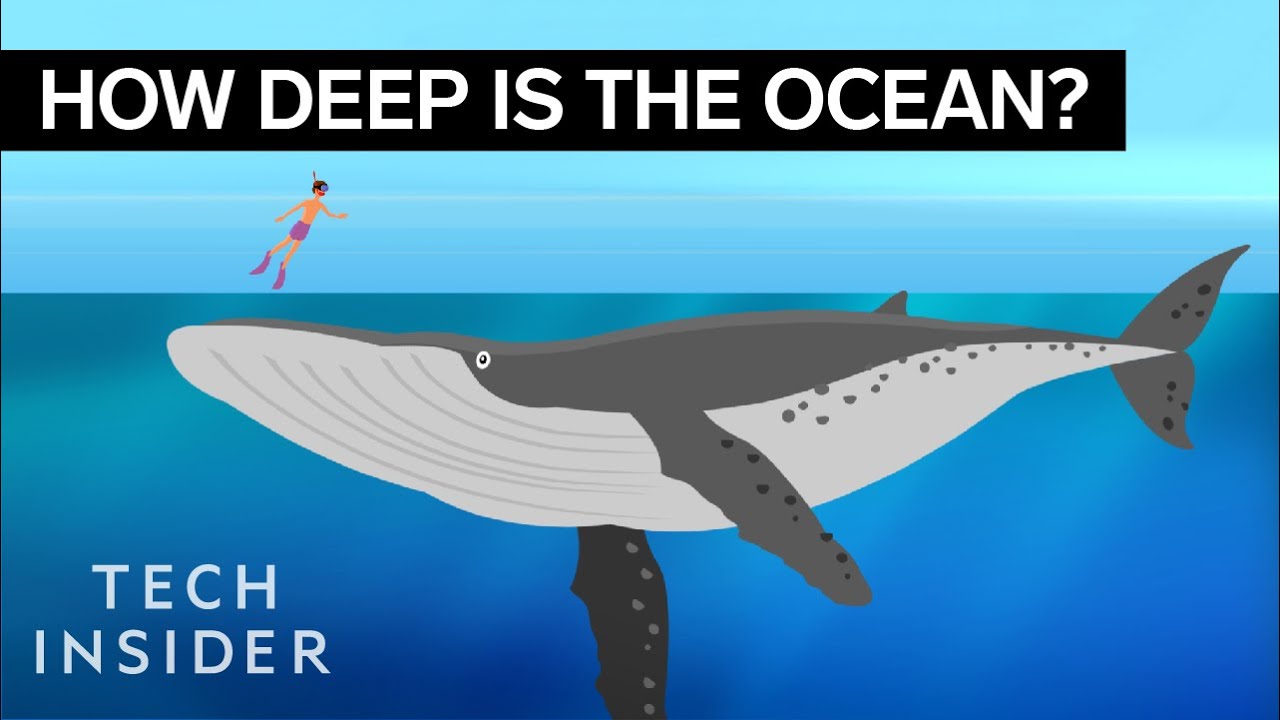
If you flipped Mount Everest upside down and dunked it into the ocean, it would not touch the bottom. The mountain’s peak would still be covered by more than a mile of water. This crescent-shaped scar in the Pacific Ocean floor plunges nearly 7 miles (11 kilometers) down. It is the most hostile place on the planet, darker than a cave and colder than a refrigerator.
The Weight of the World
Water is heavy. When you dive to the bottom of a swimming pool, you feel a little squeeze on your ears. Now imagine that squeeze multiplied by 1,000. At the bottom of the trench, the water pressure is 8 tons per square inch.
To visualize that, picture a large African elephant standing on your thumb. Or imagine balancing 50 jumbo jets on top of a single person. A normal submarine would be crushed like an empty soda can in seconds. Even here, life swims through this crushing weight.
The Squishy Strategy
How do animals survive here without turning into pancakes? They follow a simple rule: no air, no bones.
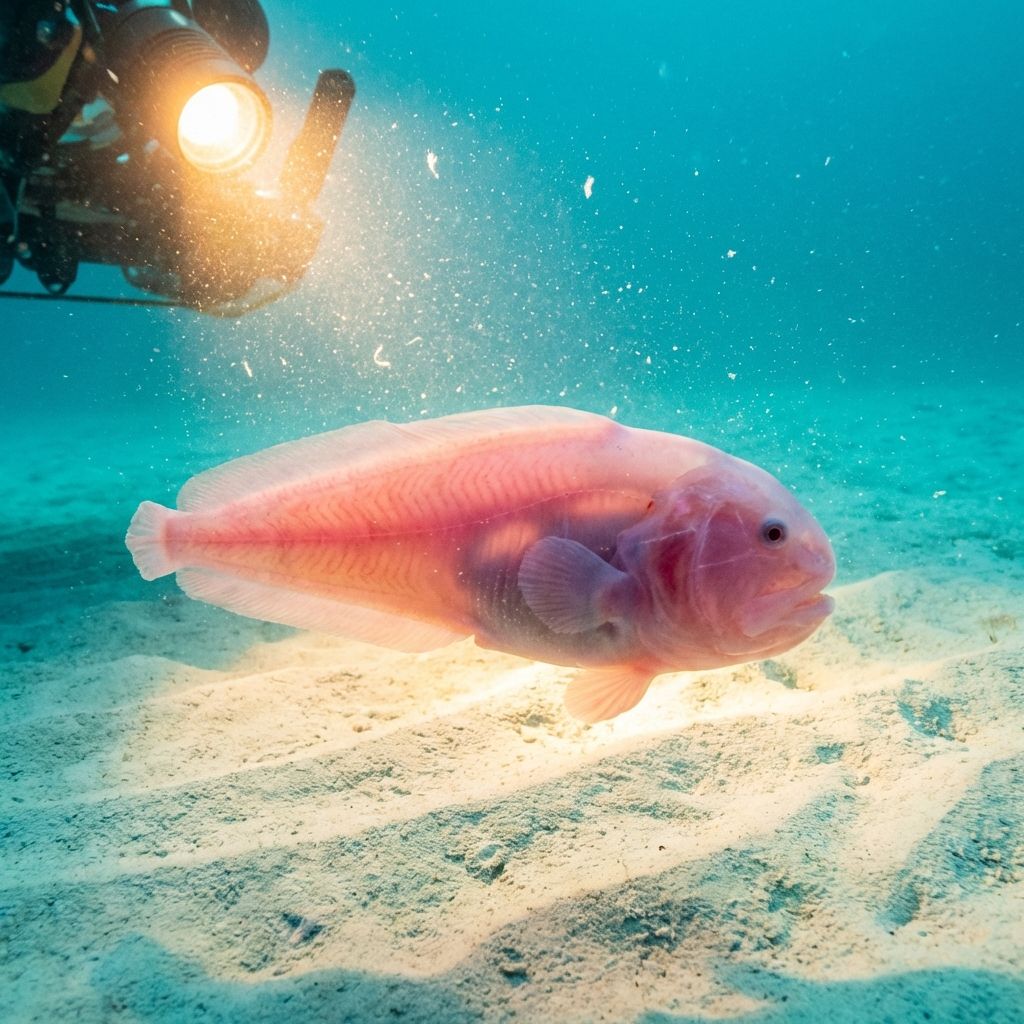
Hard bones would snap under the pressure, and air-filled lungs would collapse. Instead, creatures like the Mariana snailfish have bodies made of flexible cartilage and jelly-like flesh. Their bodies are filled with water, not air. Because water doesn’t compress (squish) easily, the pressure inside their bodies pushes back against the pressure outside with equal force. It works just like a water balloon deep in a pool—it doesn’t pop because the water inside supports the skin.
Aluminum Armor
Not everything down here is squishy. Huge amphipods (shrimp-like creatures) called Hirondellea gigas scuttle across the bottom. While other shells would dissolve in the acidic deep-sea water, these scavengers have a secret weapon. They eat sediment from the ocean floor to build a suit of armor made from aluminum gel. This unique shield keeps them safe while they hunt for “marine snow”—bits of dead fish and whales that slowly drift down from the surface miles above.
Read Land Animals & Water Animals here or in the app
Read every story in both shelves right here on the web, or open them in Encyclopedia: Kids Learning with narration you control. The full 1,000+ topics come with the app, covering space, the human body, history and more. Ad-free, ages 5–12.