Stingrays & Manta Rays
Rays have built-in metal detectors on their faces to sense the heartbeats of crabs hiding in the sand. Meet these amazing underwater gliders made entirely of bendable cartilage.
Underwater Gliders
Picture a flat, pancake-shaped fish gliding effortlessly through the water like a bird. Instead of flapping feathered wings in the air, rays glide through the water using giant pectoral fins (the side fins that act like wings). Their entire skeletons are made of cartilage—the same bendable stuff inside your nose and ears. This makes them light and flexible, allowing them to loop-the-loop and glide like stealth bombers of the sea.
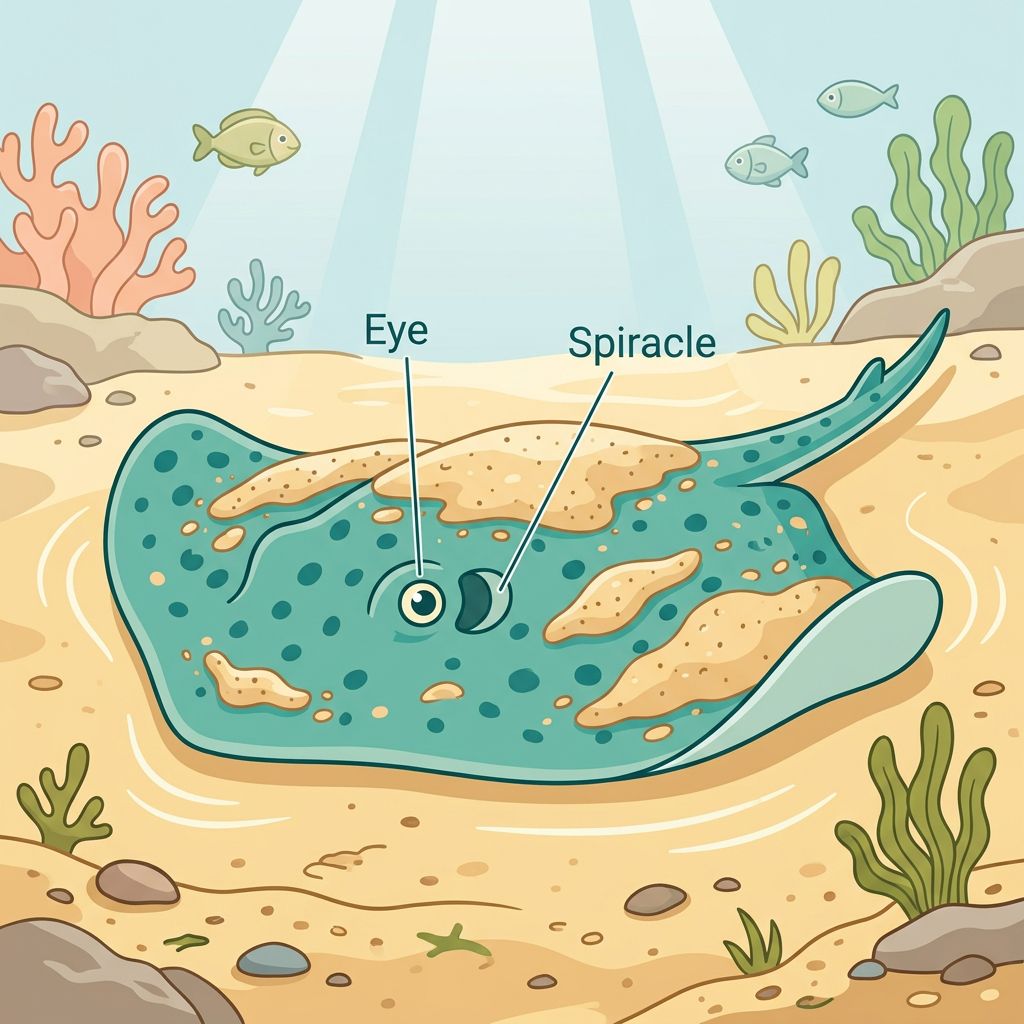
Because their mouths are on the bottom of their bodies, stingrays have a clever way of breathing while resting on the seafloor. They use spiracles (special breathing holes behind their eyes) to pump water over their gills. This lets them stay completely buried in sand without choking on dirt.
Gentle Giants vs. Sand-Dwellers
While they look similar, stingrays and manta rays lead very different lives. Think of manta rays as the friendly giants. A giant oceanic manta ray can grow up to 29 feet (9 meters) wide—wider than a two-car garage. They do not have venomous stingers. Instead, they do underwater somersaults with their massive mouths wide open, acting like giant vacuums to scoop up tiny drifting organisms called plankton.
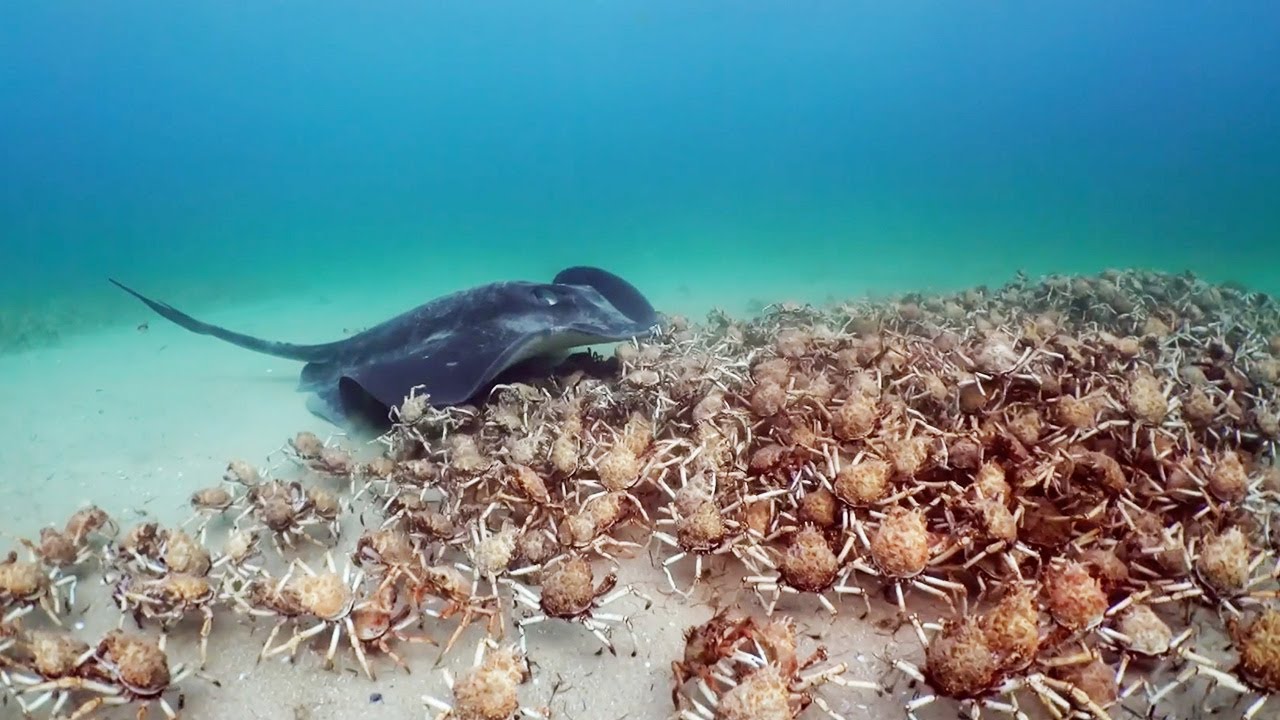
Stingrays are the stealthy ninjas. They hug the ocean floor, tossing sand over their backs to hide. If a predator gets too close, the stingray defends itself using a sharp, venom-coated spine on its tail.
The Metal-Detecting Face
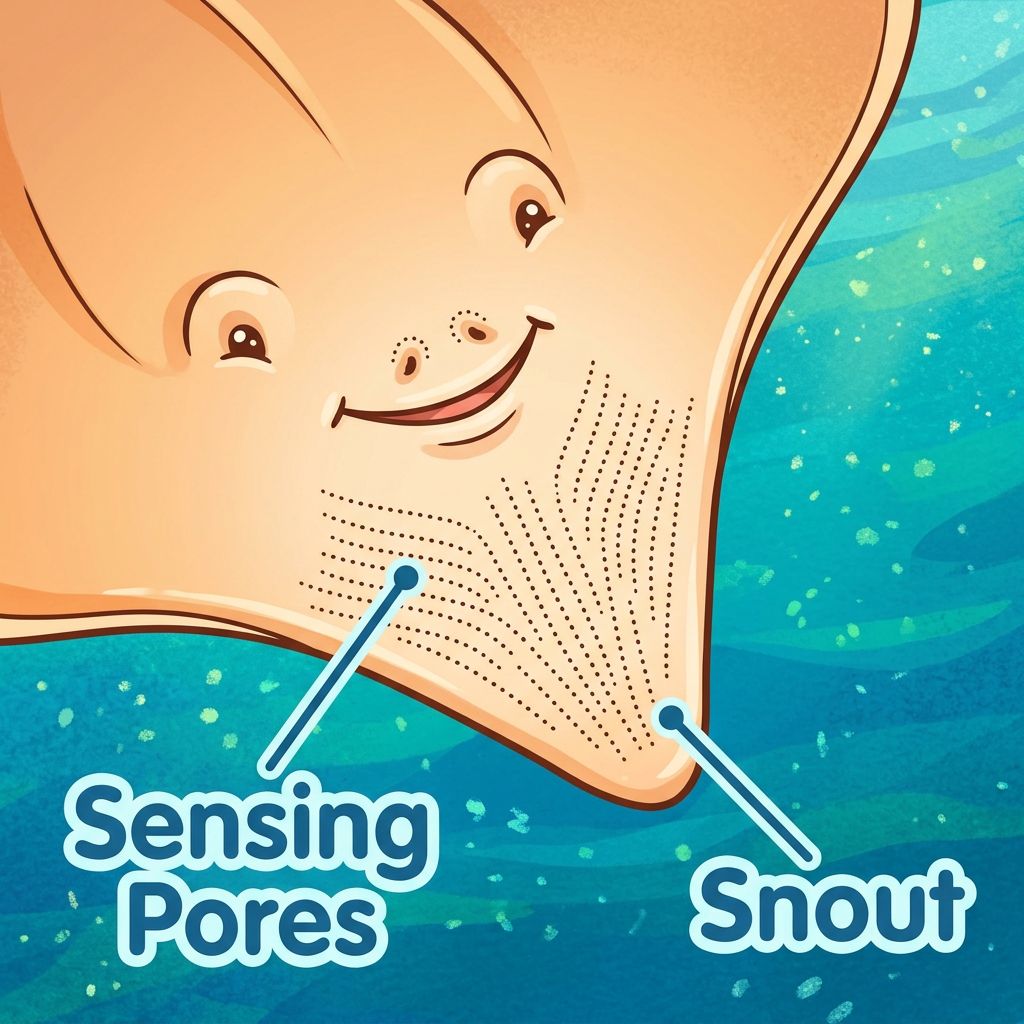
Rays have a superpower that humans can only duplicate with high-tech gear: electroreception. Their snouts are dotted with tiny, jelly-filled pores that act like metal detectors. These pores sense the weak electrical signals produced by the heartbeat of a crab or shrimp buried deep under the wet sand. Once the ray pinpoints its target, it traps the prey under its body and crushes the hard shells using rows of flat, heavy teeth that work like nutcrackers.
Some species, like the electric ray, can even generate their own electricity, packing enough voltage to stun a fish or give an unlucky diver a surprising jolt.
Read Land Animals & Water Animals here or in the app
Read every story in both shelves right here on the web, or open them in Encyclopedia: Kids Learning with narration you control. The full 1,000+ topics come with the app, covering space, the human body, history and more. Ad-free, ages 5–12.