Sea Lions vs. Seals
While seals wiggle on their bellies like sleeping bags doing the worm, sea lions can actually run on land using their flippers. You can also spot the difference just by looking for ear flaps!
The Ear Test
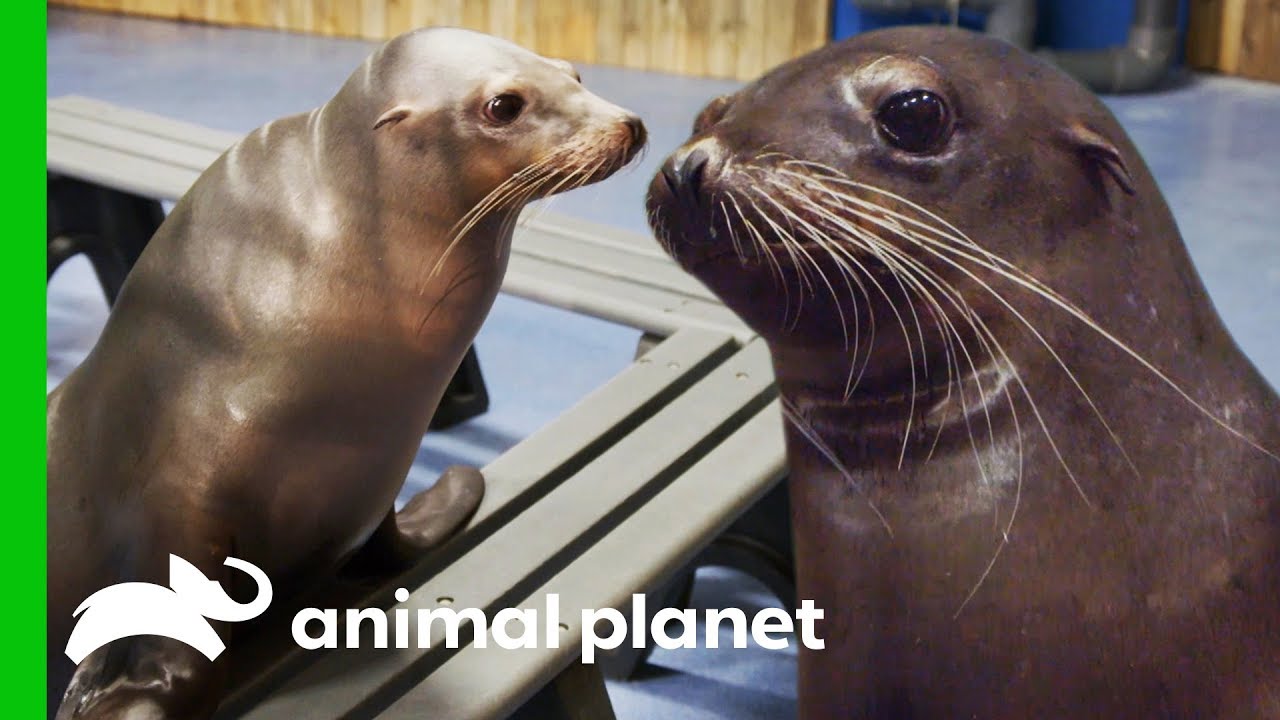
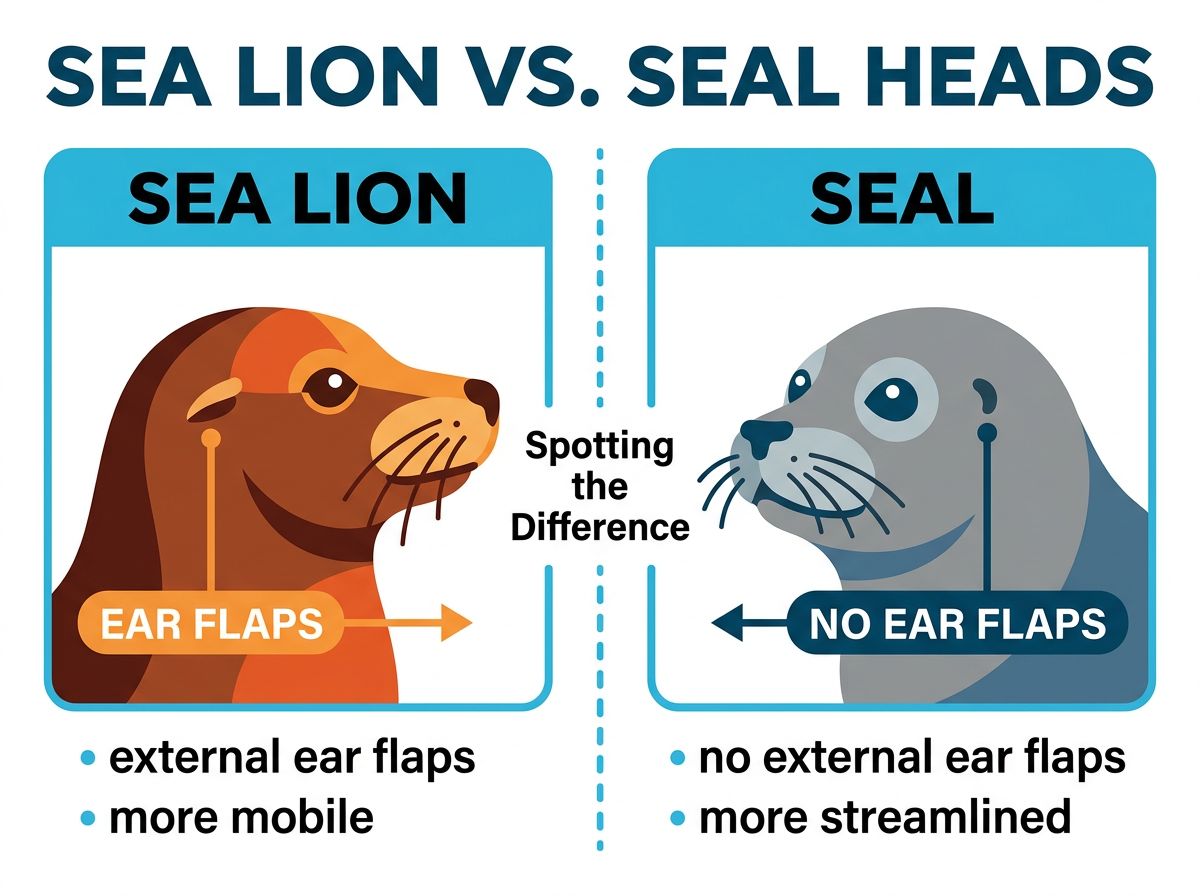
If you see a furry, potato-shaped mammal lounging on a dock, how do you know what it is? Look at the sides of its head first. Does it have tiny, visible ear flaps? If yes, you are looking at a sea lion. If the head is completely smooth with just tiny holes for ears, you are looking at a true seal.
Land Walkers vs. Belly Sliders
Watch them move on land and the contrast becomes even more obvious. Sea lions have long, muscular front flippers and can rotate their back flippers underneath their bodies. This allows them to walk, run, and even climb up steep rocks. Seals, on the other hand, have short, stubby front flippers. On land, they cannot use their back flippers to walk at all. Instead, they must wiggle their bellies to slide along the sand, a movement called “galumphing.” It looks like a giant, furry sleeping bag trying to do the worm dance.
Underwater Flight vs. Tail Power
Once they dive into the ocean, their swimming styles split into two unique techniques. Sea lions “fly” through the water, using their massive front flippers like bird wings to push themselves forward. They can reach speeds of 25 miles per hour. Seals are built for stealth. They keep their front flippers tucked tightly against their bodies to stay streamlined (shaped to reduce drag). They use their rear flippers like a fish’s tail fin, sweeping them side-to-side to glide silently through the deep.
The Noise Level
If you still cannot tell them apart, just close your eyes and listen. Sea lions are the loud, dramatic theater kids of the ocean. They bark constantly, making a loud, honking sound that can be heard from miles away. Seals are much quieter. They communicate underwater using soft grunts, clicks, and high-pitched whistles that sound like laser effects from a sci-fi movie.
Read Land Animals & Water Animals here or in the app
Read every story in both shelves right here on the web, or open them in Encyclopedia: Kids Learning with narration you control. The full 1,000+ topics come with the app, covering space, the human body, history and more. Ad-free, ages 5–12.