Octopus: Three Hearts and Blue Blood
Octopuses have three hearts (one stops when swimming!), blue blood, and 2/3 of their brain cells are in their arms. They're colorblind but can still perfectly match any color!

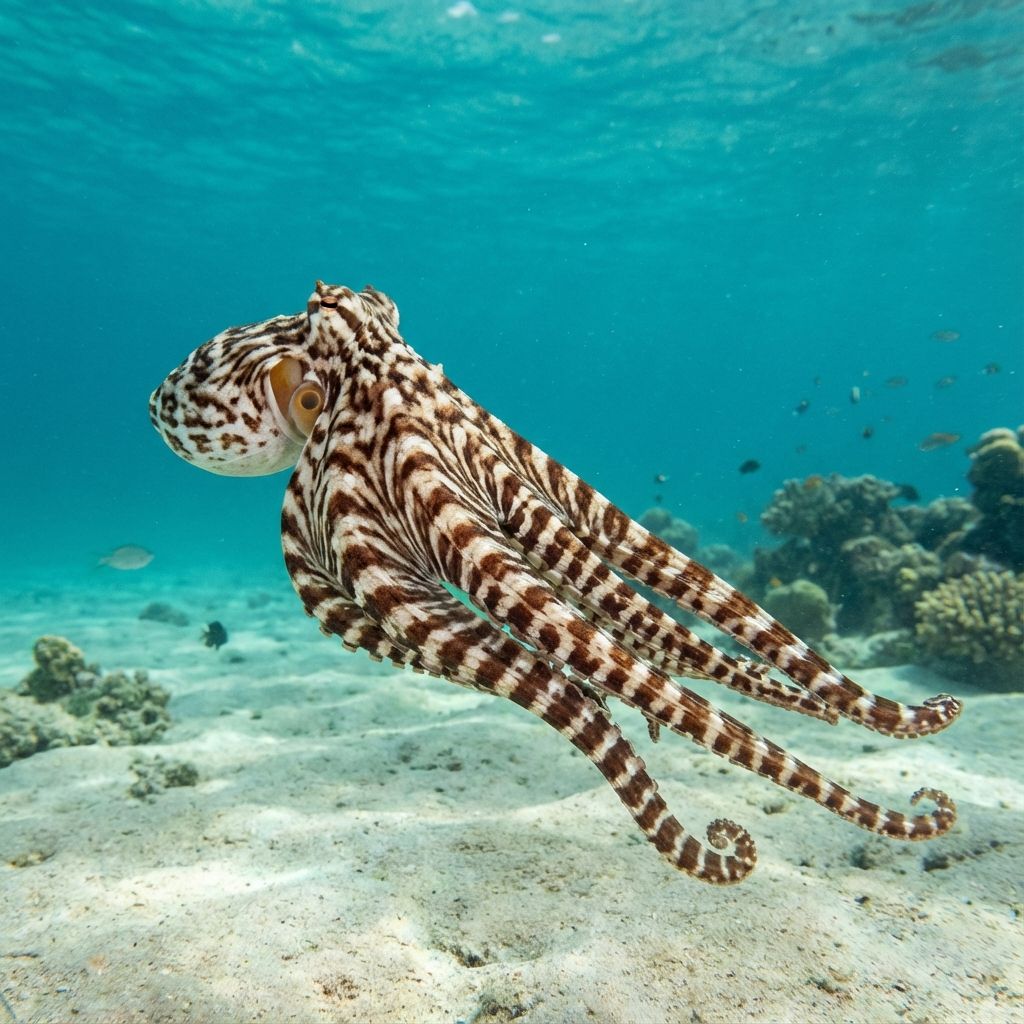
An octopus is a soft-bodied sea animal known for its intelligence and strange biology. It belongs to a group of mollusks called cephalopods. Because an octopus has no bones or shell, it can squeeze its body through tiny cracks and holes to escape predators or hunt for food.
Three Hearts and Blue Blood
Inside its body, an octopus has a unique circulatory system. It uses three hearts to stay alive. Two small branchial hearts pump blood to the gills to pick up oxygen. A third, larger systemic heart pumps that oxygen-rich blood to the rest of the body. When the octopus swims fast, the main heart stops beating, which forces the animal to tire quickly. This is why octopuses prefer to crawl along the sea floor rather than swim long distances.
Their blood is also unusual. While human blood is red because of iron, octopus blood is blue because it is copper-based. This blue blood helps them survive in deep, cold water where oxygen levels are low.
Masters of Disguise
Octopuses are famous for camouflage. They can change the color and pattern of their skin in a fraction of a second. This happens thanks to special pigment cells called chromatophores. By stretching or squeezing these dye-filled sacs, the octopus can turn red, gray, brown, or spotted to blend in with coral or sand.
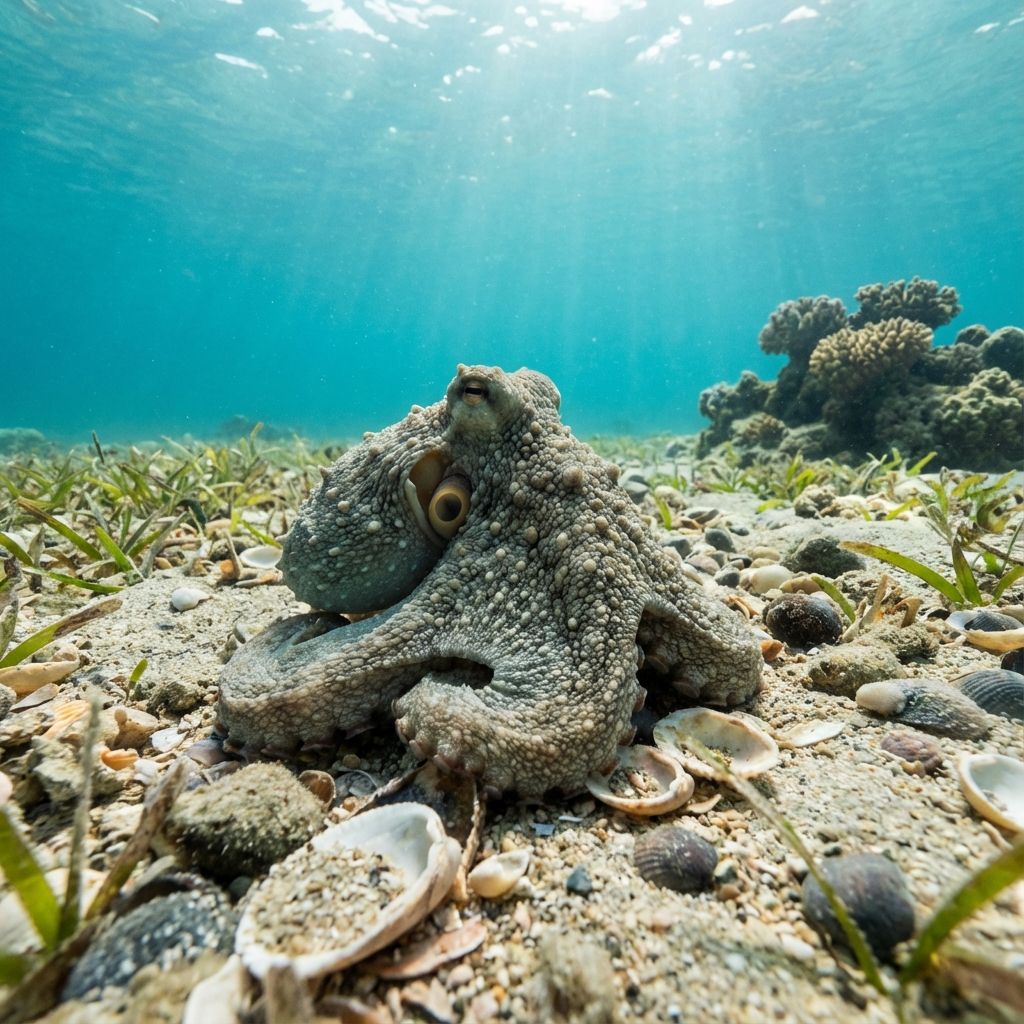
They can also change their skin texture using small muscles to create bumps and ridges, looking like a rough rock. Despite this mastery of color, studies show that octopuses are colorblind. They likely use the contrast of light and dark to match their surroundings.
Brains in Their Arms
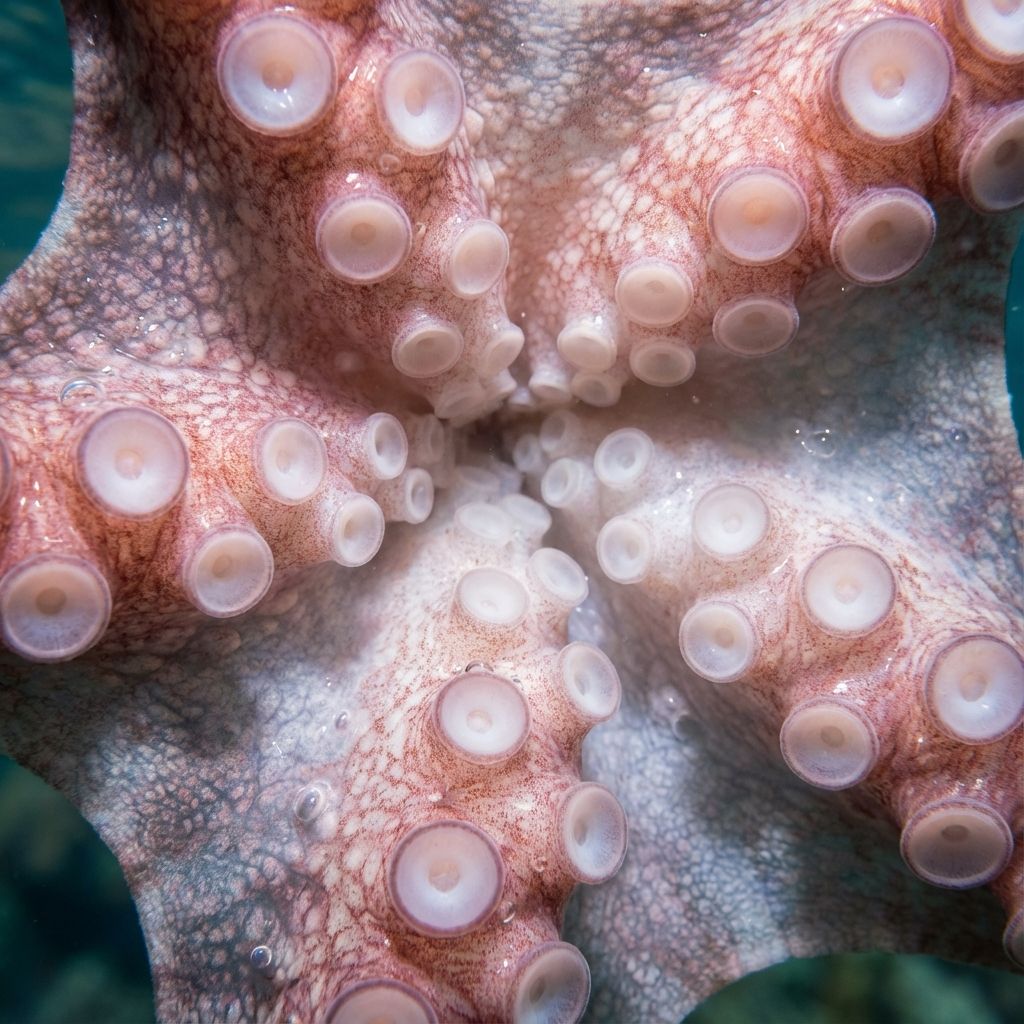
These creatures are solved-problems solvers. They have a central brain shaped like a donut that wraps around their throat. However, two-thirds of their neurons (nerve cells) are located in their eight arms. This allows the arms to taste, touch, and act partially on their own. Octopuses have been observed using coconut shells as portable shields, opening jars to get food, and navigating through complex mazes.
Read Land Animals & Water Animals here or in the app
Read every story in both shelves right here on the web, or open them in Encyclopedia: Kids Learning with narration you control. The full 1,000+ topics come with the app, covering space, the human body, history and more. Ad-free, ages 5–12.