Narwhals
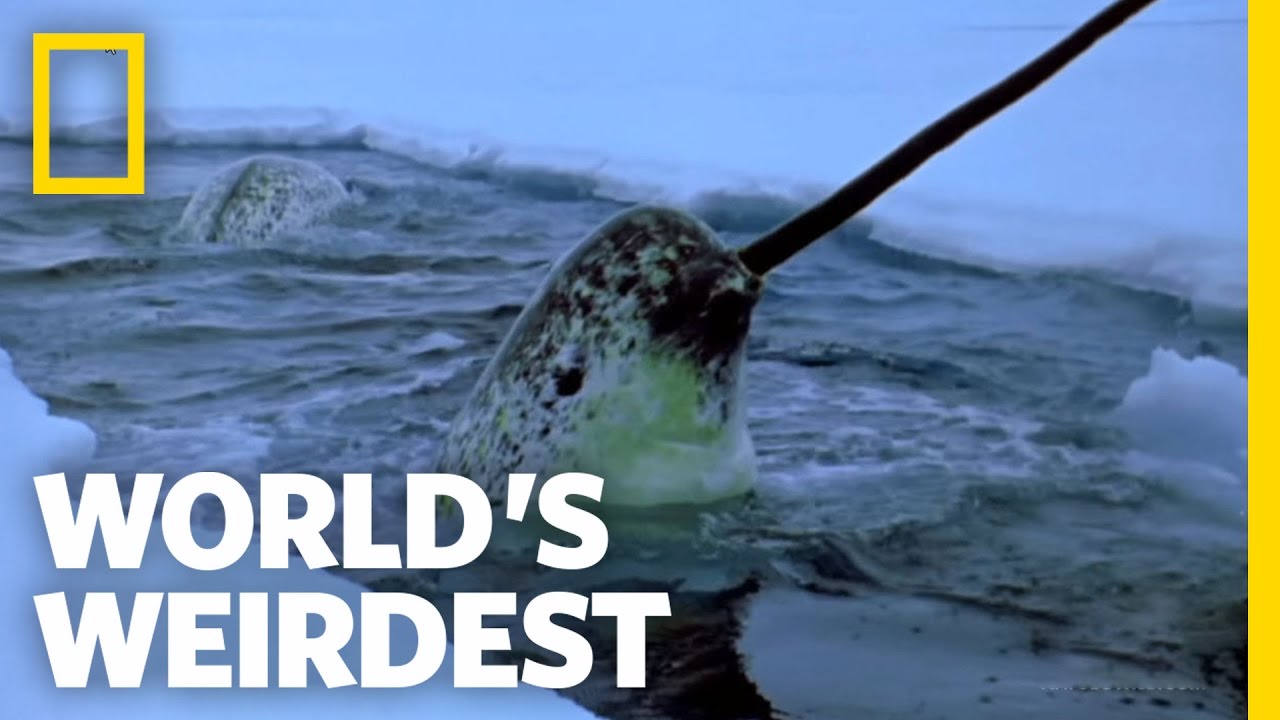
A narwhal's famous tusk is actually a giant, bendy tooth that can taste salt water and sense temperature. These deep-diving arctic whales even change color from black to white as they grow old.
The Inside-Out Tooth
Some male narwhals grow a single tooth so long that it bursts right through their upper lip and keeps growing until it is longer than a bicycle. This “unicorn of the sea” does not actually have a horn. That spiral spike on its forehead is a giant, overgrown left tooth. While human teeth have a hard enamel shell on the outside and soft nerves on the inside, a narwhal’s tusk is reversed. It is soft and sensitive on the outside, and hard and strong on the inside. This unique design allows the tusk to bend about a foot in any direction without snapping.
A Giant Floating Antenna
For a long time, scientists thought narwhals used their tusks like underwater swords to duel. While they do sometimes gently rub their tusks together, the spike is actually a high-tech sensor. It is packed with ten million nerve endings. Because the tooth has no outer enamel, ocean water flows directly into tiny tubes in the tusk, allowing the narwhal to “taste” the saltiness of the water, sense temperature changes, and locate nearby fish. It is like swimming around with a giant, organic radar detector on your face.
Masters of the Deep Dark
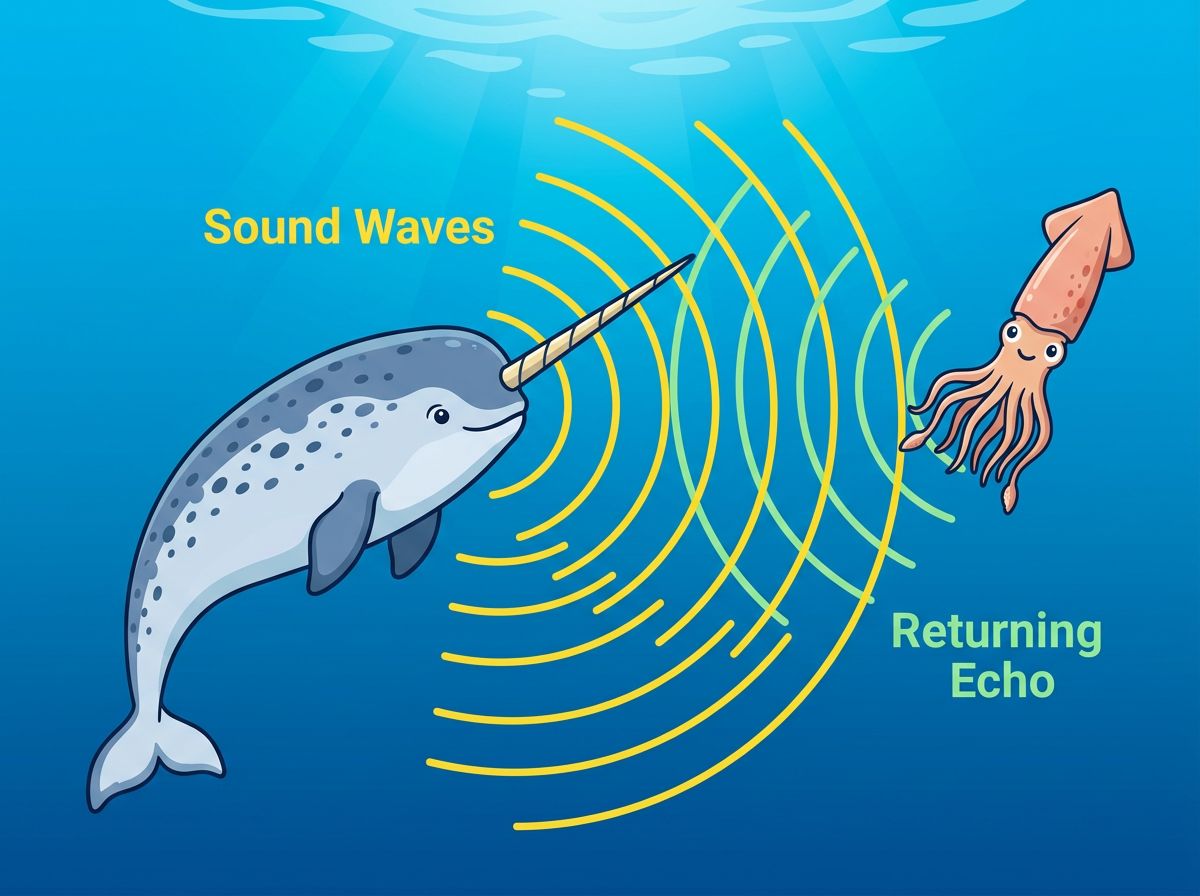
Narwhals live in the freezing Arctic waters, often swimming under massive sheets of floating ice. To survive, they must be expert divers. They can plunge down more than 5,000 feet—about fifteen football fields stacked end-to-end—into the freezing depths to hunt Greenland halibut, squid, and shrimp. Because no sunlight reaches these depths, they use echolocation (emitting clicking sounds that bounce off objects) to map out their surroundings and find food in the dark.
As narwhals age, they slowly change color. Babies are born a soft, bluish-gray. Teenagers turn nearly solid black. Adults are speckled with gray and white spots, and very old narwhals turn almost completely white, matching the drifting Arctic ice like ghosts.
Read Land Animals & Water Animals here or in the app
Read every story in both shelves right here on the web, or open them in Encyclopedia: Kids Learning with narration you control. The full 1,000+ topics come with the app, covering space, the human body, history and more. Ad-free, ages 5–12.