Is There Really an Immortal Jellyfish?
The immortal jellyfish can turn back into a baby when it gets sick or old - like a butterfly becoming a caterpillar again! It's only 4.5mm wide but can theoretically live forever.

Yes, there is a jellyfish that can theoretically live forever. It is called Turritopsis dohrnii, but most people know it as the immortal jellyfish. While most animals grow old and eventually die, this tiny sea creature has the unique ability to hit a “reset button” on its life cycle.
A Tiny Drifter
The immortal jellyfish is not a giant monster. It is incredibly small, measuring only about 4.5 millimeters (0.18 inches) wide. This is smaller than the nail on a pinky finger.
It lives in warm ocean waters around the world. The jellyfish has a bell-shaped body that is almost completely clear. Inside the transparent bell, you can see a bright red stomach. When fully grown, it has up to 90 thin tentacles used to catch plankton.
Growing Younger
Most jellyfish follow a one-way life path. They start as an egg, turn into a larva (baby), attach to the sea floor as a polyp (like a tiny plant stalk), and finally break off as a swimming medusa (adult jellyfish). Once they reproduce, they usually die.
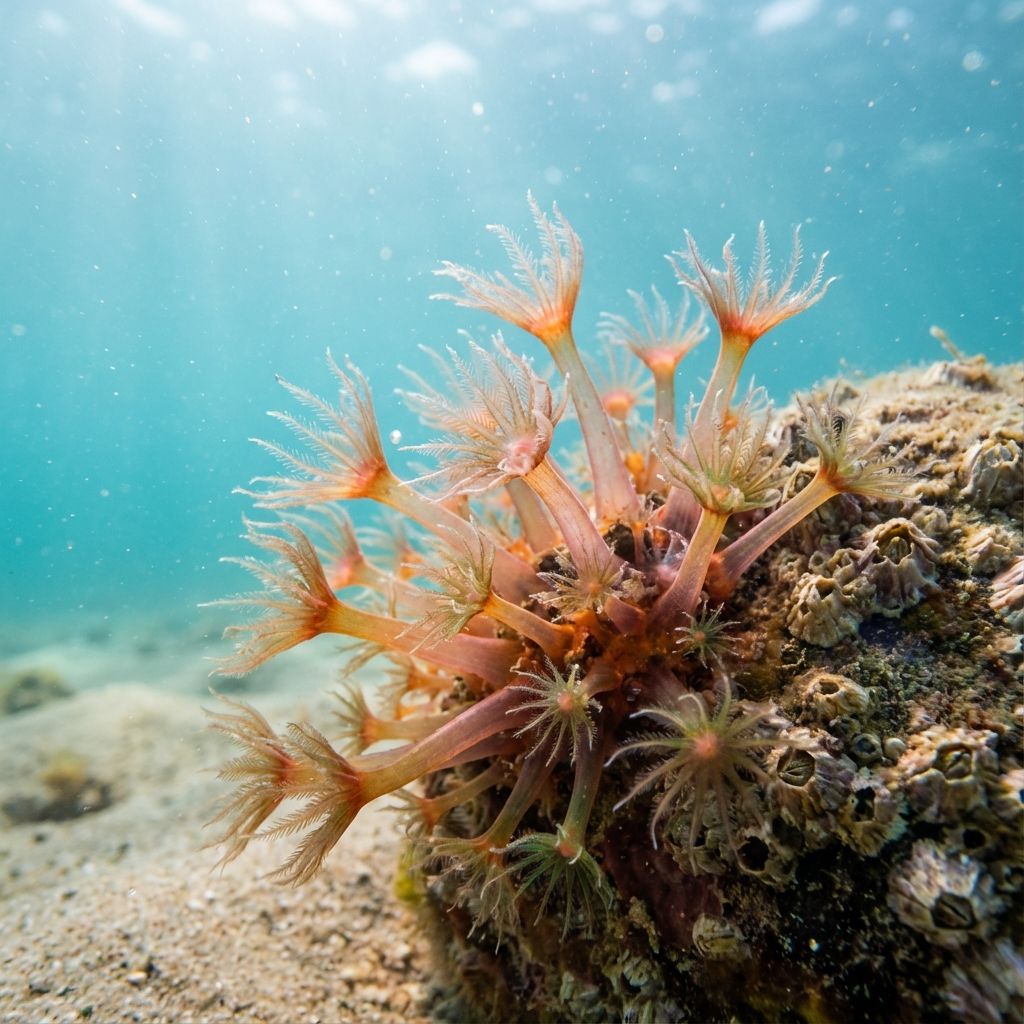
The immortal jellyfish breaks this rule. If it gets sick, injured, or cannot find food, it does not die. Instead, it reverses its life cycle. The adult jellyfish absorbs its tentacles and sinks to the ocean floor. It turns into a soft blob and transforms back into a polyp. This process is called transdifferentiation. It is like a butterfly turning back into a caterpillar.
Cloning and Survival
Once the jellyfish turns back into a polyp, it does not stay a single blob. The polyp grows and spawns a whole new colony of genetically identical jellyfish, or clones. A single injured adult can create hundreds of new babies.
Being “biologically immortal” does not mean these jellyfish are invincible. Because they are so small, they are often eaten by fish, turtles, and other sea creatures before they can reset their life cycle. They can also die from disease. However, if they stay safe from predators, they can repeat the cycle of growing up and growing young forever.
Read Land Animals & Water Animals here or in the app
Read every story in both shelves right here on the web, or open them in Encyclopedia: Kids Learning with narration you control. The full 1,000+ topics come with the app, covering space, the human body, history and more. Ad-free, ages 5–12.