How Platypuses Detect Electricity Underwater
Platypuses hunt with their eyes, ears, and nose completely shut! Their bill has 40,000 electricity sensors that detect the tiny zaps made by shrimp twitching their tails.
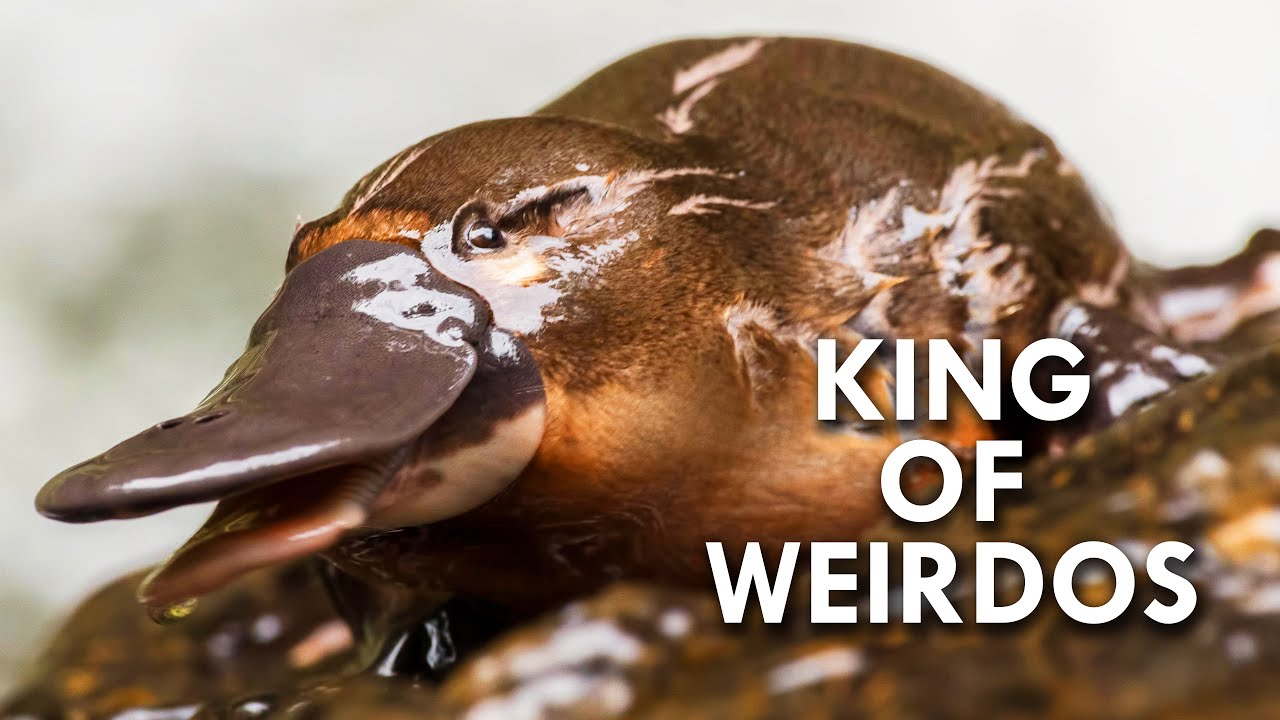
The duck-billed platypus has a superpower that helps it find food without seeing, hearing, or smelling. It can sense the tiny amounts of electricity made by other animals. This ability is called electroreception. While many fish and sharks have this skill, the platypus is one of the very few mammals (animals with fur that drink milk) that can do it.
The Sensitive Bill
The platypus’s bill looks like a duck’s beak, but it is soft, leathery, and very sensitive. The skin on the bill is covered in nearly 40,000 tiny pits called pores. Inside these pores are special nerve endings that act like sensors. Some sensors detect touch, while others detect electricity.
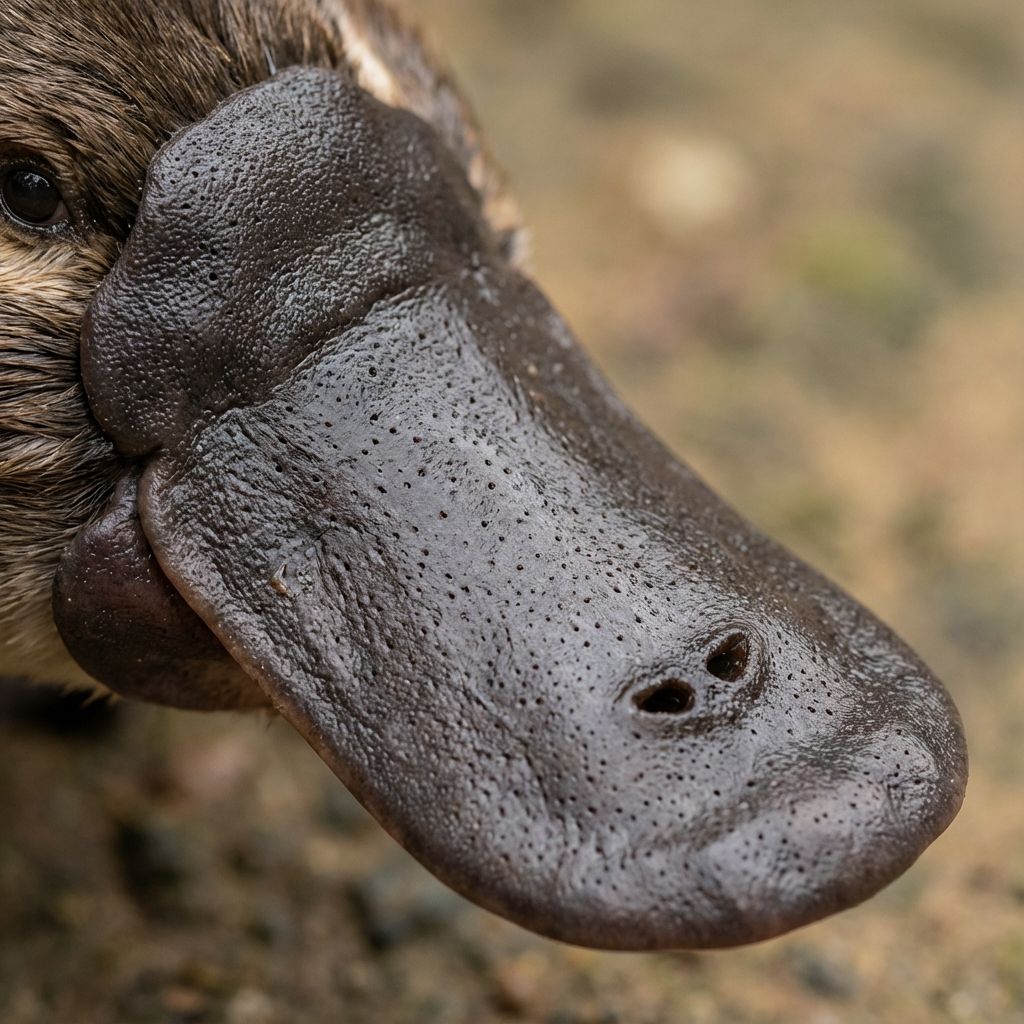
Whenever a living creature moves a muscle, its body creates a weak electrical charge. Even a small shrimp twitching its tail sends out a signal. The sensors on the platypus’s bill pick up these signals through the water, allowing it to locate living things that are hidden in the mud.
Hunting in the Dark
Platypuses live in rivers and streams in Australia. They hunt for food underwater, often at night or in cloudy water where it is hard to see. When a platypus dives, folds of skin cover its eyes and ears, and valves close its nose tight. It is completely cut off from sight, sound, and smell.
To find food, the platypus sweeps its head from side to side as it swims. This motion helps its bill scan the water like a metal detector. By combining the electrical signals from prey with the feeling of water pressure against its bill, the platypus creates a map of the riverbed in its brain. This system is so accurate that a platypus can find and eat nearly half its own body weight in worms, insect larvae, and freshwater crayfish every day.
Read Land Animals & Water Animals here or in the app
Read every story in both shelves right here on the web, or open them in Encyclopedia: Kids Learning with narration you control. The full 1,000+ topics come with the app, covering space, the human body, history and more. Ad-free, ages 5–12.