How Anglerfish Use Bacteria to Glow
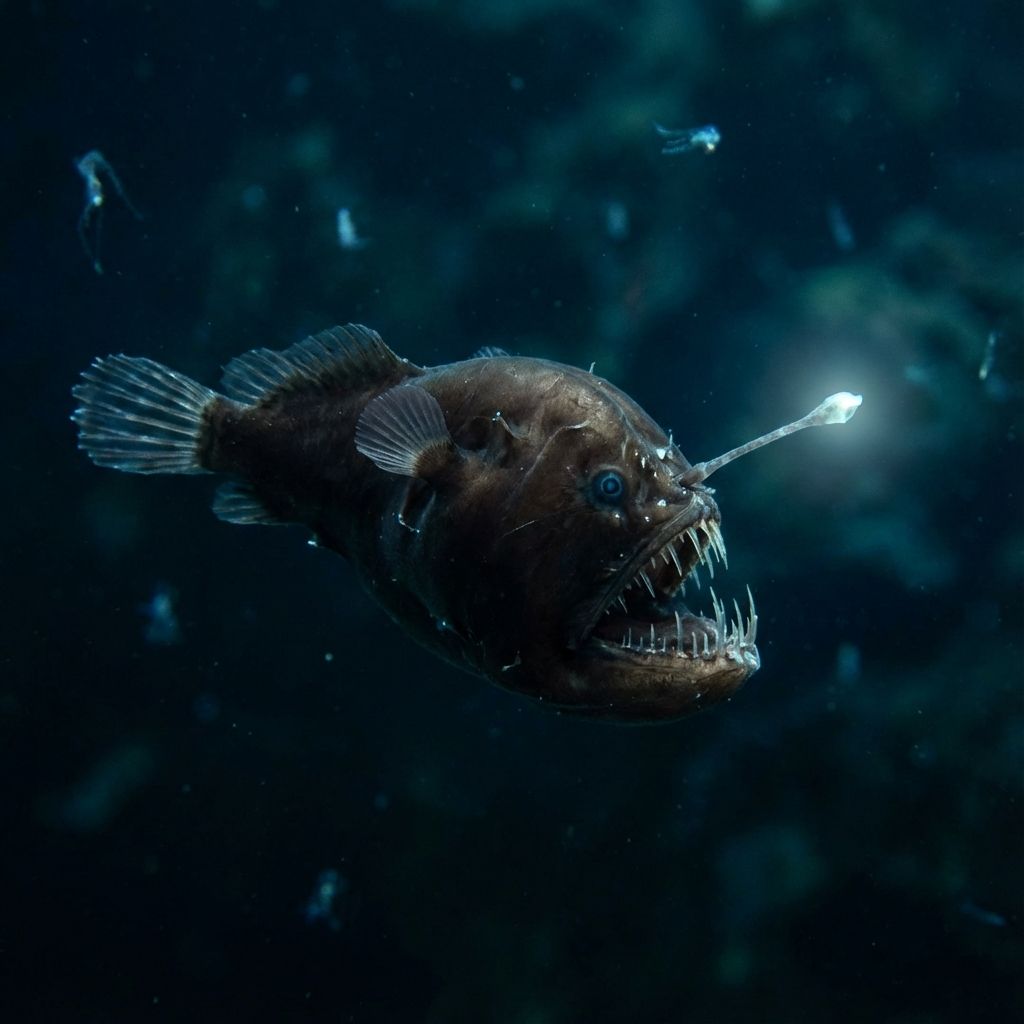
Anglerfish can't make their own light - millions of glowing bacteria live inside their head-lures! The fish can flash the glow on and off to attract curious prey in the pitch-black deep sea.

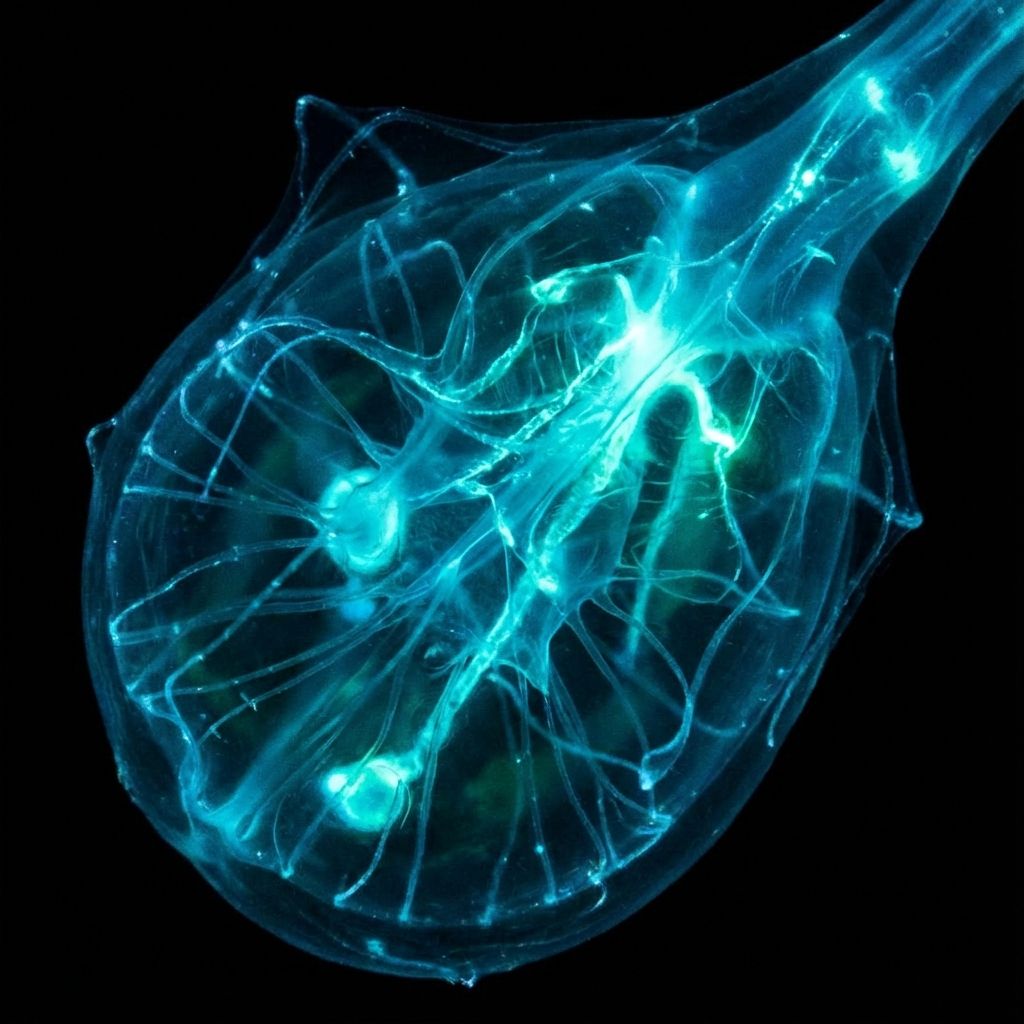
Deep in the ocean, sunlight cannot reach the water. In this area, known as the Midnight Zone, the deep-sea anglerfish creates its own light to survive. This ability to make light is called bioluminescence. The fish uses a special organ called an esca, which hangs from a modified spine on its head like a fishing pole. Inside this bulb, millions of tiny bacteria live and produce a bright, blue-green glow.
A Perfect Partnership
The relationship between the anglerfish and the glowing bacteria is a type of symbiosis (a partnership where living things help each other). The anglerfish cannot make light on its own. Instead, it provides a safe home for the bacteria inside the lure. The fish’s body supplies the bacteria with nutrients and oxygen from its blood. In return, the bacteria shine brightly. This light is essential for the fish to find food in the total darkness of the deep ocean.
Controlling the Glow
While the bacteria are always glowing, the anglerfish can control when the light is visible. Some species have a skin flap that slides over the lure like a shutter. Others can restrict the blood flow to the lure to dim the light. By flashing the light on and off, the anglerfish attracts curious prey like small fish or shrimp. When the prey comes close to investigate the glow, the anglerfish snaps its large jaws shut. The light also helps male anglerfish find females in the dark water.
Read Land Animals & Water Animals here or in the app
Read every story in both shelves right here on the web, or open them in Encyclopedia: Kids Learning with narration you control. The full 1,000+ topics come with the app, covering space, the human body, history and more. Ad-free, ages 5–12.