Goblin Shark: The Slingshot Jaw
Meet the deep-sea shark that shoots its mouth out of its face to catch prey. It looks like an alien, glows pink, and has been swimming in the ocean for 125 million years.

The Face Launcher
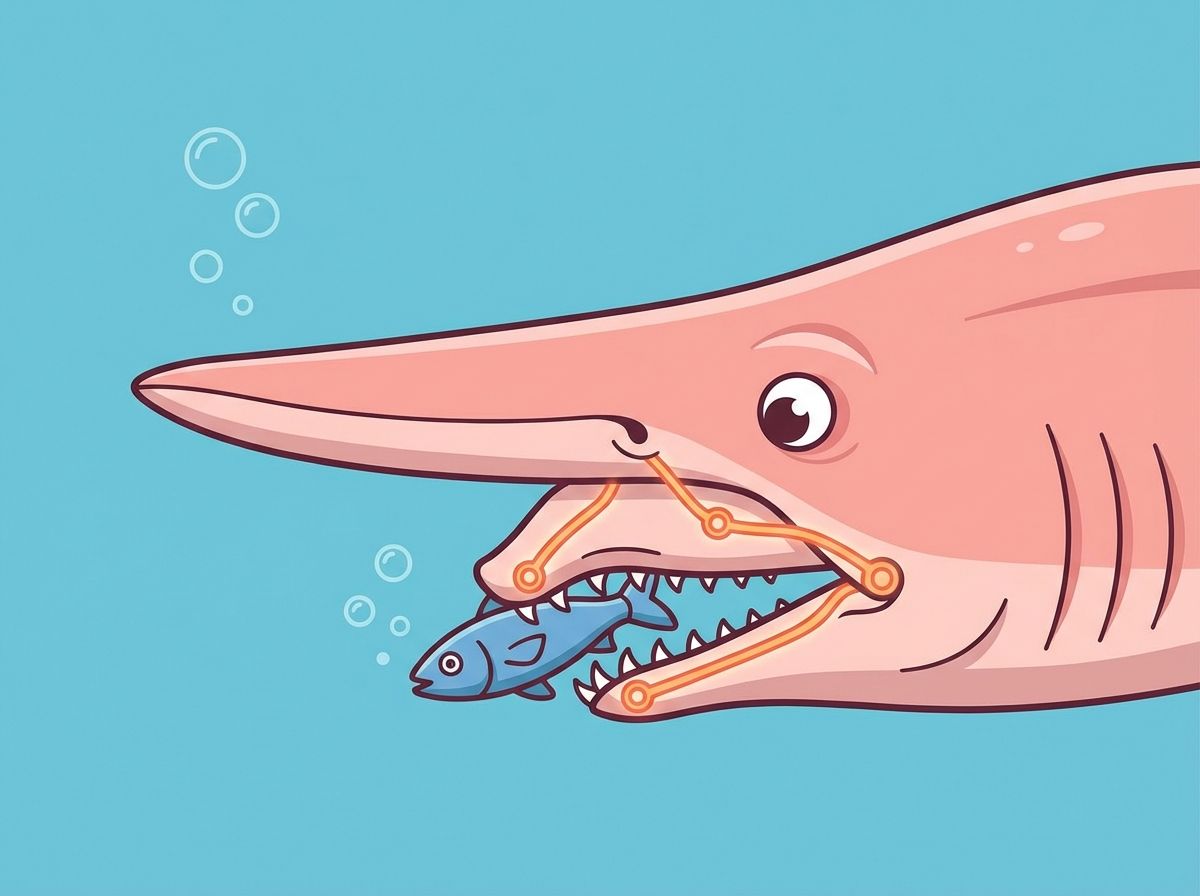
If you wanted to eat a burger without moving your head, you would have to throw your teeth across the table to grab it. That sounds impossible for a human, but for the goblin shark, it is just lunch.
This deep-sea hunter floats slowly through the dark water, waiting for a fish or squid to drift by. When prey gets close, the shark does not lunge with its body. Instead, it launches its jaws forward out of its face. The jaws snap shut and pull the food back into the mouth faster than a finger snap. It is a high-speed ambush.
A Ghost in the Dark
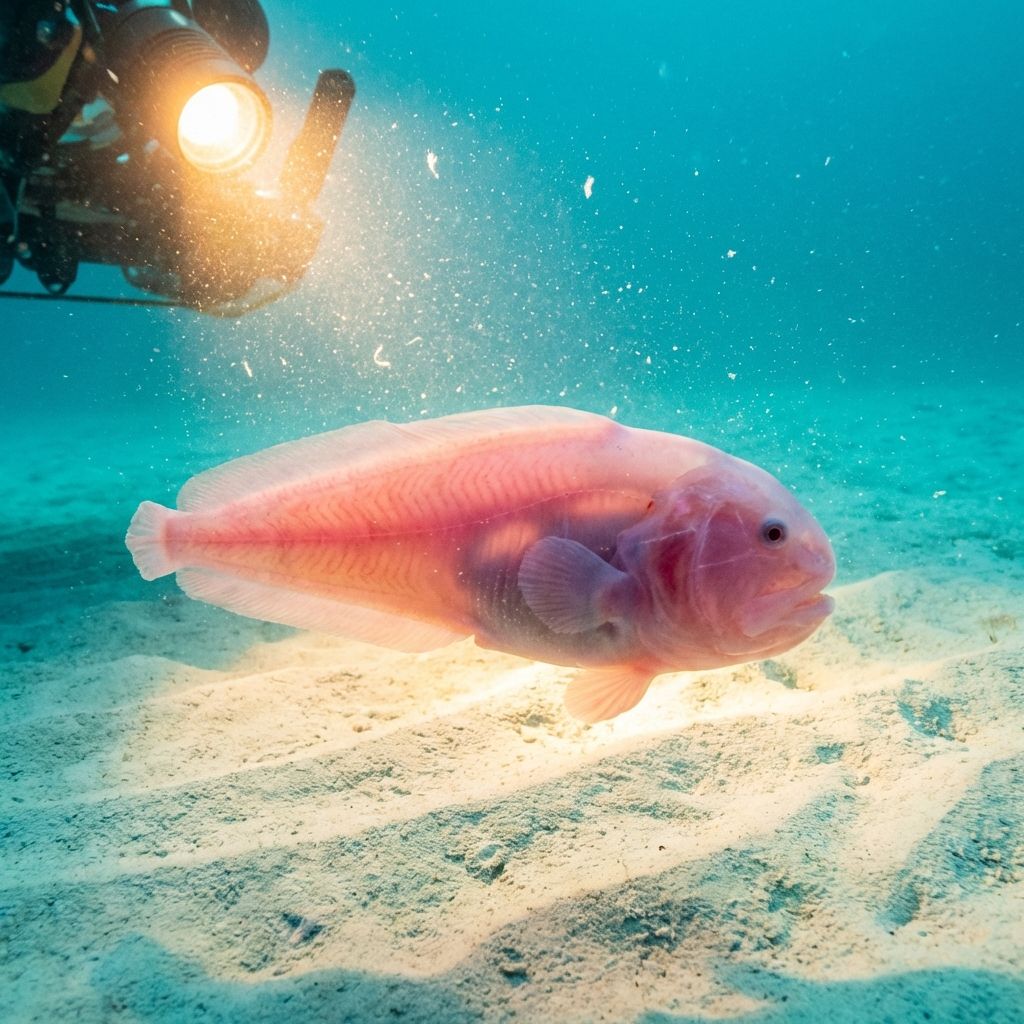
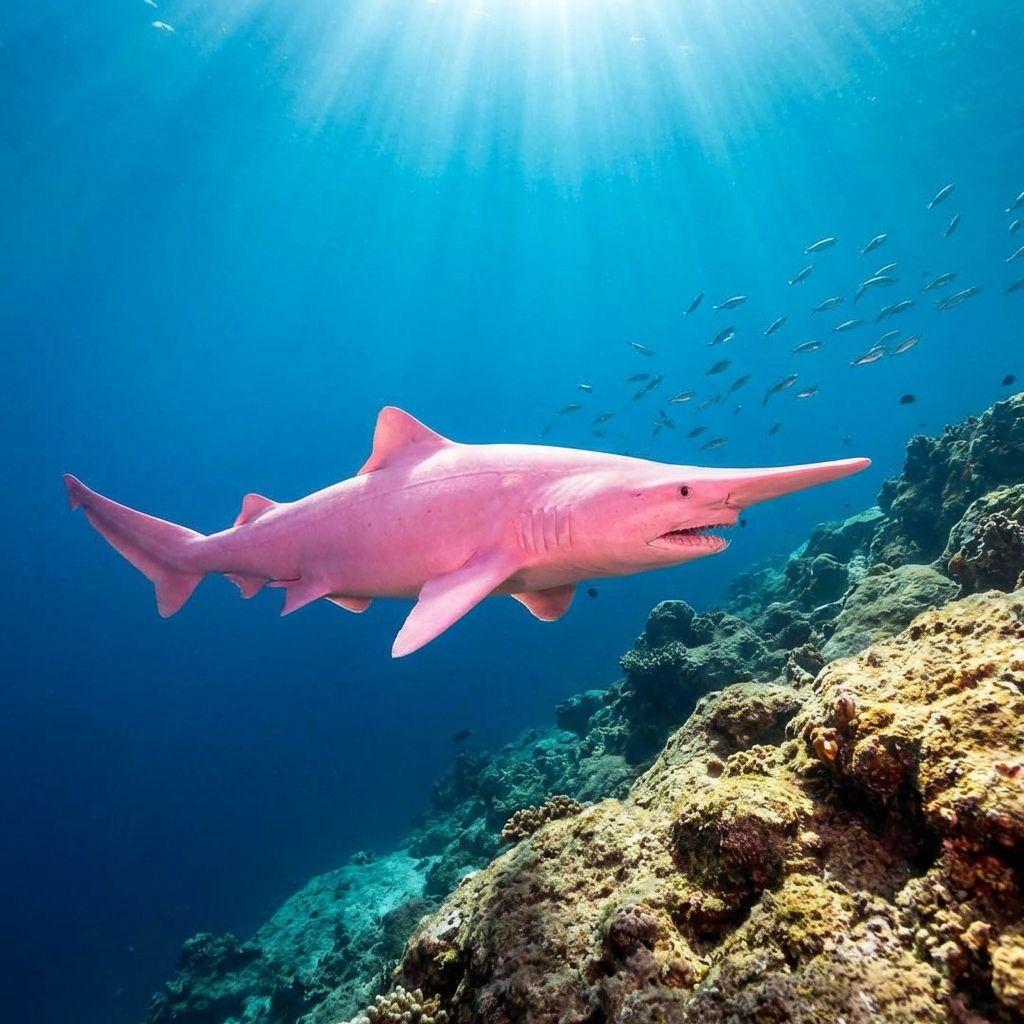
Most sharks are gray, but the goblin shark looks like it forgot to put on its skin. It is a strange, bubblegum pink color. This isn’t a fashion choice—it is actually a view inside the shark’s body.
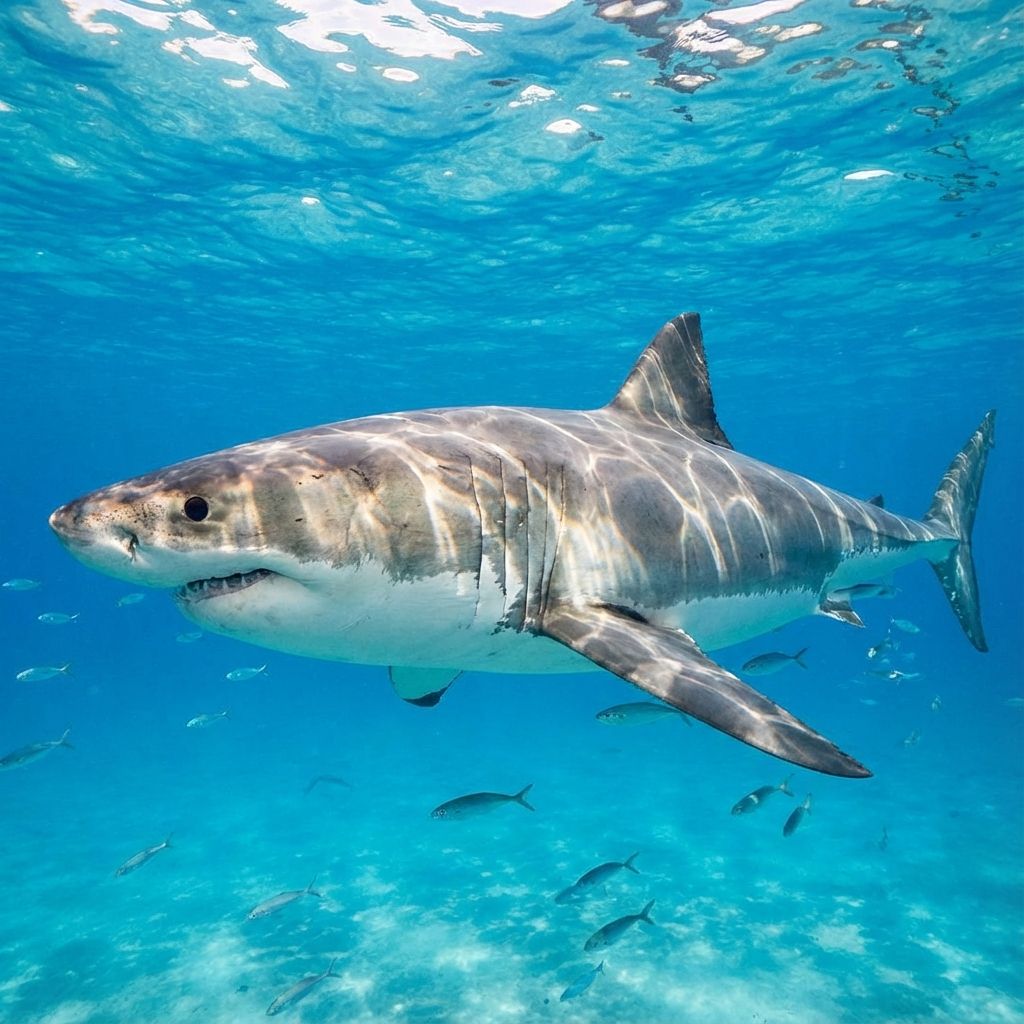
The goblin shark has translucent (see-through) skin. The pink color comes from the blood vessels running just underneath. While pink stands out in sunlight, it works like an invisibility cloak in the deep ocean. Red and pink light cannot travel far underwater, so at deep depths, this shark looks black, melting perfectly into the shadows. Its skin is also baggy and flabby, unlike the tough, sandpaper skin of a Great White.
The Electric Nose
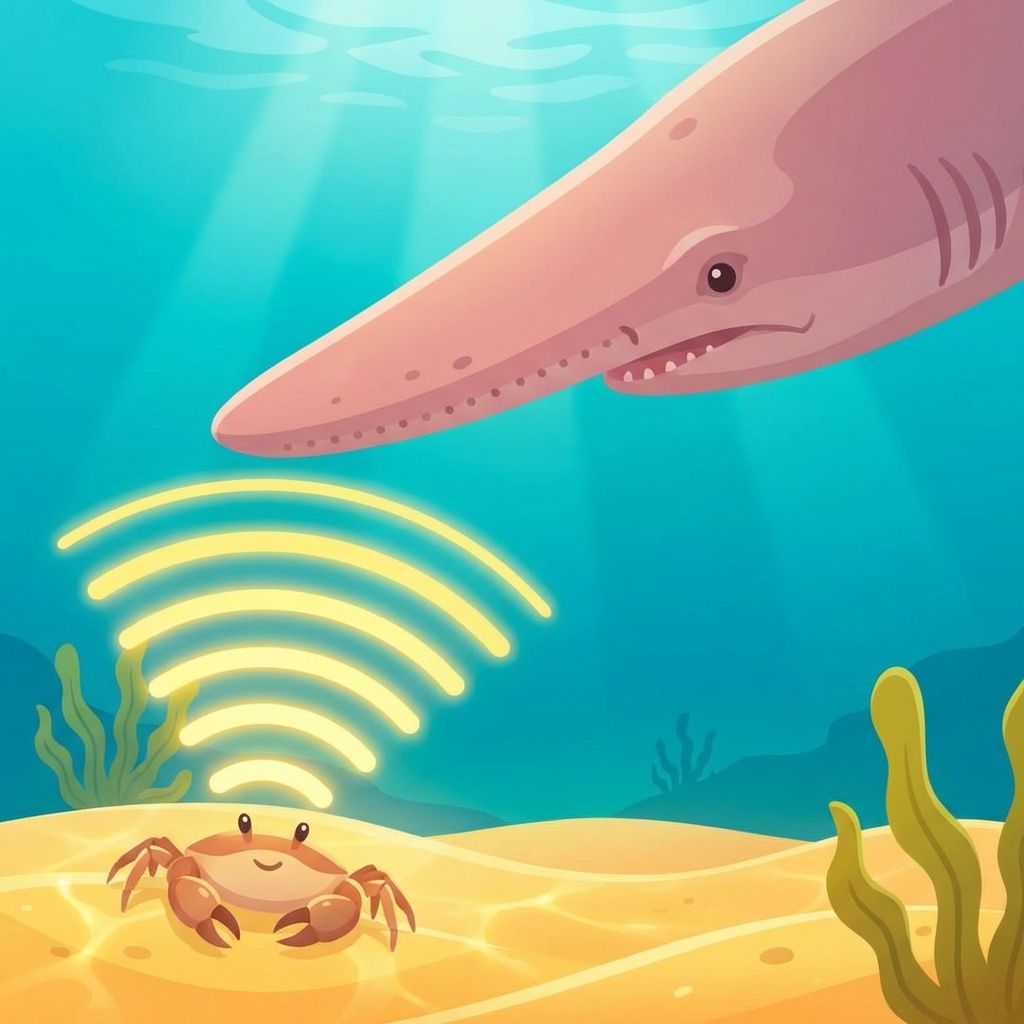
The long, flat snout sticking out above the goblin shark’s mouth looks like a sword, but it works like a metal detector for food. In the deep, sunless ocean, eyes are not always useful. This long nose is covered in tiny dots called ampullae of Lorenzini.
These dots are super-sensitive sensors that detect the tiny electrical signals given off by other animals’ muscles. A crab hiding in the mud might be invisible to the eye, but to a goblin shark, its heartbeat rings like a dinner bell.
Survivor of the Ages
Scientists call the goblin shark a “living fossil.” Its family tree goes back 125 million years. These sharks were swimming in the ocean before the T-Rex was born. While the dinosaurs on land went extinct, the goblin shark stayed safe in the deep, dark water, keeping its slingshot smile exactly the same.
Read Land Animals & Water Animals here or in the app
Read every story in both shelves right here on the web, or open them in Encyclopedia: Kids Learning with narration you control. The full 1,000+ topics come with the app, covering space, the human body, history and more. Ad-free, ages 5–12.