Deep Sea Vents & Tube Worms
Deep in the pitch-black ocean, 8-foot worms thrive in water hot enough to melt lead. They have no mouths, no stomachs, and eat poison for breakfast.

Factory on the Floor
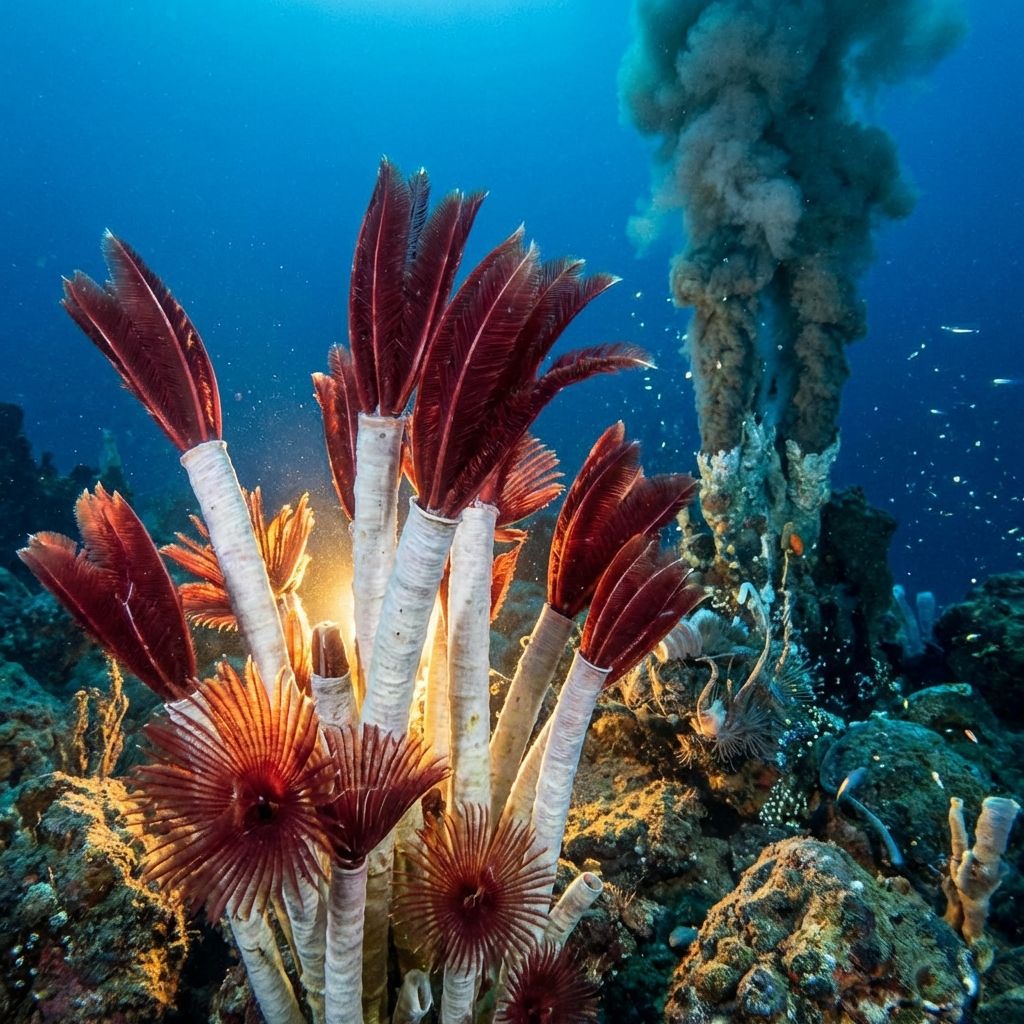
Deep in the ocean, there are chimneys that blast black smoke. This isn’t a factory—it is a hydrothermal vent at the bottom of the ocean.
Here, seawater seeps into cracks in the Earth’s crust, touches magma (underground lava), and shoots back up at supersonic speeds. The water emerging from these “black smokers” can reach 750°F (400°C). That is hotter than a pizza oven and hot enough to melt lead. The intense pressure of the deep ocean is the only thing stopping the water from boiling away into steam instantly.
The 8-Foot Lipstick
Crowded around these scalding chimneys are colonies of giant tube worms. They look like white plastic pipes topped with bright red feathers, earning them the nickname “giant lipsticks.”
These are not like the earthworms in a backyard garden. Giant tube worms can grow up to 8 feet long—taller than a standard doorframe. They have no eyes to see the darkness and no legs to crawl away. Instead, they anchor themselves to the rock, protected by a hard white tube made of chitin, the same tough material found in a crab’s shell.
Poison Eaters
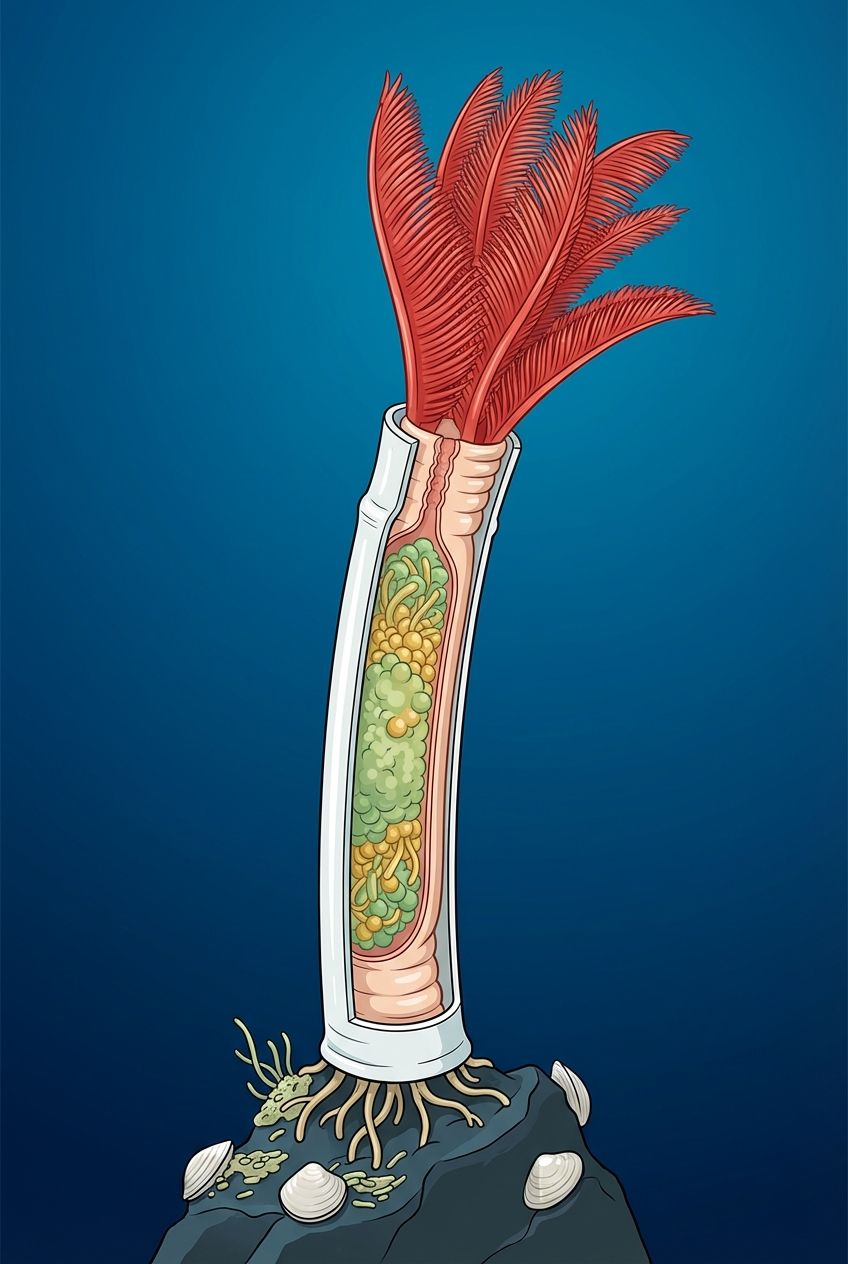
The strangest thing about a tube worm is its anatomy. It has no mouth, no stomach, and no gut. It cannot eat food in the traditional sense. Instead, it farms it.
The vents pump out hydrogen sulfide—a chemical that smells like rotten eggs and is deadly poison to humans. The worm’s red plume acts like a gill, trapping this toxic gas. Inside the worm’s body, billions of bacteria take the poison and turn it into sugar and energy. The worm provides a safe home, and the bacteria provide a steady lunch.
Alien Clues
Before scientists discovered these vents in 1977, everyone assumed all life on Earth needed sunlight to survive. The tube worms proved that life can thrive on chemicals alone. This discovery changed how astronomers look for aliens. If giant worms can live in the ink-black, poisonous pressure cooker of Earth’s ocean, alien life might be swimming right now in the icy, dark oceans of Jupiter’s moon, Europa.
Read Land Animals & Water Animals here or in the app
Read every story in both shelves right here on the web, or open them in Encyclopedia: Kids Learning with narration you control. The full 1,000+ topics come with the app, covering space, the human body, history and more. Ad-free, ages 5–12.