Crocodiles: Strongest Bite Force on Earth
Crocodile jaws snap shut with 3,700 psi - three times stronger than a lion! But their opening muscles are so weak you could hold their mouth shut with a rubber band.

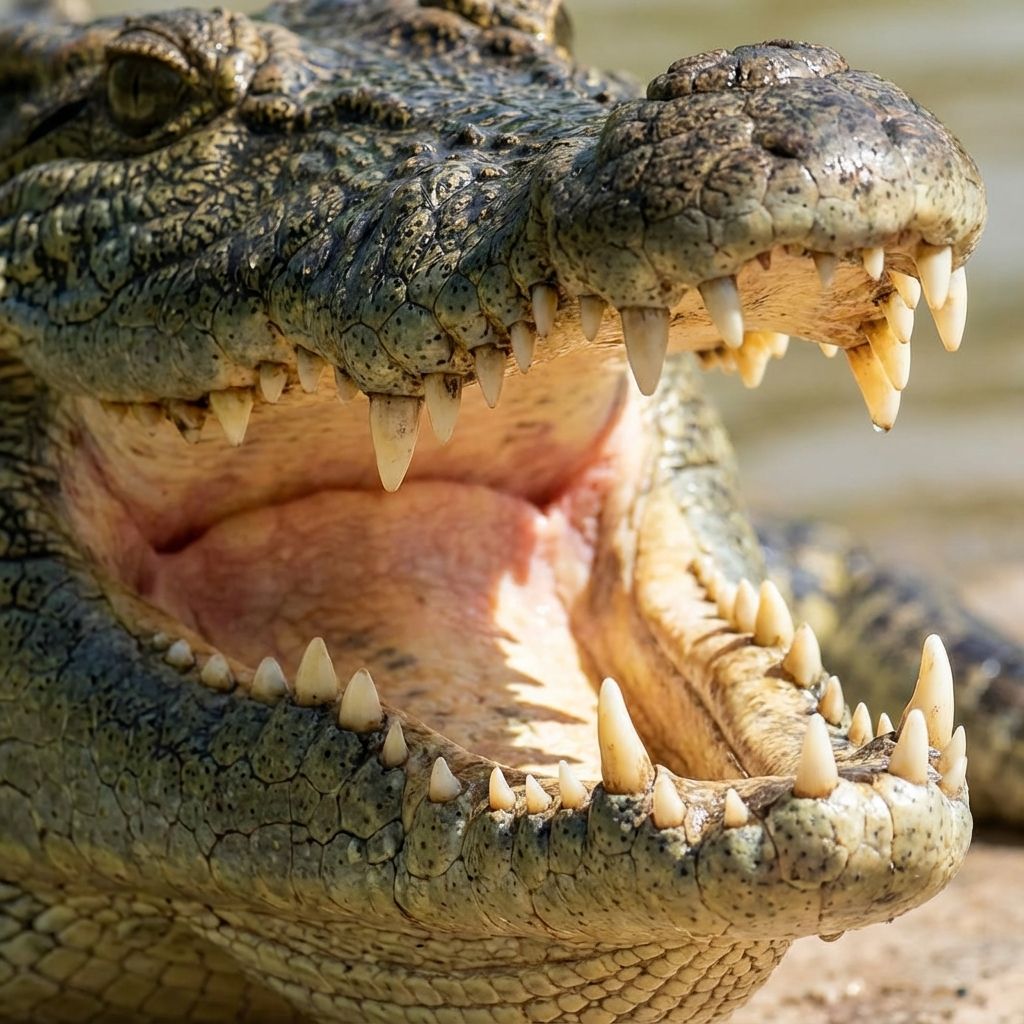
Crocodiles have the most powerful bite of any animal on Earth. Large saltwater crocodiles can slam their jaws shut with a force of 3,700 pounds per square inch (psi). This is more than three times stronger than a lion or tiger. Their jaw muscles are designed for snapping shut with immense speed and power, allowing them to crush bone and turtle shells easily.
However, the muscles used to open their jaws are very weak. A human can hold a large crocodile’s mouth shut with just a rubber band or strong hands. Inside the mouth, crocodiles have between 60 and 110 teeth. These teeth are conical (cone-shaped) and are made for gripping prey, not chewing. Crocodiles swallow their food in large chunks. They often swallow stones called gastroliths, which stay in their stomachs to help grind up food and act as weight to help them dive.
Underwater Survival
Crocodiles are reptiles that breathe air, but they are experts at holding their breath. A resting crocodile can stay underwater for more than an hour. When they dive, their heart rate slows down to just a few beats per minute to save oxygen. This allows them to wait patiently at the bottom of a river for prey to come near.
They have a special flap of skin at the back of their throat called a palatal valve. This valve seals the throat shut so water cannot get into their lungs, even when they open their mouth underwater to catch food. This adaptation lets them hunt fully submerged without drowning.
The Mystery of Crocodile Tears
There is a common myth that crocodiles cry because they feel fake sadness while eating prey. This is where the phrase “crocodile tears” comes from. While crocodiles do produce tears, it has nothing to do with emotions.
When a crocodile eats, its jaws move around, which pushes air through the sinuses and forces tears out of the tear ducts. These tears serve a practical purpose: they clean the eye and keep it moist, especially when the animal has been out of the water for a long time. They also have a clear “third eyelid” (nictitating membrane) that slides across the eye to protect it while swimming underwater, acting like built-in goggles.
Read Land Animals & Water Animals here or in the app
Read every story in both shelves right here on the web, or open them in Encyclopedia: Kids Learning with narration you control. The full 1,000+ topics come with the app, covering space, the human body, history and more. Ad-free, ages 5–12.