Can Alligators Survive in Frozen Ponds?
When ponds freeze, alligators stick just their noses above the ice and go into 'brumation' - their hearts slow to a few beats per minute until spring thaws them out!

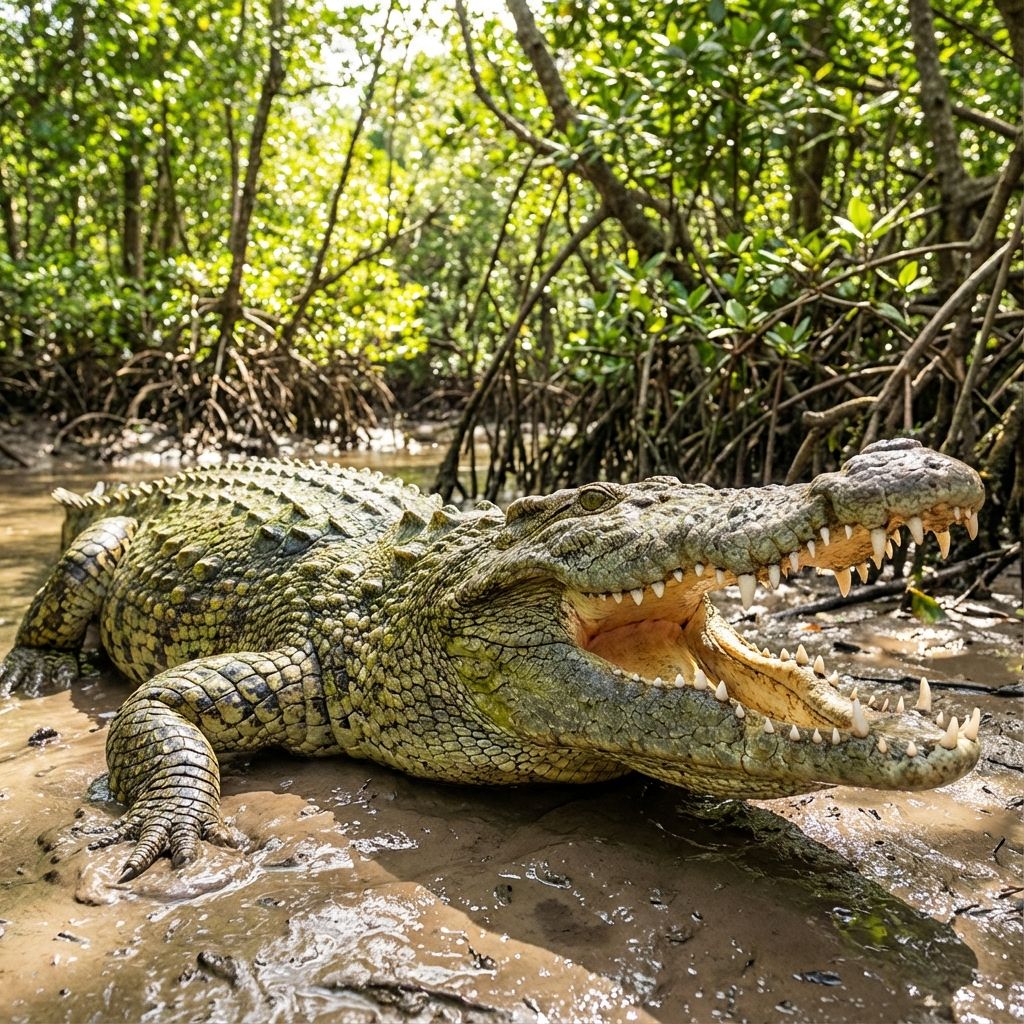
American alligators have a remarkable way to survive when their wetland homes freeze over. Unlike mammals, alligators are cold-blooded (ectothermic). This means they cannot generate their own body heat and rely on their environment to stay warm. When temperatures drop below freezing, they must adapt quickly to avoid freezing to death.
The “Snorkeling” Maneuver
Alligators cannot survive if they are completely trapped under a layer of solid ice. Like all reptiles, they have lungs and must breathe air. If the surface of a pond freezes completely, an alligator trapped underneath would drown.
To prevent this, alligators use a survival instinct called the “icing response.” As the water begins to freeze, the alligator swims to the surface. It tilts its head up and sticks just its snout (nose) out of the water.
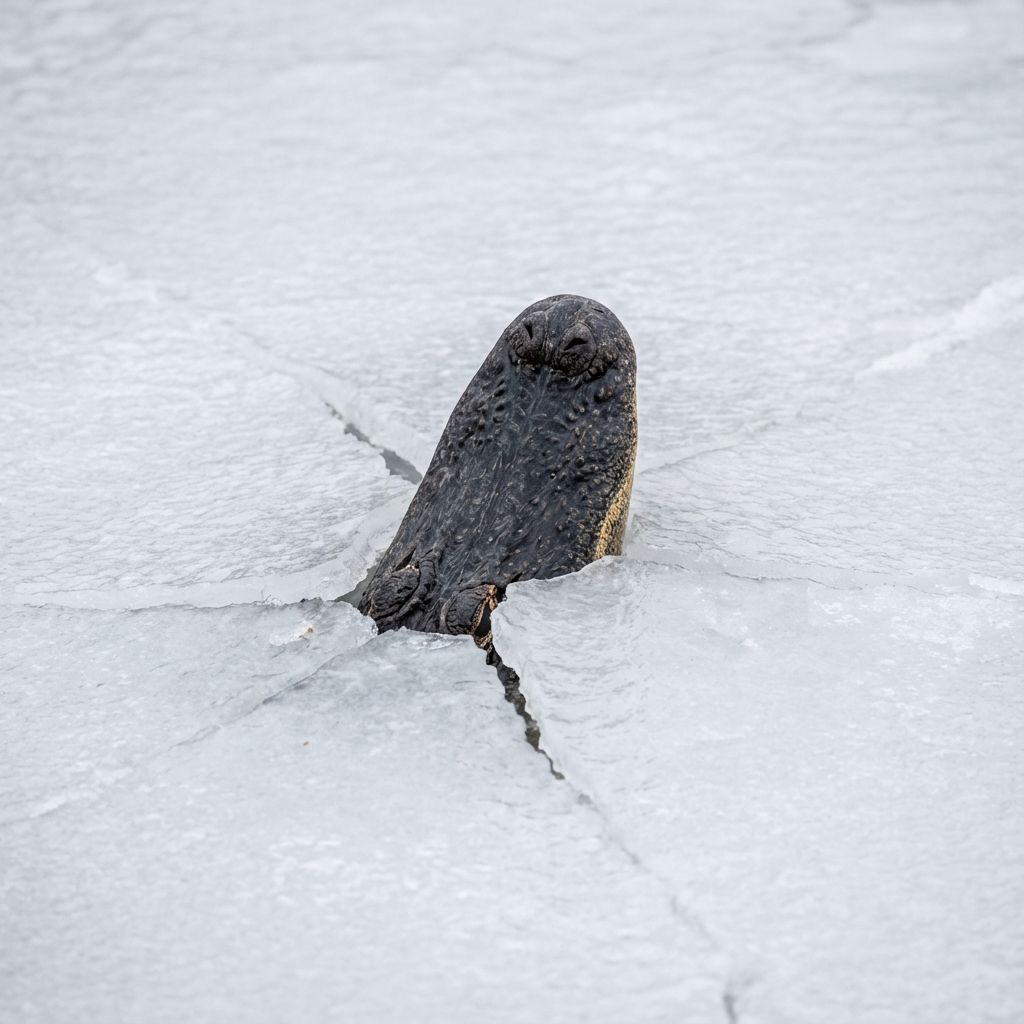
The water freezes around the alligator’s snout, locking it in place. The ice holds the alligator suspended in the water. As long as the tip of the snout remains above the ice, the alligator can continue to breathe oxygen from the air while the rest of its body hangs motionless in the freezing water below.
Entering Deep Sleep
While trapped in the ice, the alligator enters a state called brumation. This is similar to hibernation in mammals like bears. During brumation, the alligator’s body slows down drastically to save energy.
- Heart Rate: The heart beats very slowly, sometimes only a few times per minute.
- Metabolism: The body stops digesting food. Alligators do not eat during this time.
- Movement: The animal becomes lethargic (sluggish) and does not move.
This state allows the alligator to survive for days or even weeks in freezing water. Once the weather warms up and the ice melts, the alligator pulls its snout back underwater, warms up its muscles in the sun, and returns to its normal activity.
Read Land Animals & Water Animals here or in the app
Read every story in both shelves right here on the web, or open them in Encyclopedia: Kids Learning with narration you control. The full 1,000+ topics come with the app, covering space, the human body, history and more. Ad-free, ages 5–12.